

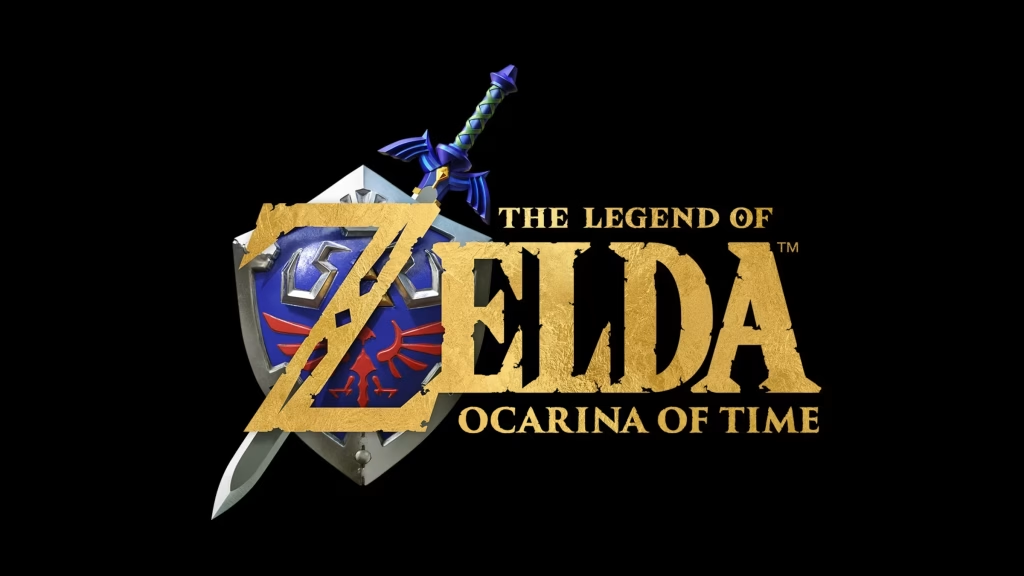
After years of rumors, leaks, wish lists, and fans reading way too much into every Nintendo Direct rumor, The Legend of Zelda: Ocarina of Time is officially coming back as a full remake for Nintendo Switch 2.
Not a remaster. Not a cleaned-up port. Not the 3DS version running at a higher resolution. Nintendo is treating this as a true remake, and the reveal trailer makes that clear without needing to show much at all.
The trailer is short — under two minutes — but it is packed with little details for Zelda fans to pick apart. Rather than opening with combat, dungeons, or a sweeping shot of Hyrule Field, Nintendo starts somewhere quieter and more mythic: with a tapestry.
That choice says a lot.
Hyrule as a Legend, Not Just a Setting
The first thing we see is a woven depiction of Hyrule, almost like the story is being remembered centuries later. It gives the trailer the feeling of an old legend being retold, which is perfect for Ocarina of Time. This is the game that shaped so much of Zelda’s history, both in-universe and for players in the real world.
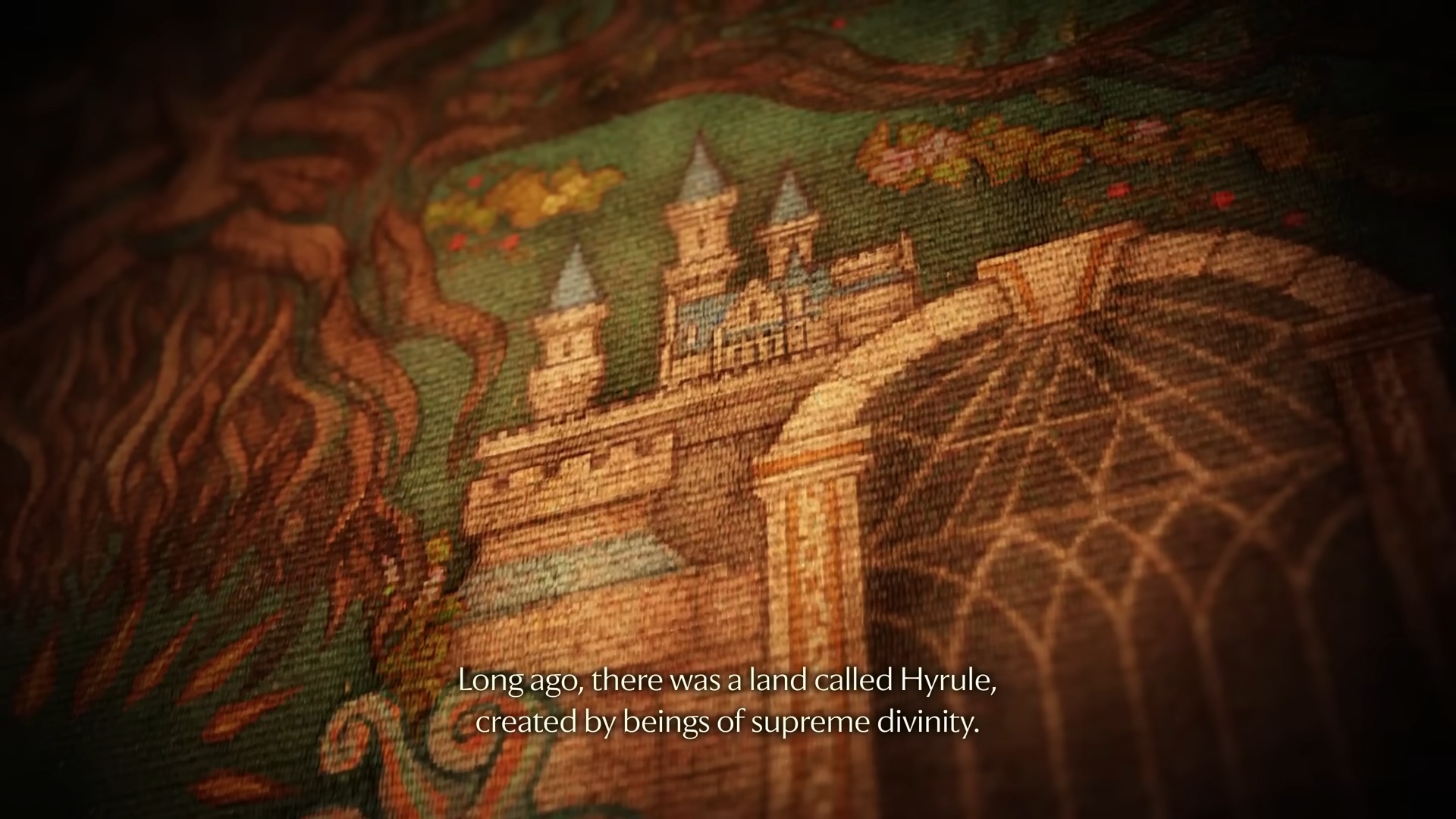
The narration describes Hyrule as a land created by divine beings, which longtime fans will immediately recognize as a reference to the three Golden Goddesses: Din, Nayru, and Farore. They created the land, gave order to the world, and brought life into existence before leaving behind the Triforce.
That opening matters because Ocarina of Time is not just another adventure in the Zelda timeline. It is one of the most important turning points in the entire series. The events of this story echo through multiple timelines, and the way Hyrule remembers those events becomes part of the legend itself.
So opening the remake with the story literally woven into history feels intentional.
The Forest at the Edge of the Kingdom
From there, the trailer moves toward the edge of Hyrule, to a small forest watched over by an ancient tree. There is no mystery about what this is: we are heading back to Kokiri Forest and the Great Deku Tree.
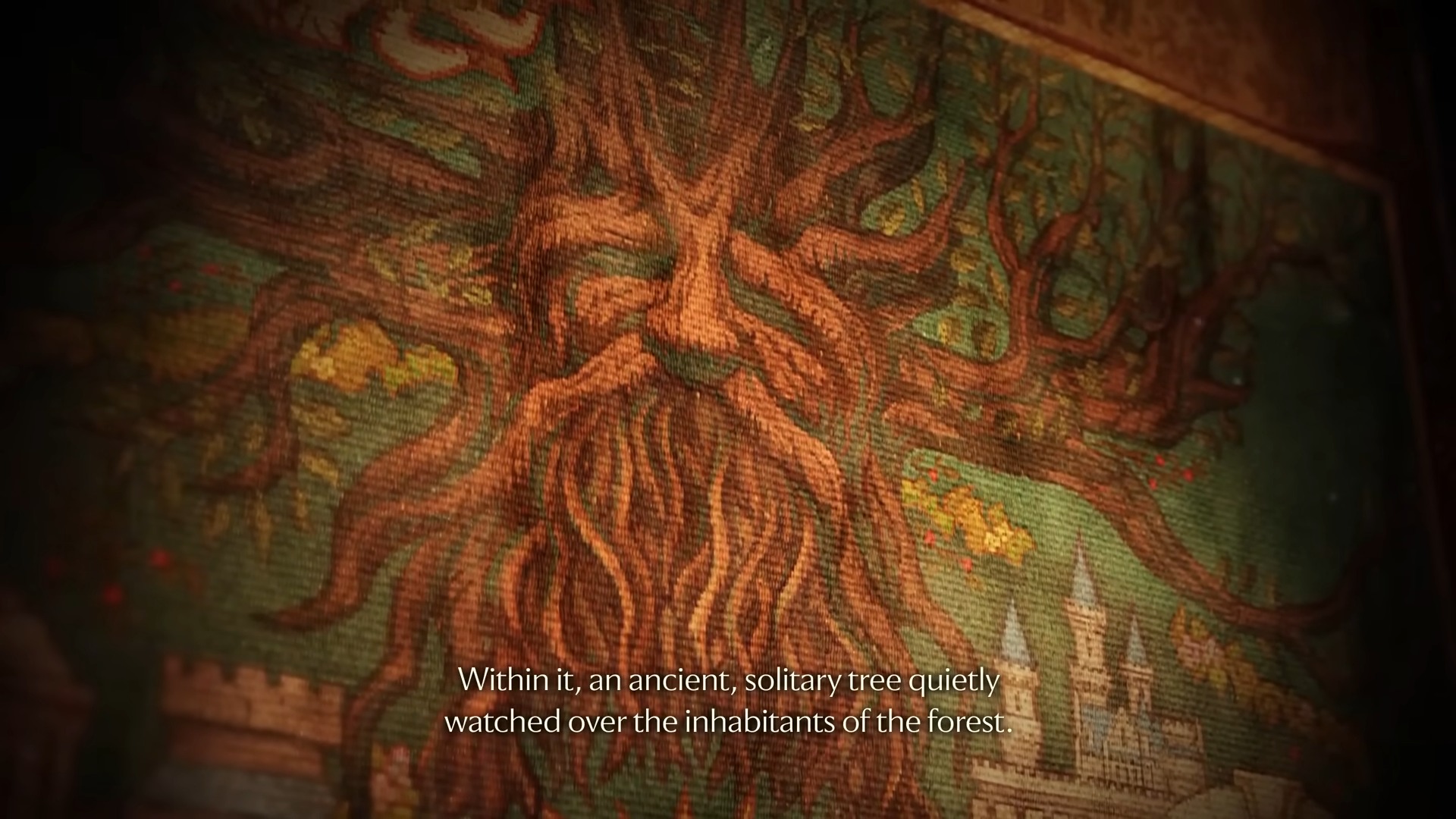
The music gives it away before the visuals even need to. A version of Saria’s Song plays as the narration describes the forest, instantly bringing back the Lost Woods. It is one of those melodies Zelda fans can recognize in a few notes, and hearing it here is enough to hit the nostalgia button hard.
The Great Deku Tree, of course, is the guardian of the forest and the protector of the Kokiri. In the original Ocarina of Time, Kokiri Forest is peaceful, innocent, and almost completely sealed off from the outside world. It is the place where Link begins his life before everything gets bigger, darker, and much more dangerous.
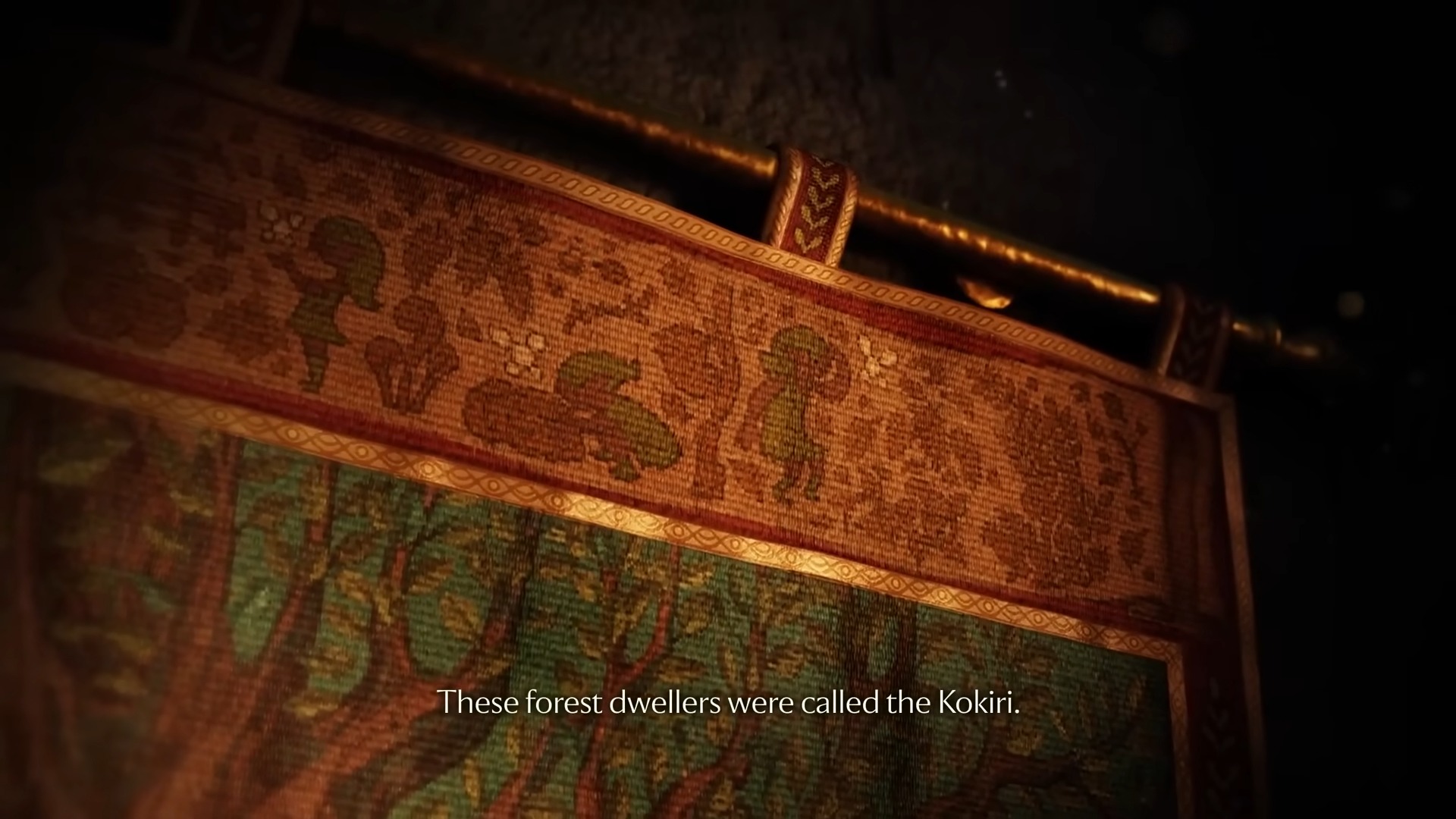
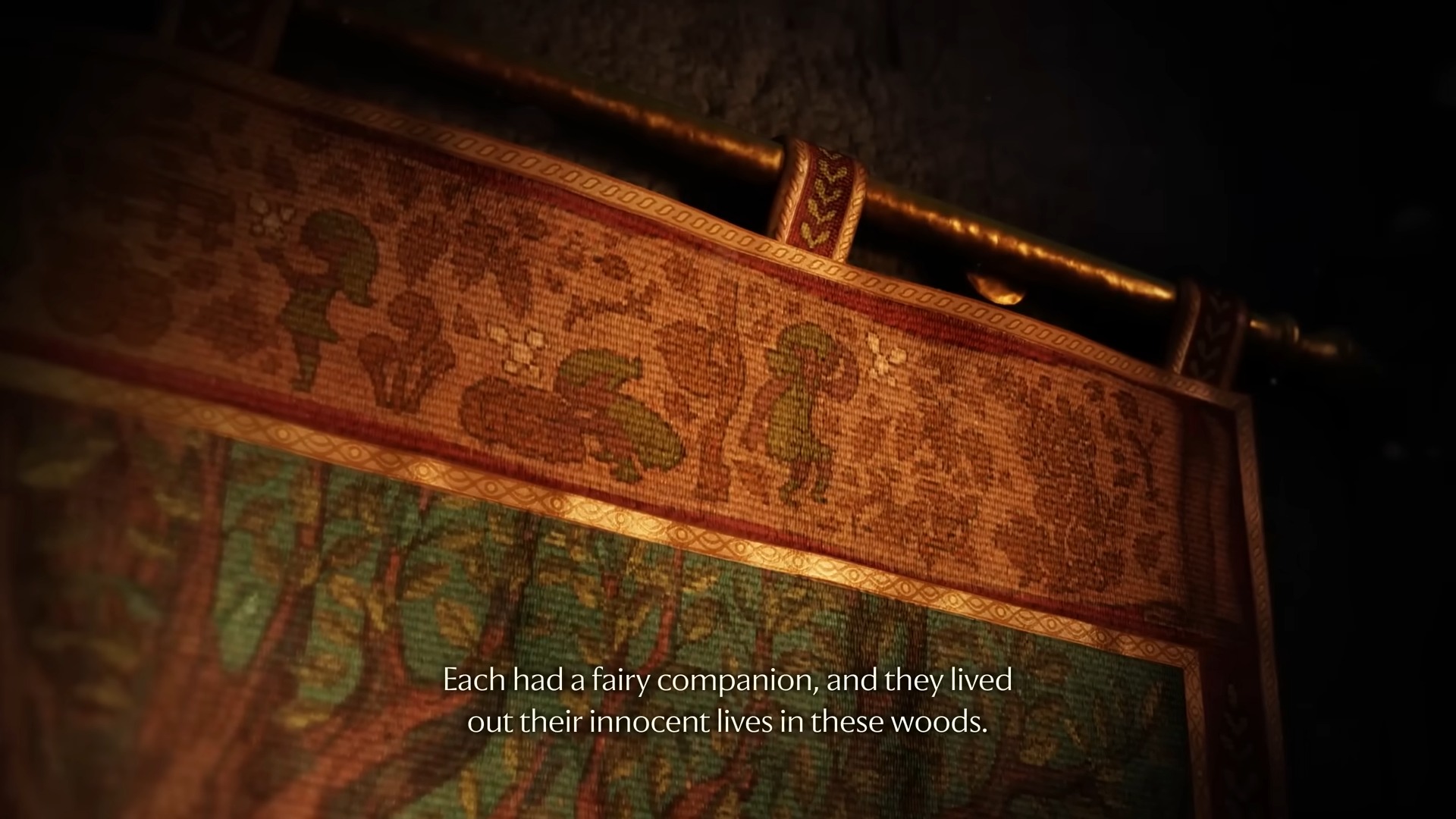
The tapestry shows the Kokiri living their normal lives, and there are some fun little details tucked into the scene. You can spot forest children doing small everyday tasks, and one of them appears to be holding a short blade, likely a nod to the Kokiri Sword.
It is a small touch, but that is exactly the kind of thing Zelda fans are going to freeze-frame and obsess over.
Link, the Child Who Doesn’t Belong
The most important detail in the tapestry is Link.
The Kokiri are shown with fairy companions, just as they are in the original game. Every Kokiri has one. That is part of what makes them Kokiri.
But Link is separate from the others, curled up asleep without a fairy beside him.
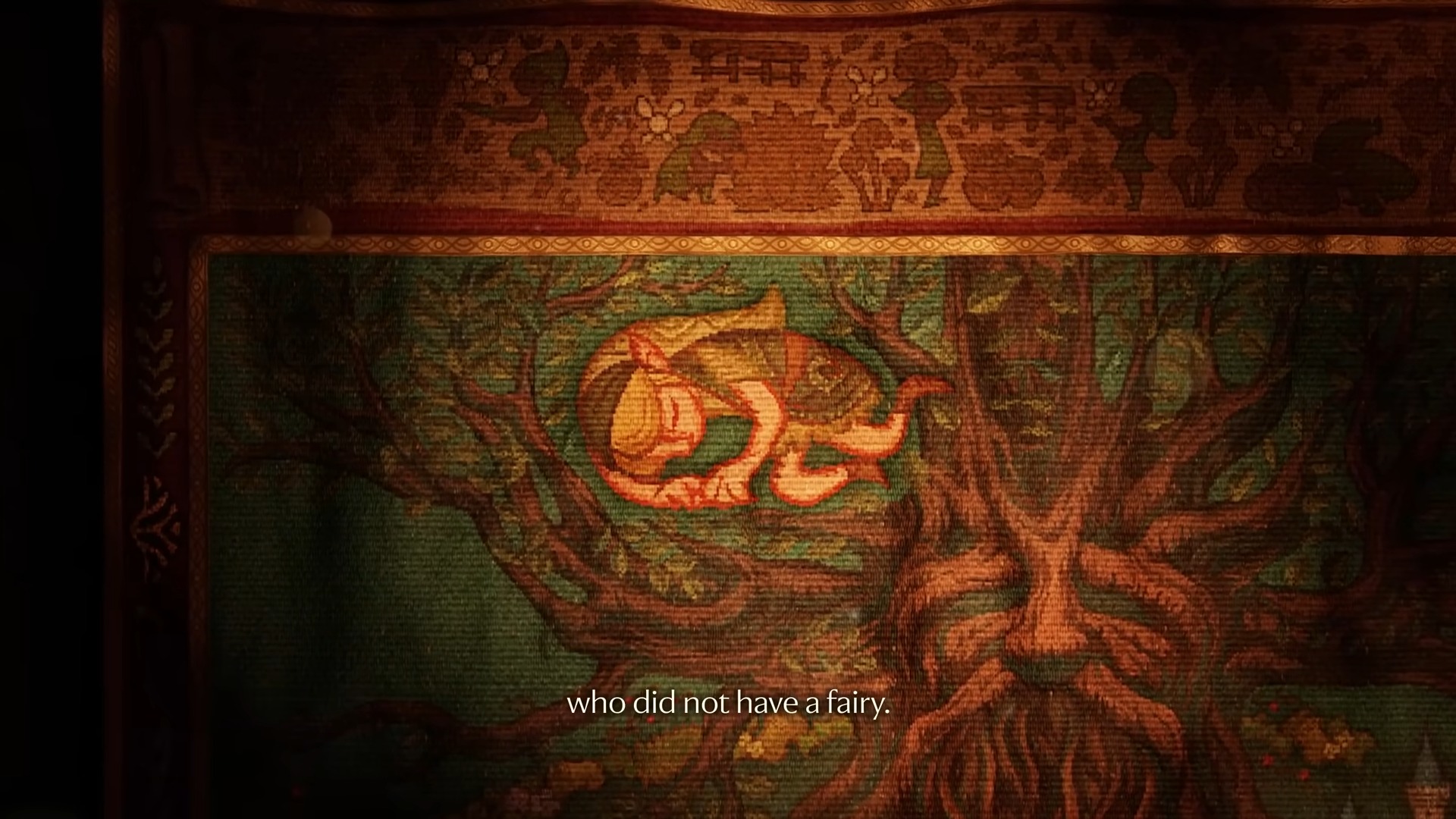
That detail cuts straight to the heart of Ocarina of Time’s opening. Link grows up in Kokiri Forest, wears the same green clothes, and lives among the forest children, but he is always different. The original game makes that clear immediately: he is the boy without a fairy.
In the remake trailer, Nintendo seems to be emphasizing that isolation right from the start. Link is not standing heroically with a sword. He is not posing like the chosen one. He is just a sleeping child, alone, unaware of what is coming.
Then the trailer fades from the tapestry into the actual Kokiri Forest, where we see Link asleep in his treehouse. It mirrors the opening of the original game, where Link is troubled by prophetic dreams — dreams tied to the darkness spreading across Hyrule.
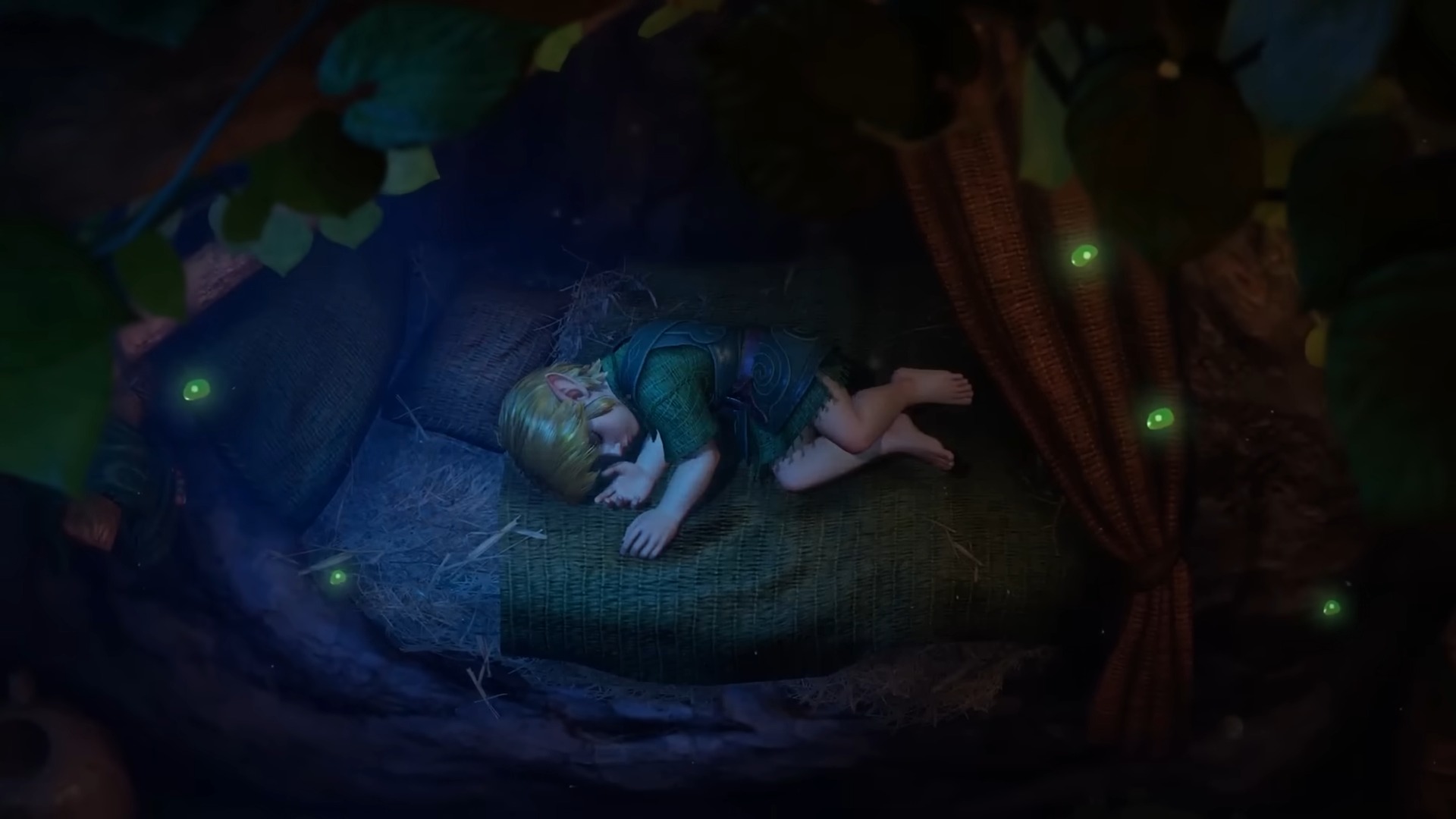
That is a strong place to begin, because Ocarina of Time’s story is built around fate, prophecy, and the idea that Link, Zelda, and Ganondorf are all being pulled toward the same disaster before they fully understand it.
Young Link’s New Design
The trailer gives us our first proper look at young Link in the remake, and Nintendo seems to be walking a careful line. He looks new, but not unfamiliar.
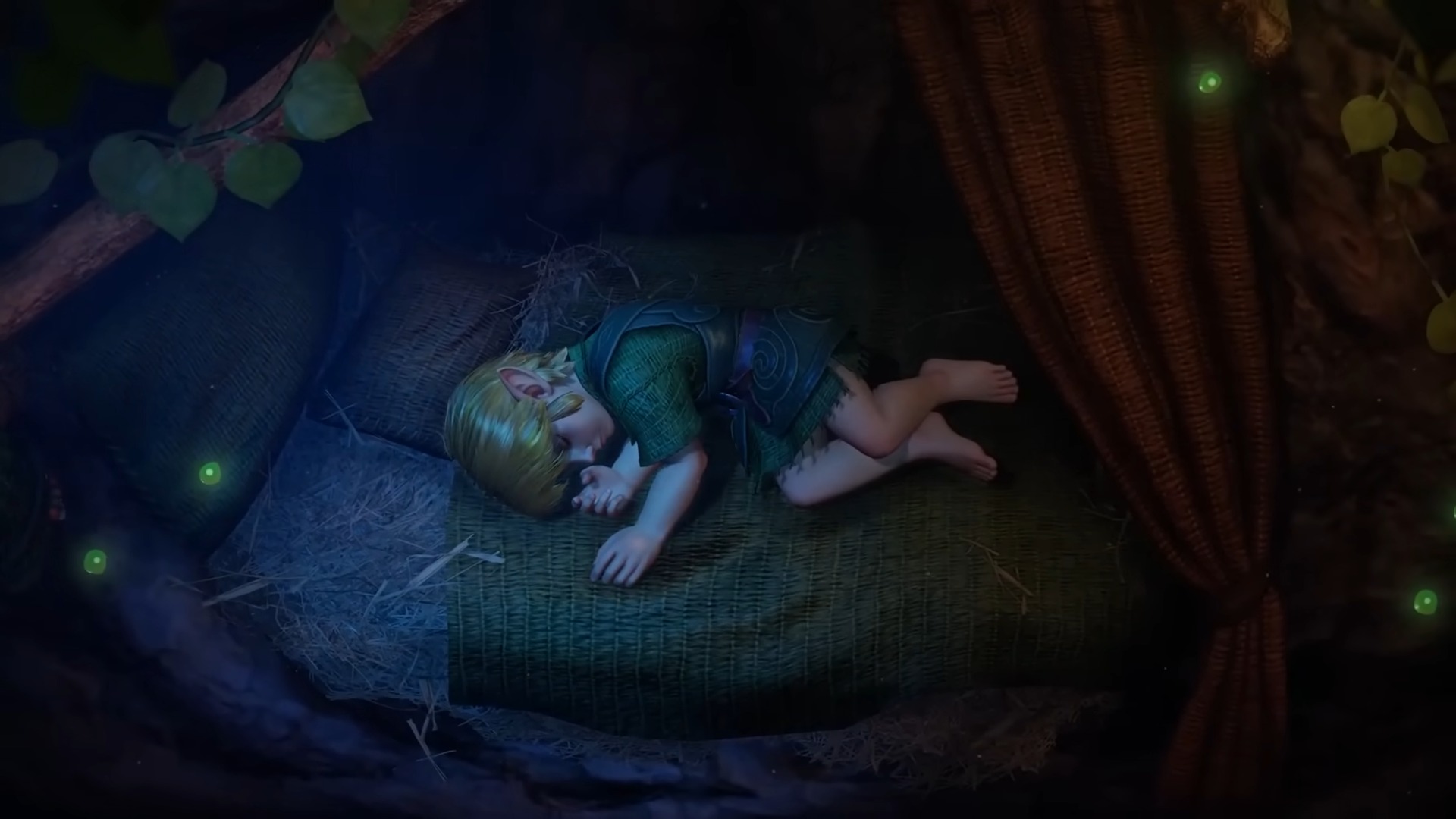
One thing fans noticed right away is that Link is not wearing his pointed green cap while sleeping. That may mean absolutely nothing — he could have simply taken it off in his own home — but it does make the scene feel a little more natural. This version of Link looks less like a mascot model and more like a kid who actually lives in the forest.
His outfit also has more texture than the old version. The green tunic looks like it could be made from natural fibers, which fits the Kokiri setting. There also appears to be another layer over it, possibly leather, with patterns that feel connected to the forest and Kokiri designs seen throughout the series.
It is still classic Link, just with enough detail to make him feel like he belongs in a living, breathing version of Kokiri Forest.
The Triforce Mark on Link’s Hand
One of the biggest talking points in the trailer is the glowing mark on Link’s hand.
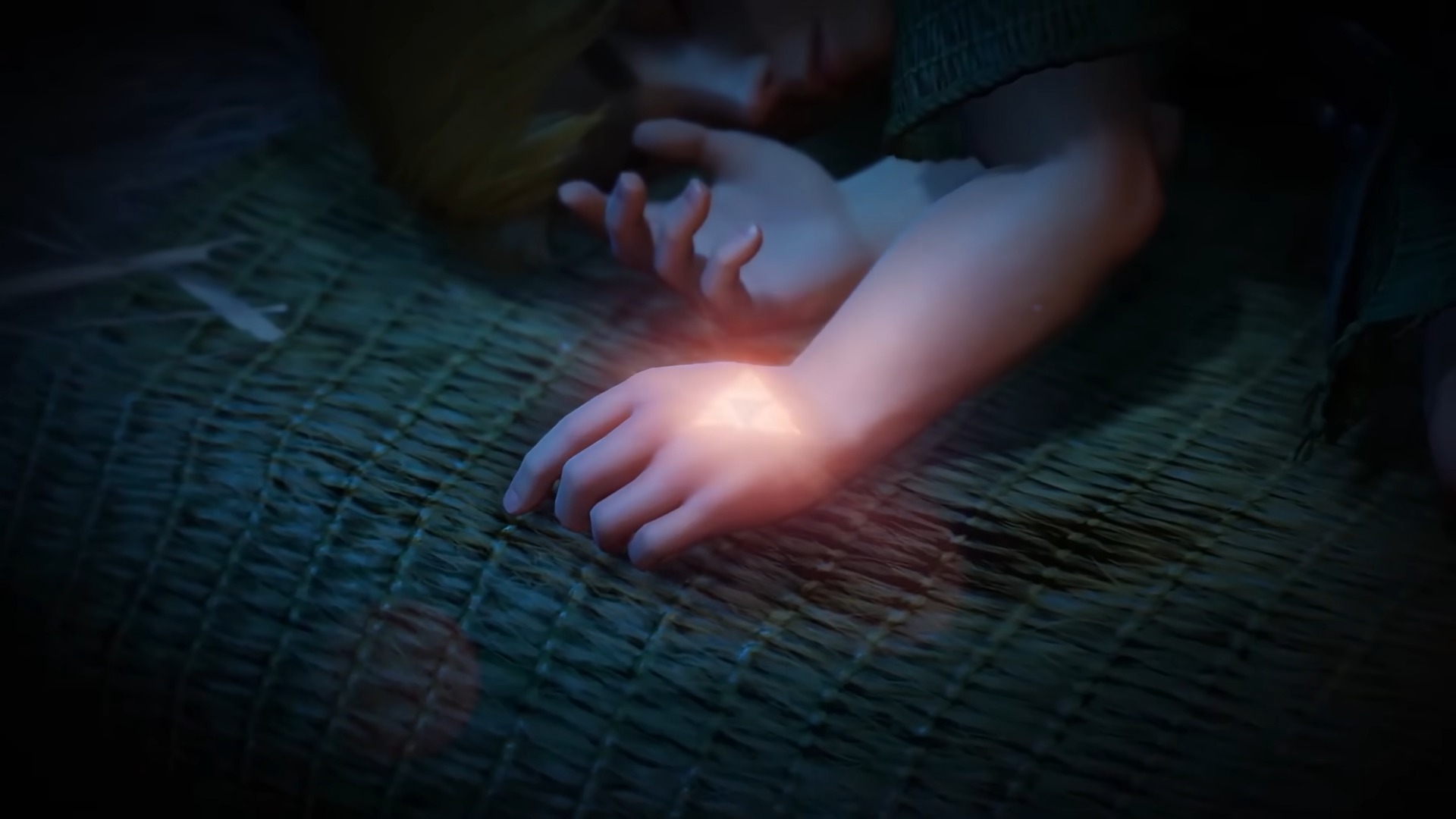
We see the Triforce symbol appear, with the lower-right triangle shining brightest. That represents the Triforce of Courage, the piece associated with Link.
At first glance, this might seem odd. In the original Ocarina of Time, Link does not possess the Triforce of Courage at the beginning of the story. Ganondorf eventually enters the Sacred Realm and tries to claim the full Triforce, but because his heart is unbalanced, it splits. Ganondorf receives Power, Zelda receives Wisdom, and Link receives Courage.
So why would Link already have the mark?
The best explanation is that this is not necessarily the Triforce itself. It may be a sign of worthiness or destiny.
Zelda has done this before. In Zelda II: The Adventure of Link, the mark appears on Link’s hand before he claims the Triforce of Courage. In Skyward Sword, Link also receives the Triforce mark as proof that he has grown into someone worthy of wielding its power.
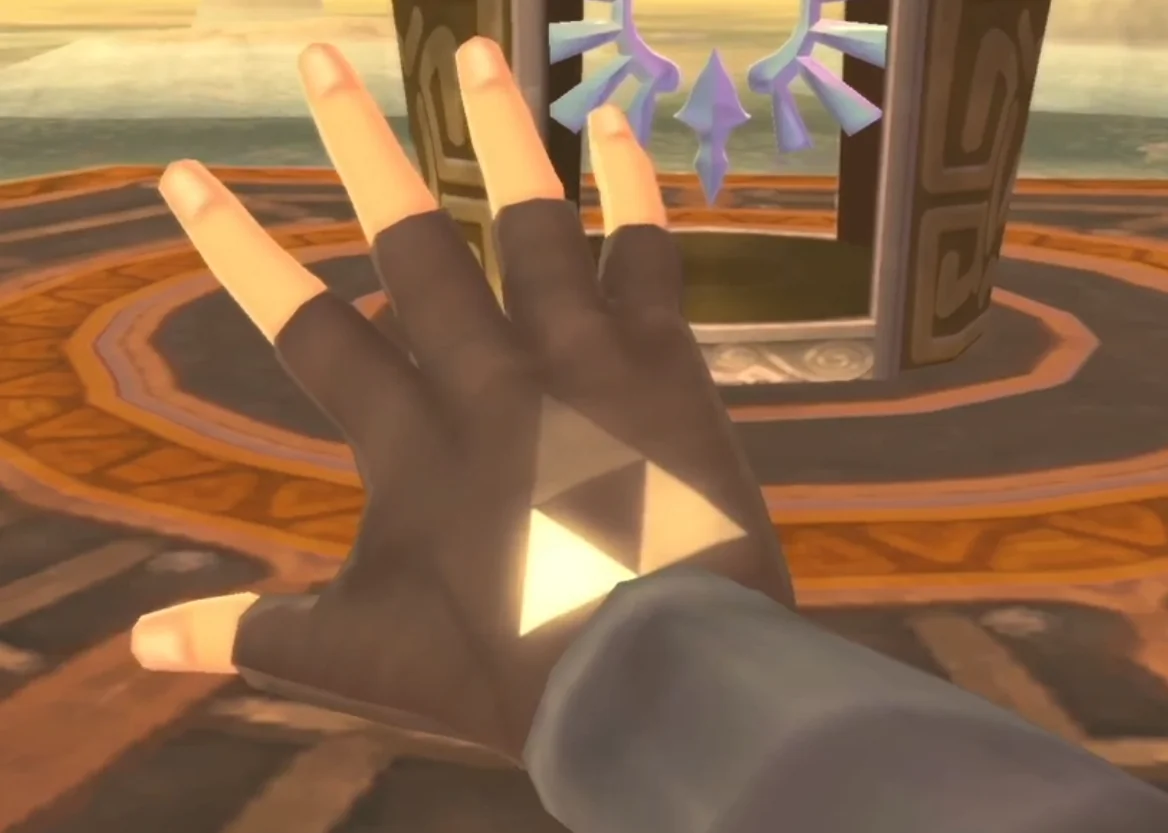
That may be what we are seeing here. Link’s courage is already within him, even if his role in the larger conflict has not fully begun.
There is also something interesting about the timing. If the mark appears while Link is dreaming of Ganondorf, it hints that their connection is already forming. Link, Zelda, and Ganondorf are bound together by the Triforce long before the story reaches its biggest moments.
A Quiet Trailer With a Big Message
What is interesting about this trailer is how little Nintendo actually shows.
We do not see adult Link. We do not see Zelda. We do not see Ganondorf clearly. There are no dungeon reveals, no boss fights, no Master Sword pull, no Epona, and no big montage of famous locations.
Nintendo could have easily made this trailer a nostalgia explosion. Instead, it chose restraint.
That makes the reveal feel more confident. The trailer does not need to prove why Ocarina of Time matters. It assumes you already know. Rather than shouting, “Remember this?” every five seconds, it carefully reintroduces the world through myth, music, and mood.
For a game as important as Ocarina of Time, that is probably the right call.
The Return of Hyrule Field
Near the end of the trailer, the music begins to shift toward the feeling of Hyrule Field. That is another smart choice, because the first time players stepped out of Kokiri Forest and into Hyrule Field in 1998 was unforgettable.
It is hard to overstate how massive that moment felt at the time. The world suddenly opened up. The adventure stopped being a small forest mystery and became something much bigger.
The trailer seems to be building toward that same feeling. Link is still asleep in the forest, but the music is already pointing beyond the trees.
The adventure is waiting.
A Modern Zelda Logo for a Classic Story
The logo reveal uses the newer distressed Zelda branding that Nintendo has leaned on in recent years. It first felt tied closely to Breath of the Wild, but it has since become part of the broader modern Zelda identity.
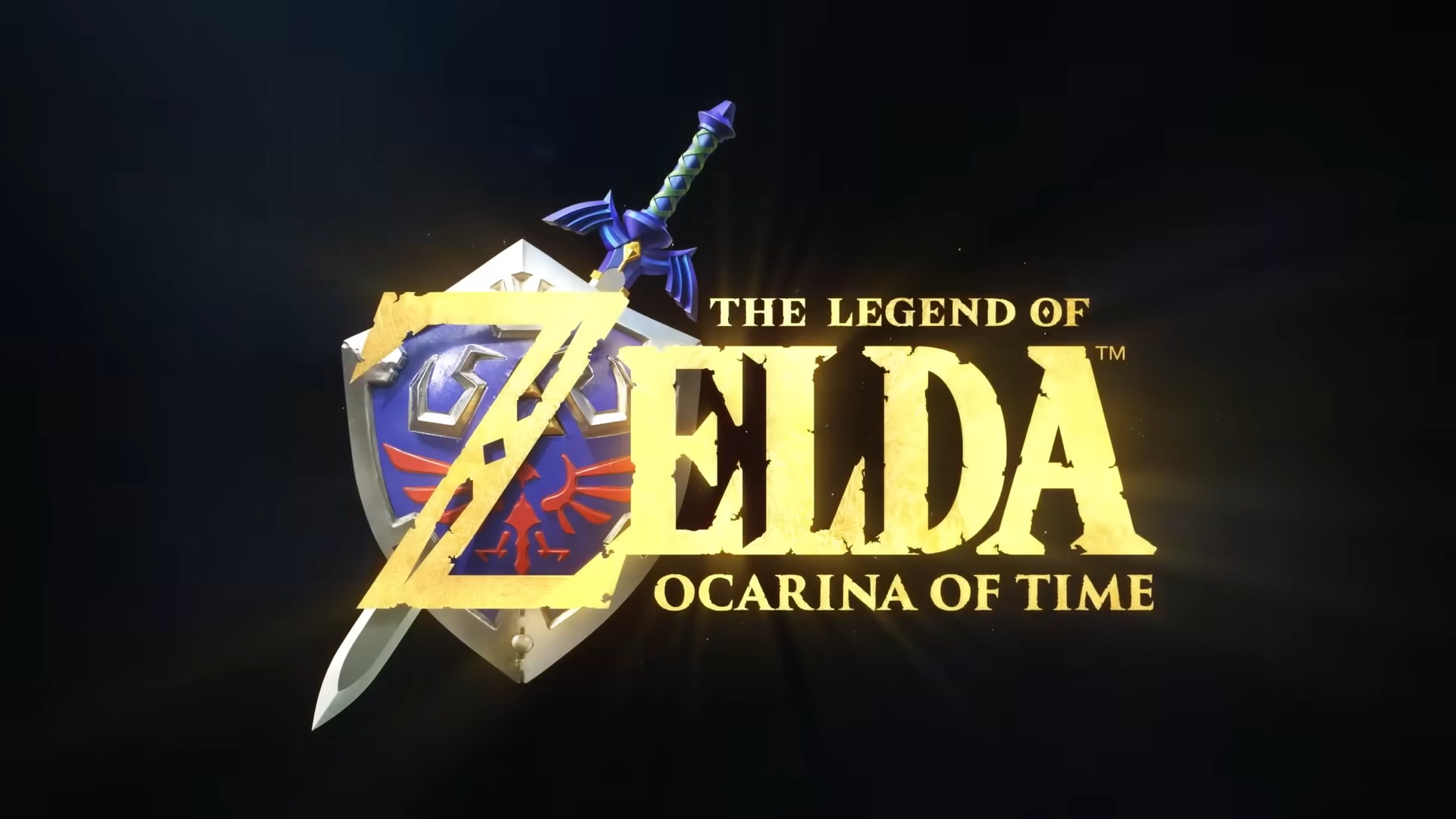
Seeing that style attached to Ocarina of Time is interesting. It helps position the remake not as a museum piece, but as a major modern Zelda release. This is not just Nintendo dusting off an old game. It is bringing one of its most important stories into the Switch 2 era.
Is Nintendo Aligning the Ocarina of Time Remake With the Zelda Movie?
One detail worth watching is how closely Nintendo’s modern Zelda branding seems to be lining up across different projects.
The live-action Legend of Zelda movie marketing has leaned into a very classic fantasy look: gold lettering, a dark background, and the Triforce sitting prominently behind the title. It is simple, dramatic, and designed to tell general audiences exactly what this world is about before they know anything else — ancient power, destiny, and myth.
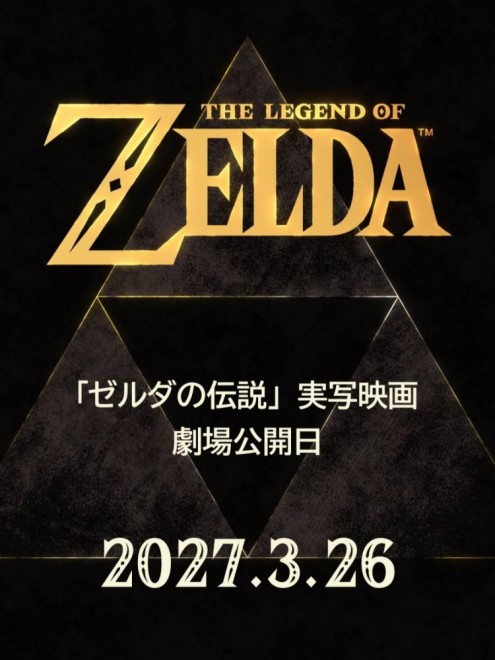
That makes the Ocarina of Time remake reveal feel even more interesting.
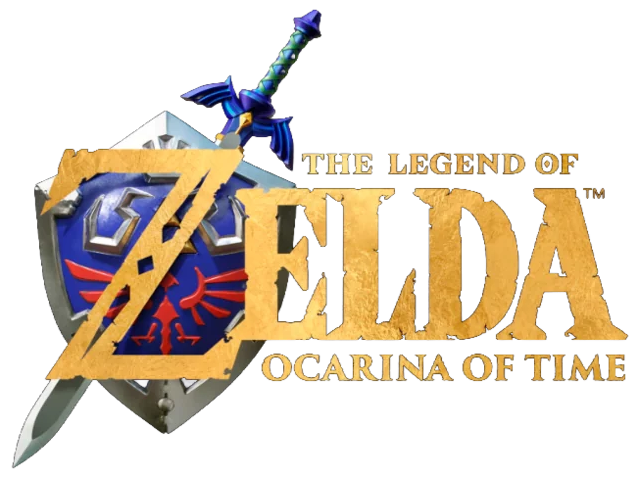
Rather than using the old Nintendo 64 logo style with the Master Sword and Hylian Shield front and center, the remake trailer appears to favor a cleaner, more mythic presentation. The focus is not on inventory iconography or familiar game imagery. It is on the legend itself: the tapestry, the creation of Hyrule, the Golden Goddesses, the Triforce, the Great Deku Tree, and the child chosen by courage.
That overlaps neatly with the kind of broad fantasy identity Nintendo would want for a movie audience.
This does not necessarily mean the Ocarina of Time remake and the Zelda movie are directly connected. Nintendo has not officially said the film is based on Ocarina of Time, and shared branding is not proof of a shared story. But the similarity in tone is hard to ignore. Both projects seem to be pushing Zelda as a sweeping high-fantasy legend rather than just a game franchise with familiar characters.
The timing also makes the comparison feel natural. With a major Zelda film on the way and Ocarina of Time returning on Switch 2, Nintendo may be using both projects to reintroduce the core image of Zelda to a wider audience: Link, Zelda, Hyrule, the Triforce, ancient prophecy, and a kingdom threatened by darkness.
If the movie does pull from Ocarina of Time, this remake suddenly makes even more sense. Ocarina is still the cleanest “classic Zelda” story for general audiences: a young Link, Princess Zelda, Ganondorf, the Master Sword, the Triforce, Hyrule Castle, the forest origin, and a coming-of-age adventure that already feels built for a fantasy film.
For now, it is best to call this a visual and thematic similarity, not confirmation. But Nintendo rarely treats Zelda branding casually. If the remake trailer and movie logo feel like they belong to the same fantasy era, that may be exactly the point.
The Shield Difference Fans Are Already Noticing
One of the biggest logo details fans have started pointing out is the Hylian Shield itself.
At a glance, the remake logo looks like classic Ocarina of Time: gold Zelda lettering, the Master Sword behind the title, and the shield sitting behind the giant “Z.” But look closer and the shield does not appear to be a one-to-one recreation of the original Nintendo 64-era design.
Instead, the remake seems to use a more modern Hylian Shield style — closer to the shield design Nintendo has leaned on in later Zelda games. The blue face, red bird crest, Triforce placement, and cleaner metal framing feel more in line with the broader modern Zelda brand than the exact shield used in the original Ocarina of Time logo.
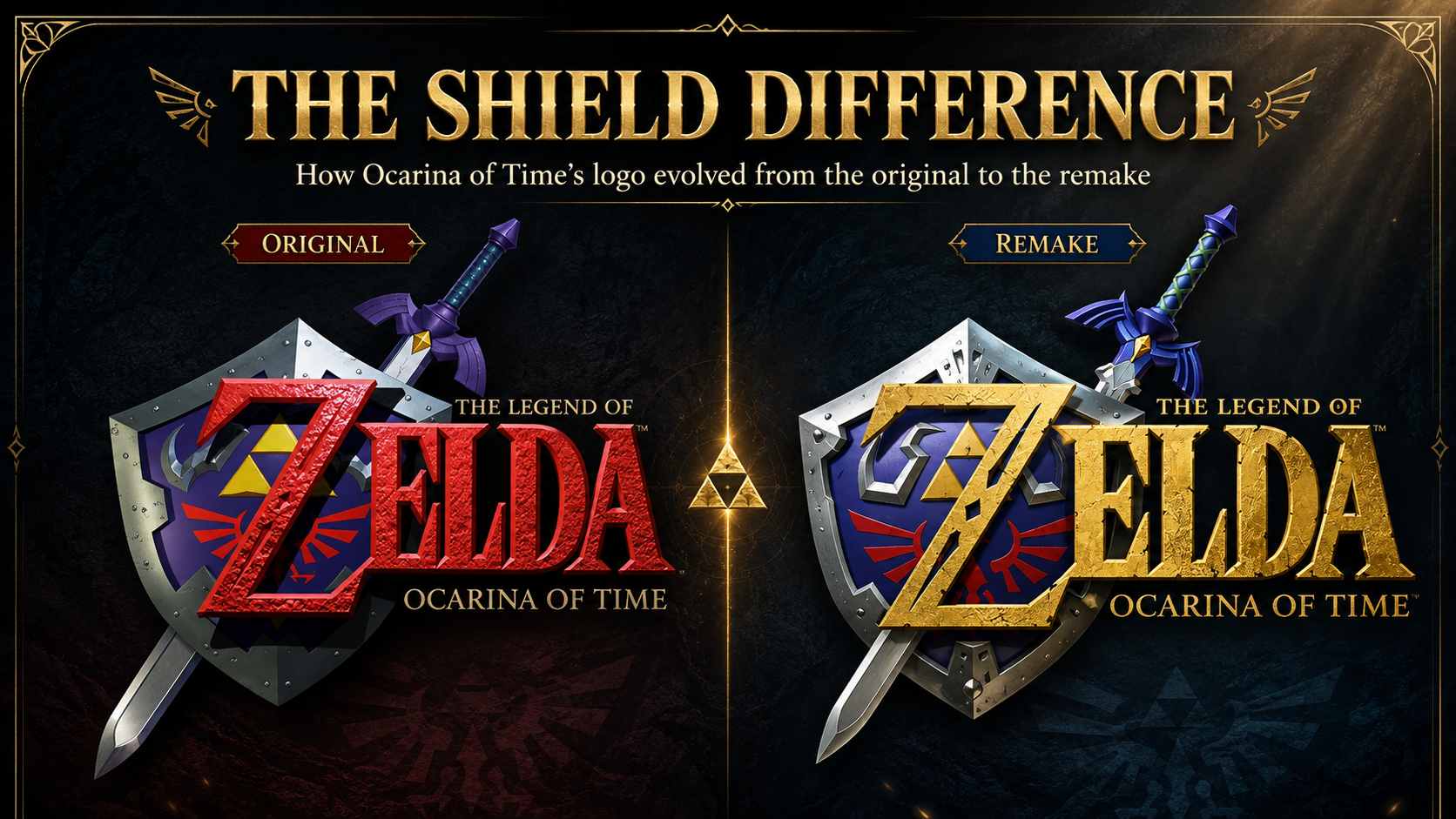
That may seem like a small change, but for Zelda fans, small logo choices matter.
The original Ocarina of Time logo is burned into the memory of anyone who grew up with the Nintendo 64 game. Its shield and sword were not just decoration; they became part of the game’s identity. So when the remake keeps the basic layout but updates the shield, it naturally raises questions. Is Nintendo simply modernizing the artwork? Is this meant to create consistency with recent Zelda branding? Or is the remake being visually positioned closer to the upcoming Zelda movie’s gold-and-Triforce identity?
Right now, the safest answer is that Nintendo is likely standardizing the series’ visual language. The remake logo still clearly evokes Ocarina of Time, but the shield looks polished for the modern era rather than frozen in 1998.
That also fits the movie comparison. The live-action Zelda movie logo does not use the shield at all, instead focusing on the gold “Zelda” wordmark and a large Triforce shape behind it. The remake logo keeps the classic sword-and-shield identity, but the updated shield design makes it feel less like a direct reuse of the old N64 branding and more like part of Nintendo’s current Zelda image.
In other words, the logo is doing two things at once: reminding fans of the original Ocarina of Time while subtly bringing it in line with the Zelda brand Nintendo is presenting today.
What We Still Don’t Know
Of course, the trailer leaves us with more questions than answers.
How faithful will the remake be to the original? Are the dungeons being redesigned? Will the world be more open? Will the story be expanded? How different will combat feel? Will Nintendo keep the original structure mostly intact, or use this as a chance to rethink parts of the game for modern players?
Right now, we do not know.
But based on this first look, Nintendo seems to understand the weight of what it is remaking. Ocarina of Time is not just beloved because of nostalgia. It is beloved because it gave Zelda a new language. It brought Hyrule into 3D, made Ganondorf feel larger than life, gave Princess Zelda one of her most memorable roles, and turned Link’s journey from childhood to adulthood into one of the defining adventures in gaming.
A Legend Reborn
The trailer ends before giving too much away, but the message is clear.
A child sleeps in Kokiri Forest. The mark of courage glows on his hand. The Great Deku Tree watches over the woods. Hyrule waits beyond the forest. And somewhere in the distance, Ganondorf’s shadow is already beginning to stretch across the kingdom.
Nintendo did not need to show much more than that.
Ocarina of Time is back, and if this trailer is any indication, the remake is not just trying to recreate the original. It is trying to make the legend feel alive again.