A new retailer listing has given Zelda fans their first real pricing clue for The Legend of Zelda: Ocarina of Time on Nintendo Switch 2, and the number is already sparking discussion.
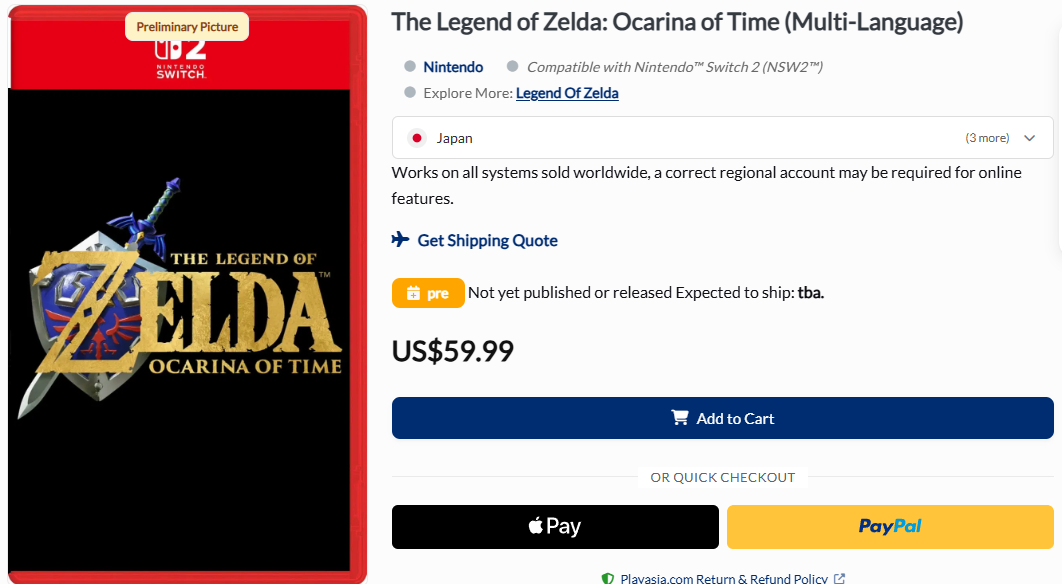
PlayAsia is currently listing The Legend of Zelda: Ocarina of Time (Multi-Language) for Nintendo Switch 2 at US$59.99, with the product marked as a preorder and the expected shipping date still listed as “tba.” The listing identifies it as a Japan version, but notes that it includes subtitle support for Japanese, English, French, Italian, German, Spanish, Portuguese, Russian, Korean, Simplified Chinese, and Traditional Chinese. It also says the game works on systems sold worldwide, though a regional account may be required for online features.
That price is notable because Nintendo has already shown that Switch 2 pricing can vary widely depending on the release. The Switch 2 editions of Breath of the Wild and Tears of the Kingdom were previously priced at $69.99 and $79.99 respectively for new physical buyers, while upgrade packs were offered separately for players who already owned the original Switch versions.
For Ocarina of Time, the $59.99 PlayAsia listing could mean several things. It may simply reflect regional import pricing, a placeholder price, or PlayAsia’s own early estimate before Nintendo confirms final pricing across all markets. But it also raises the obvious fan question: is this a massive ground-up remake, or a more conservative modernization of the Nintendo 64 classic?
Nintendo has confirmed that The Legend of Zelda: Ocarina of Time is returning for a new generation on Nintendo Switch 2 in 2026. In its Nintendo Direct recap, Nintendo described the game as the return of the “critically acclaimed Nintendo 64 classic,” saying it has been “reborn” for Switch 2. The official wording confirms the platform and release year, but it does not yet spell out every detail about how extensive the remake will be.
That leaves plenty of room for speculation. A $59.99 price point sounds more restrained than the highest Switch 2 software prices, but price alone does not tell the full story. Nintendo could still deliver a visually rebuilt version with modern controls, quality-of-life updates, improved performance, and expanded presentation while keeping the core adventure close to the original. On the other hand, fans hoping for a full-scale reimagining in the style of Final Fantasy VII Remake may want to keep expectations grounded until Nintendo shows more gameplay.
PlayAsia’s own preorder blog frames the release as a physical Nintendo Switch 2 edition and highlights the familiar core of the original adventure: Link’s journey across Hyrule, the Master Sword, the Ocarina of Time, time travel between childhood and adulthood, and iconic locations like Kokiri Forest, Hyrule Field, Death Mountain, the Temple of Time, and Hyrule Castle.
For collectors, the listing is worth watching because it specifically points to a multi-language physical version. Import-friendly Zelda releases tend to attract attention quickly, especially when English support is included. Still, fans should remember that this is a retailer listing, not a final Nintendo pricing announcement for every region.
The safest takeaway right now is simple: Ocarina of Time for Switch 2 is officially coming in 2026, PlayAsia has opened preorders for a multi-language physical version, and the current $59.99 listing is the first major hint at where the game may land in price. Whether that price reflects the remake’s true scope remains to be seen.
Until Nintendo reveals more, the mystery around this remake is almost fitting. Ocarina of Time has always been a game about stepping through a doorway into a changed world. Now Zelda fans are waiting to see just how much Hyrule has changed this time.
Ocarina of Time Remake Was the Most-Watched Trailer of Summer Game Fest 2026
The Legend of Zelda: Ocarina of Time remake did not just steal the spotlight during Nintendo’s June 2026 Direct. According to new analytics data, it may have been the single biggest trailer of the entire Summer Game Fest season.
Marketing analytics firm LevelUp reportedly found that Nintendo’s latest Direct was the most-watched gaming showcase during the Summer Game Fest window, narrowly beating the main Summer Game Fest presentation itself. Even more impressive for Zelda fans, the newly revealed Ocarina of Time remake trailer was reportedly the most-viewed game trailer across video and social media platforms.
That is a huge statement for a trailer that, frankly, did not show very much.
Nintendo Direct Reportedly Beat Summer Game Fest in Peak Viewers
According to the reported LevelUp data, Nintendo’s June 2026 Direct reached a peak of 3.8 million viewers. That put it just ahead of the main Summer Game Fest showcase, which reportedly peaked at 3.7 million viewers.
Other major presentations trailed behind. Sony’s State of Play reportedly reached 2.9 million peak viewers, while the Xbox Games Showcase reached 2.2 million. The Gears of War: E-Day Direct, which followed Xbox’s main show, reportedly peaked at 808,000 viewers.
Those are close numbers at the top, but the takeaway is clear: Nintendo had the most-watched showcase of the season.
That alone would be newsworthy. But for Zelda fans, the bigger story is what drove so much of the attention.
Ocarina of Time Was Reportedly the Most-Viewed Trailer
LevelUp’s data reportedly places The Legend of Zelda: Ocarina of Time remake at the top of the trailer rankings, with an estimated 115 million views across video and social media platforms between June 1 and June 11.
That number is especially notable because the Ocarina of Time remake trailer arrived late in the Summer Game Fest period. Nintendo’s Direct aired on June 9, meaning the Zelda trailer had far less time to rack up views than some of the other major trailers from earlier showcases.
By comparison, God of War: Laufey reportedly landed in second place with 90.5 million views, while Resident Evil Veronica followed with 70.9 million. Those are massive numbers, but Ocarina of Time still came out on top.
For a remake of a 1998 Nintendo 64 game, that says everything about the power this title still has.
A Short Teaser Was Enough
Part of what makes this so interesting is how little Nintendo actually showed.
The Ocarina of Time remake reveal was not a deep gameplay presentation. It was not a lengthy breakdown of new mechanics, dungeon changes, voice acting, combat systems, or world design. It was a teaser — a carefully controlled first look meant to confirm the project and get fans talking.
And it worked.
Even with months of rumors leading into the Direct, the official reveal still became the most-viewed trailer of the Summer Game Fest season. That suggests the demand for Ocarina of Time is not just nostalgia from longtime fans. It is mainstream curiosity. It is younger Zelda fans wanting to see what the hype is about. It is older players returning to one of the most important games ever made. It is the kind of cross-generational interest few games can create.
Why Ocarina of Time Still Pulls Huge Numbers
Ocarina of Time is not just another Zelda game. It is one of the defining releases in Nintendo history.
Originally released for the Nintendo 64 in 1998, Ocarina of Time helped establish the blueprint for 3D adventure games. Its lock-on targeting, dungeon design, cinematic pacing, music, and time-travel structure shaped not only Zelda, but the wider action-adventure genre.
For many players, it remains the Zelda game. Even fans who came in through Breath of the Wild or Tears of the Kingdom know Ocarina of Time by reputation. The Temple of Time, Hyrule Field, Ganondorf, Epona, the Master Sword, Navi, the ocarina songs, and the jump from child Link to adult Link are all deeply embedded in Nintendo history.
That is why a remake hits differently.
A new trailer for an upcoming game can generate excitement. A remake of Ocarina of Time generates memory, curiosity, debate, fear, hope, and comparison all at once. Fans are not just asking whether the game looks good. They are asking whether Nintendo can protect the feel of one of the most beloved games ever made while bringing it into the Switch 2 era.
Views Do Not Mean Everyone Agrees
The huge view count does not mean every fan reaction has been identical.
Some fans are thrilled just to see Nintendo finally revisit Ocarina of Time in a major way. Others are cautious, especially because the reveal trailer was so brief. There are still plenty of unanswered questions: how much of the world is being rebuilt, whether the dungeon structure is unchanged, how modern the combat will feel, and whether Nintendo will keep the original’s darker atmosphere intact.
There is also the question of what “remake” really means here. Fans have seen everything from faithful visual rebuilds to complete reinterpretations use that label. Until Nintendo shows more gameplay, nobody can say exactly how far this version goes.
Still, the viewership numbers show that the audience is paying attention.
Zelda Remains One of Nintendo’s Biggest Weapons
The timing also matters. Nintendo Switch 2 is still building its early identity, and major exclusives are crucial. A full remake of Ocarina of Time gives Nintendo something rare: a game that appeals to longtime fans, lapsed Nintendo players, younger Zelda fans, and people who simply know the original by reputation.
That kind of recognition is hard to buy.
The Direct’s reported viewership success also shows that Nintendo does not need to be officially part of the main Summer Game Fest showcase to dominate the surrounding conversation. By holding its own presentation and ending with Zelda, Nintendo managed to become one of the biggest stories of the week.
And within that Direct, Ocarina of Time became the clear centerpiece.
The Trailer Views Tell the Real Story
Nintendo has not revealed everything about The Legend of Zelda: Ocarina of Time remake yet. We still need a proper gameplay breakdown, a firm release date, and a clearer sense of how faithful or ambitious this remake will be.
But the early numbers already tell us something important.
Nearly three decades after its original release, Ocarina of Time can still command the attention of the gaming world. A short teaser was enough to beat some of the biggest modern game trailers of the season. That is not normal nostalgia. That is legacy.
For Zelda fans, it is another reminder of just how powerful this game remains.
The Door of Time has opened again, and judging by the numbers, millions of players are ready to walk through it.
Ocarina of Time Remake Trailer Breakdown: Nintendo’s “Legend Reborn” Begins in the Forest
After years of rumors, leaks, wish lists, and fans reading way too much into every Nintendo Direct rumor, The Legend of Zelda: Ocarina of Time is officially coming back as a full remake for Nintendo Switch 2.
Not a remaster. Not a cleaned-up port. Not the 3DS version running at a higher resolution. Nintendo is treating this as a true remake, and the reveal trailer makes that clear without needing to show much at all.
The trailer is short — under two minutes — but it is packed with little details for Zelda fans to pick apart. Rather than opening with combat, dungeons, or a sweeping shot of Hyrule Field, Nintendo starts somewhere quieter and more mythic: with a tapestry.
That choice says a lot.
Hyrule as a Legend, Not Just a Setting
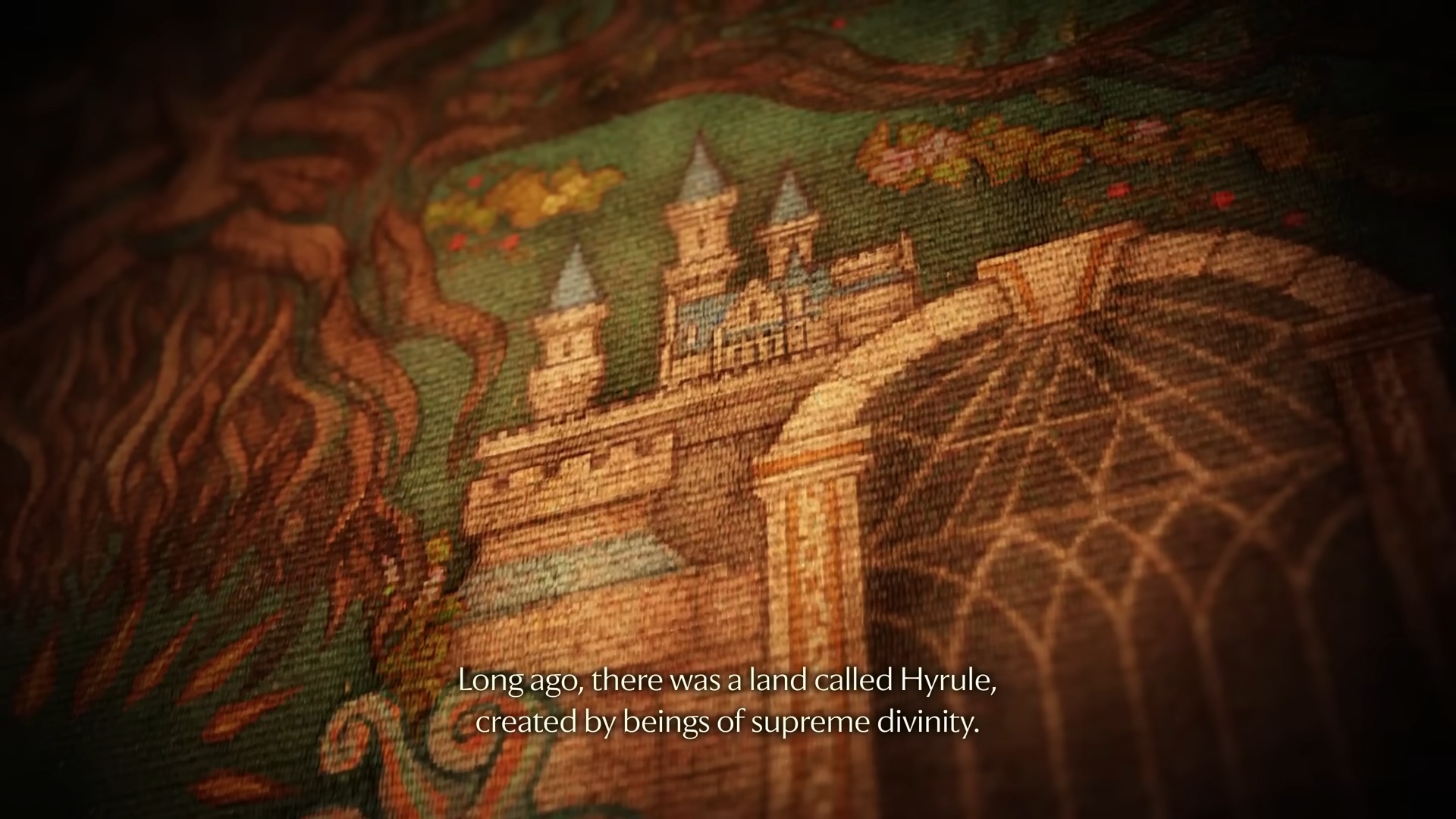
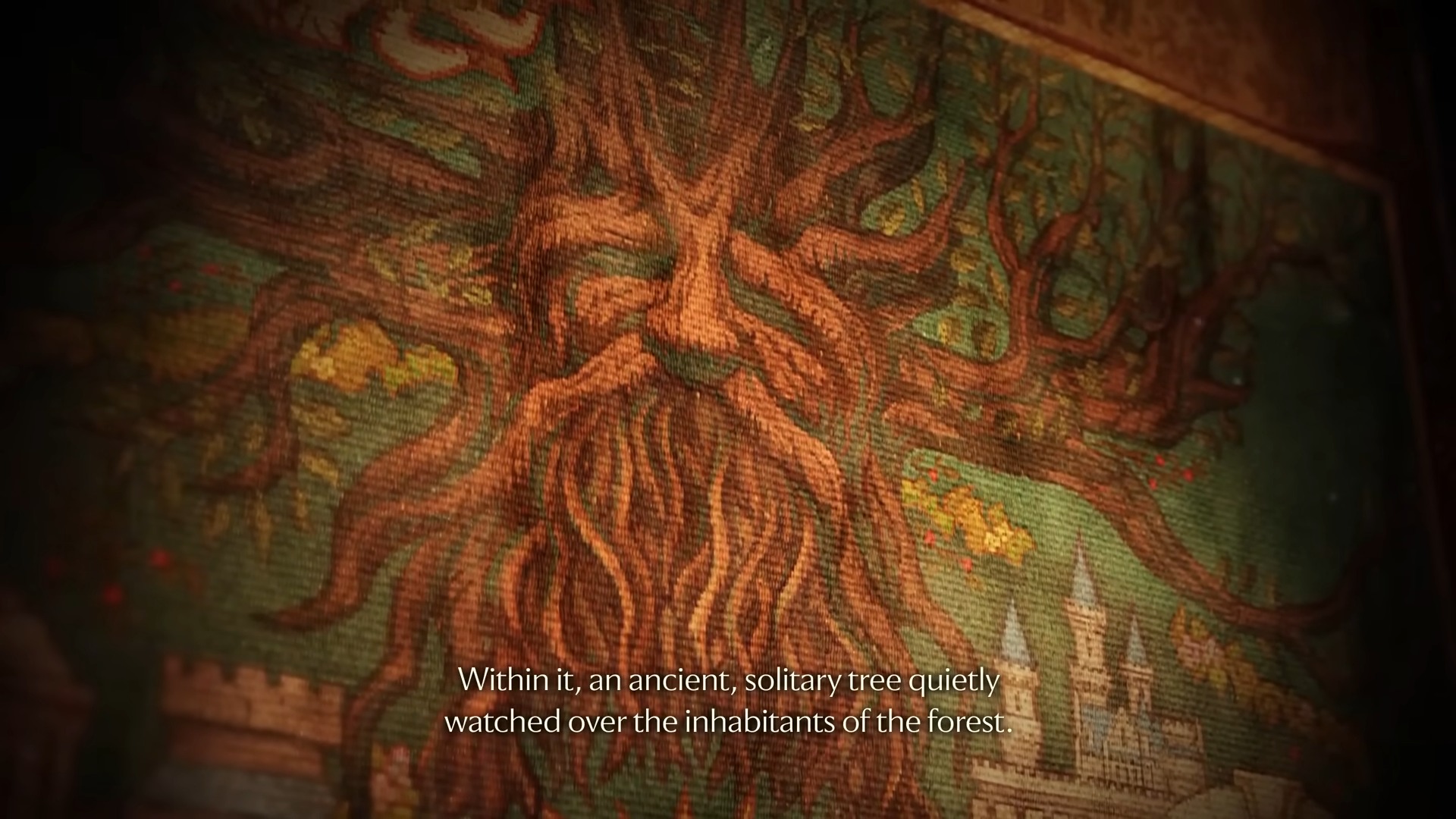
The first thing we see is a woven depiction of Hyrule, almost like the story is being remembered centuries later. It gives the trailer the feeling of an old legend being retold, which is perfect for Ocarina of Time. This is the game that shaped so much of Zelda’s history, both in-universe and for players in the real world.
The narration describes Hyrule as a land created by divine beings, which longtime fans will immediately recognize as a reference to the three Golden Goddesses: Din, Nayru, and Farore. They created the land, gave order to the world, and brought life into existence before leaving behind the Triforce.
That opening matters because Ocarina of Time is not just another adventure in the Zelda timeline. It is one of the most important turning points in the entire series. The events of this story echo through multiple timelines, and the way Hyrule remembers those events becomes part of the legend itself.
So opening the remake with the story literally woven into history feels intentional.
The Forest at the Edge of the Kingdom
From there, the trailer moves toward the edge of Hyrule, to a small forest watched over by an ancient tree. There is no mystery about what this is: we are heading back to Kokiri Forest and the Great Deku Tree.
The music gives it away before the visuals even need to. A version of Saria’s Song plays as the narration describes the forest, instantly bringing back the Lost Woods. It is one of those melodies Zelda fans can recognize in a few notes, and hearing it here is enough to hit the nostalgia button hard.
The Great Deku Tree, of course, is the guardian of the forest and the protector of the Kokiri. In the original Ocarina of Time, Kokiri Forest is peaceful, innocent, and almost completely sealed off from the outside world. It is the place where Link begins his life before everything gets bigger, darker, and much more dangerous.
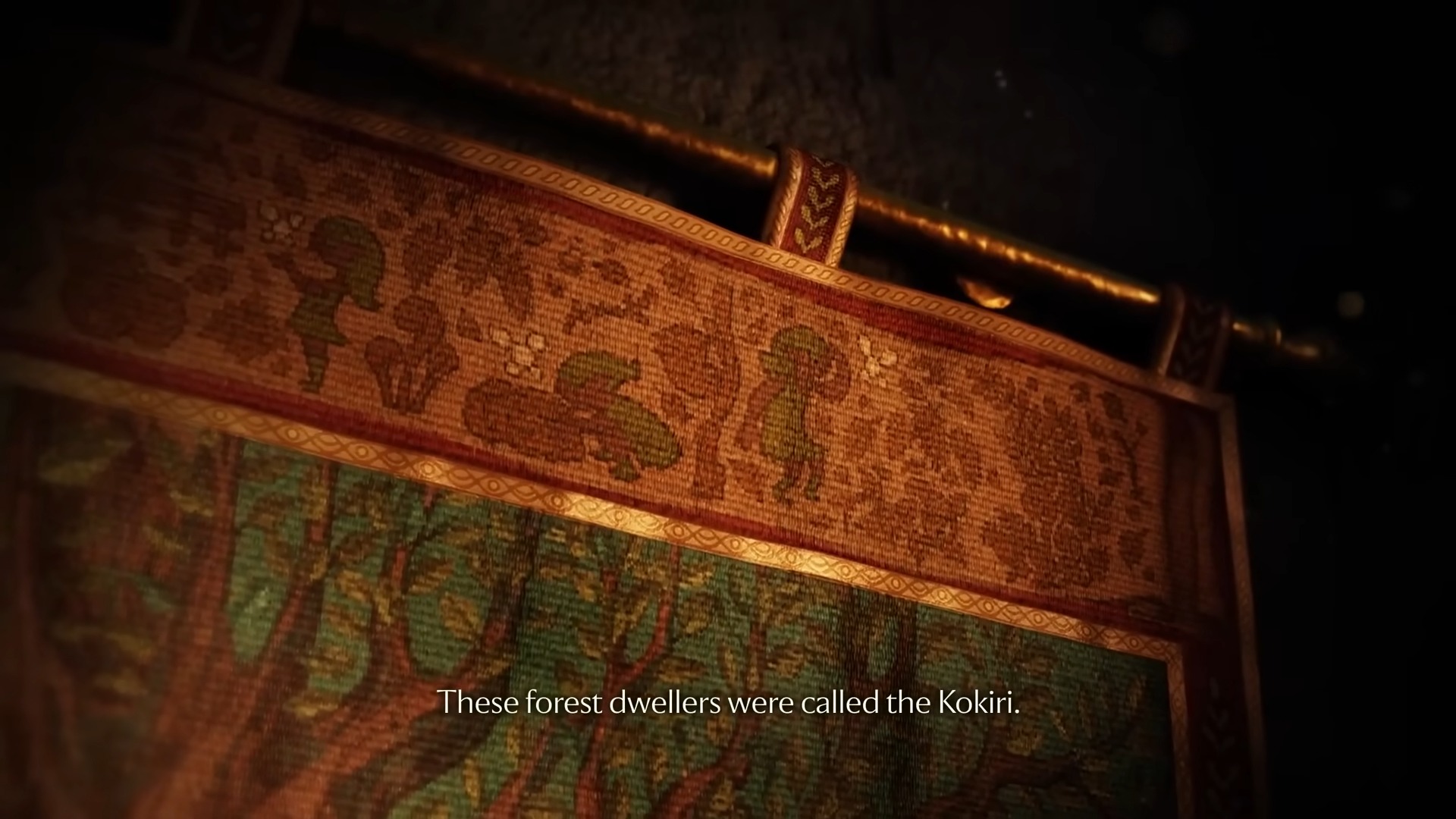
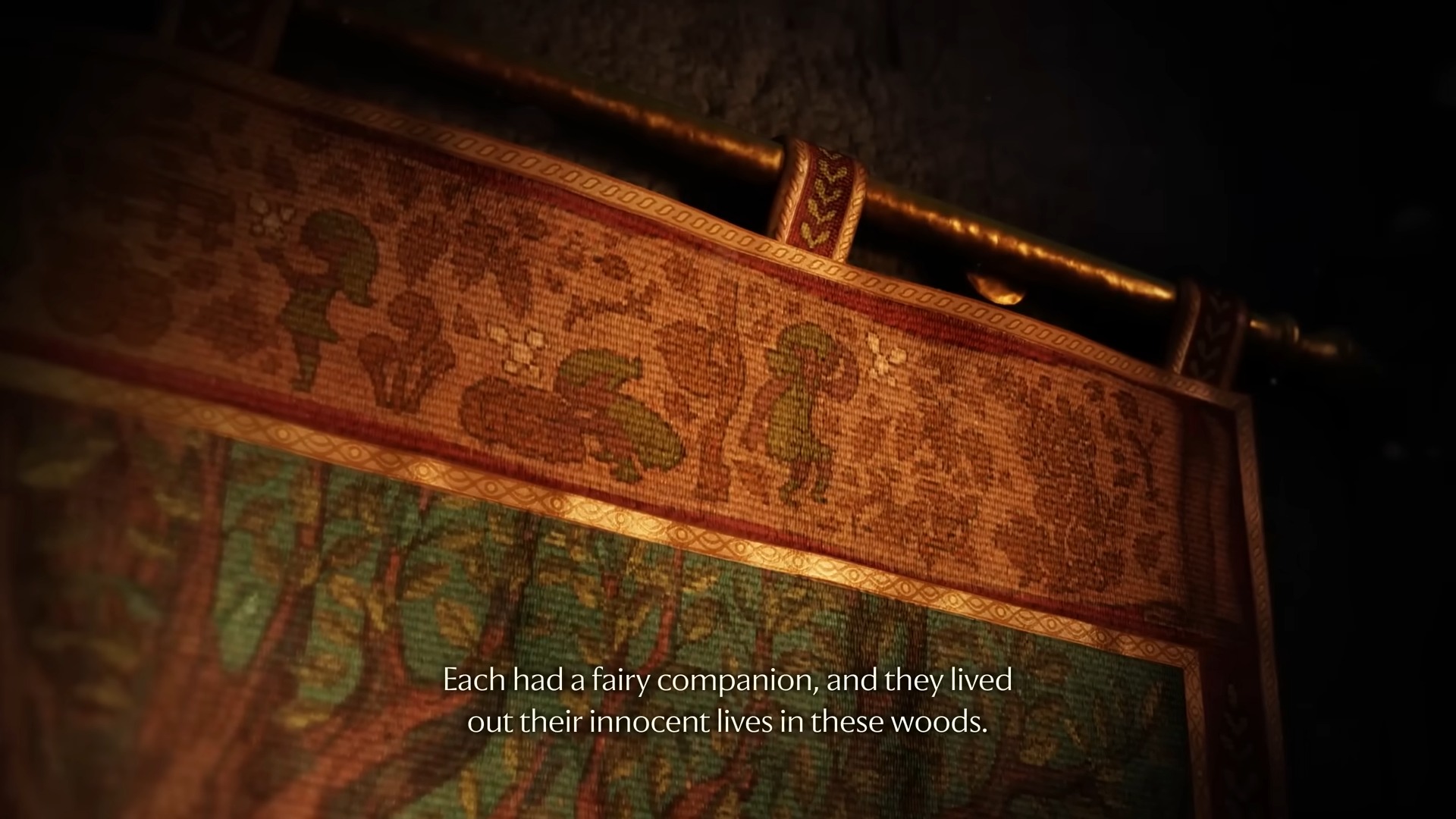
The tapestry shows the Kokiri living their normal lives, and there are some fun little details tucked into the scene. You can spot forest children doing small everyday tasks, and one of them appears to be holding a short blade, likely a nod to the Kokiri Sword.
It is a small touch, but that is exactly the kind of thing Zelda fans are going to freeze-frame and obsess over.
Link, the Child Who Doesn’t Belong
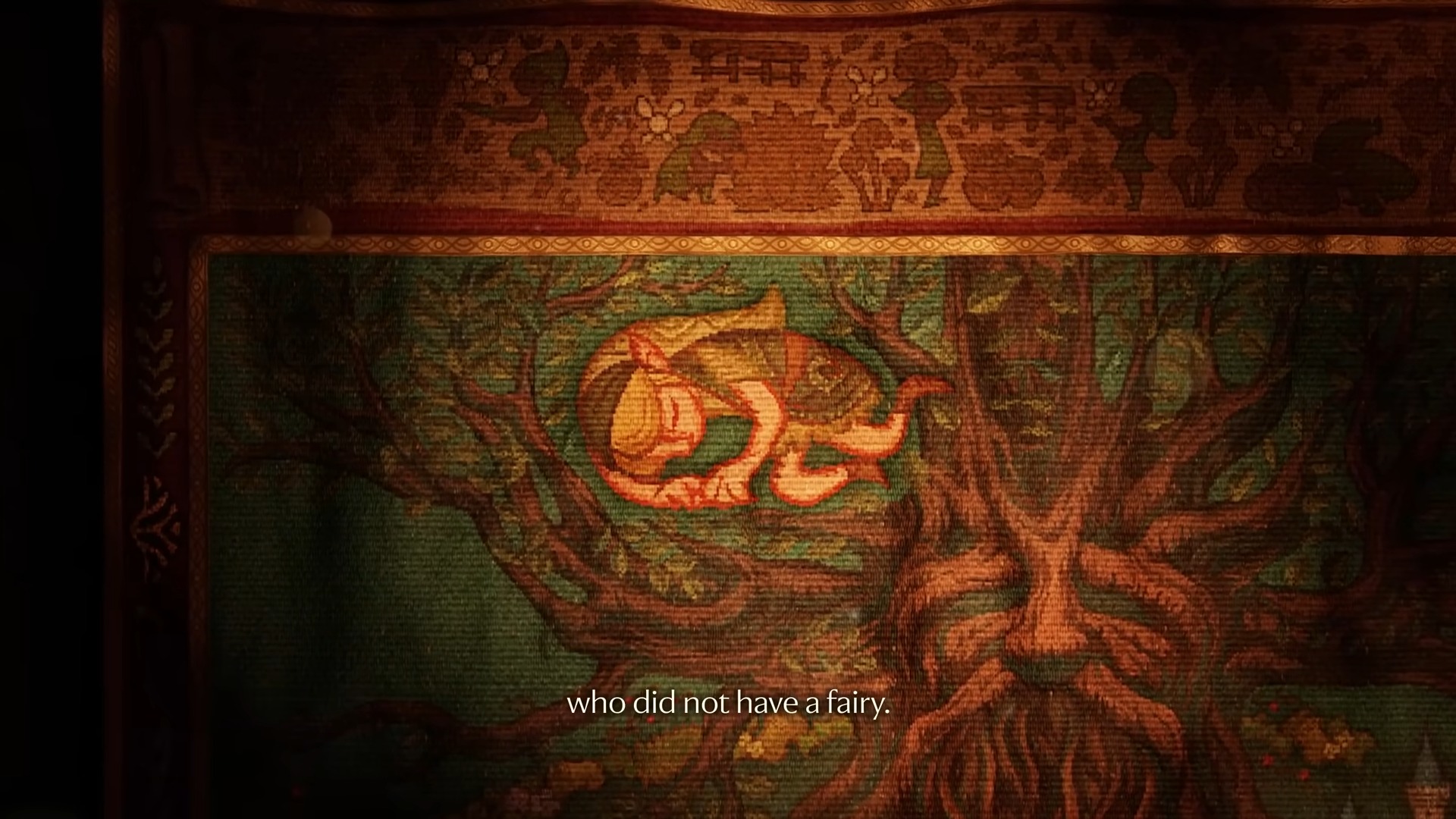
The most important detail in the tapestry is Link.
The Kokiri are shown with fairy companions, just as they are in the original game. Every Kokiri has one. That is part of what makes them Kokiri.
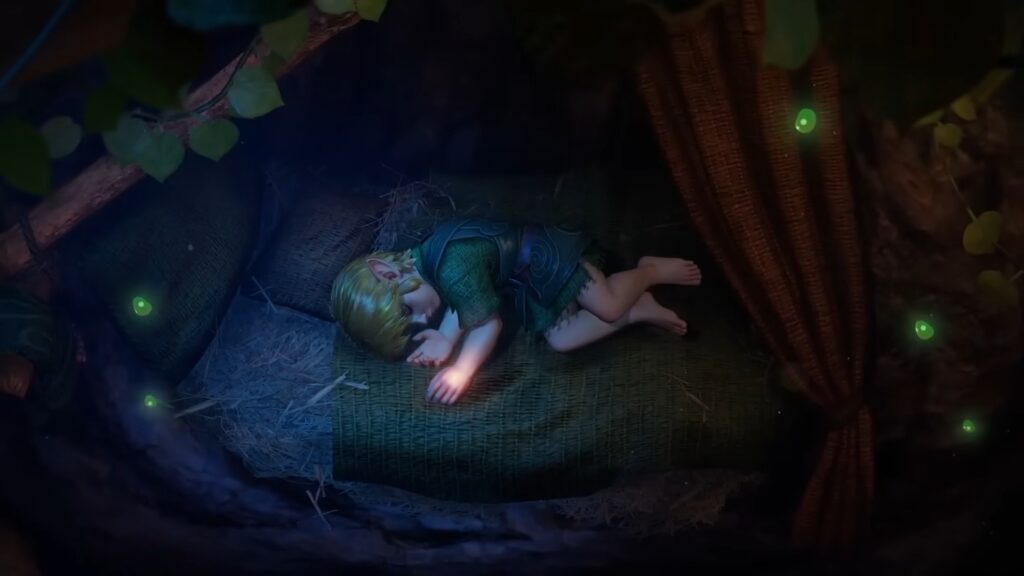
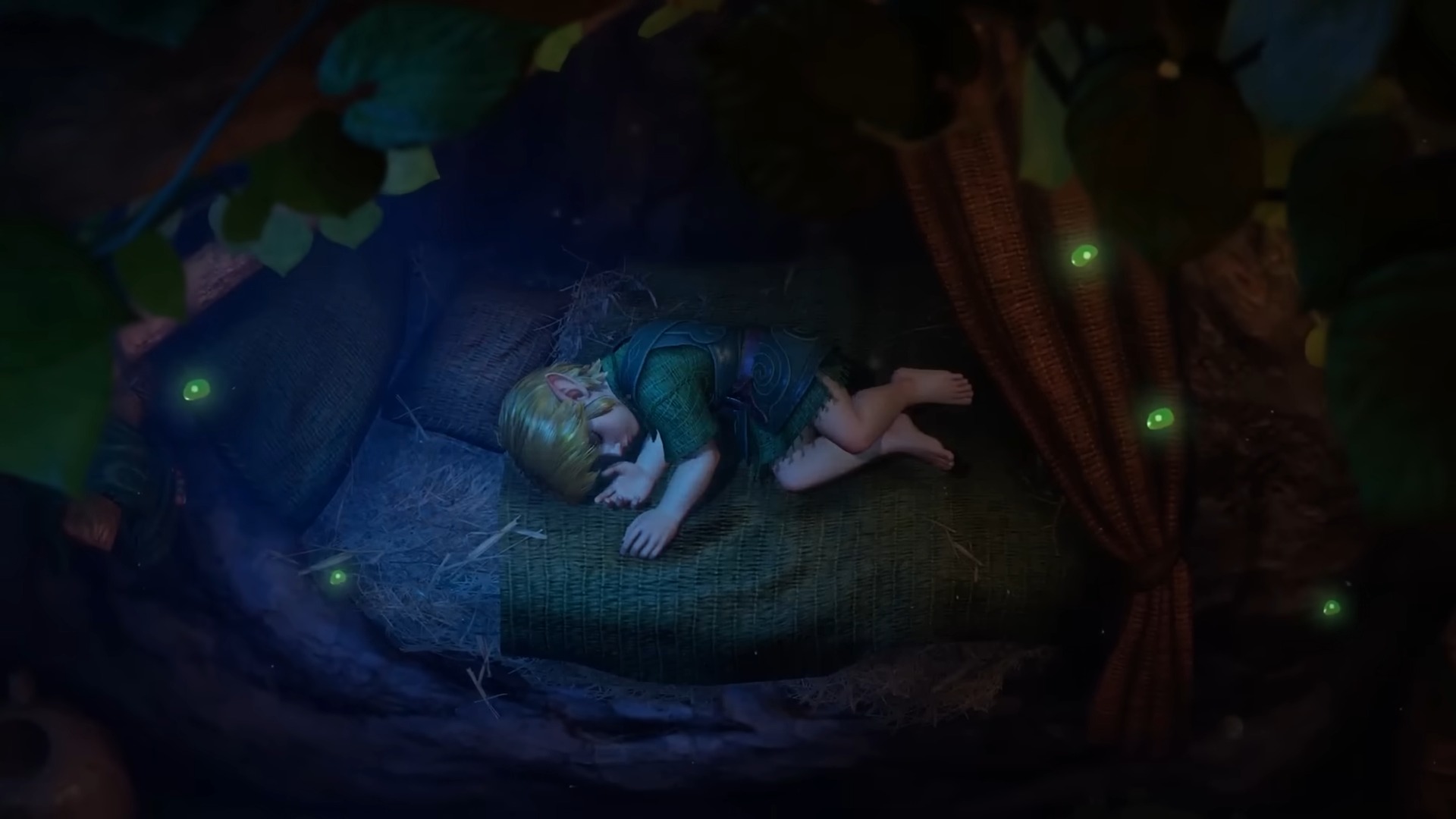
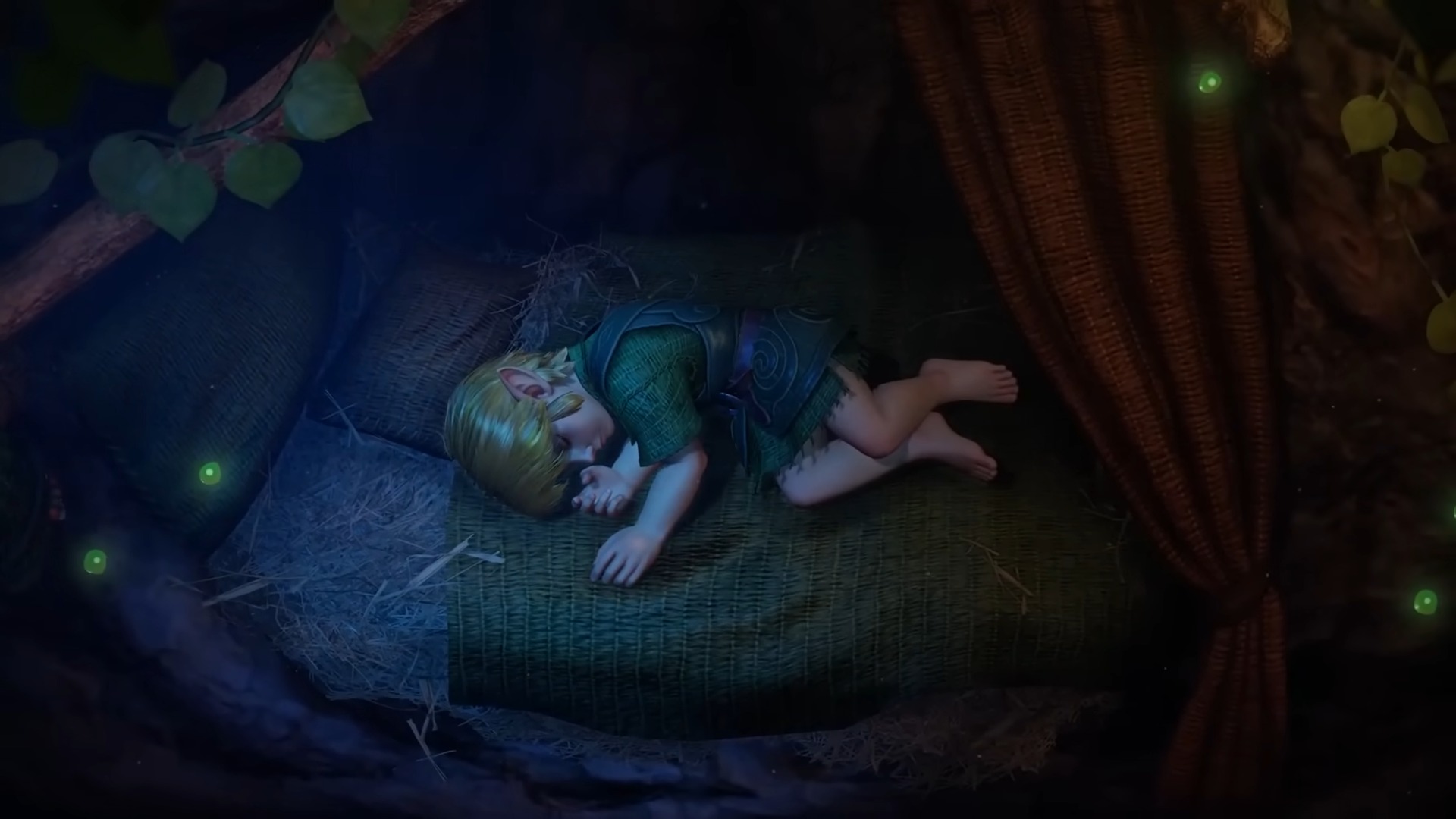
But Link is separate from the others, curled up asleep without a fairy beside him.
That detail cuts straight to the heart of Ocarina of Time’s opening. Link grows up in Kokiri Forest, wears the same green clothes, and lives among the forest children, but he is always different. The original game makes that clear immediately: he is the boy without a fairy.
In the remake trailer, Nintendo seems to be emphasizing that isolation right from the start. Link is not standing heroically with a sword. He is not posing like the chosen one. He is just a sleeping child, alone, unaware of what is coming.
Then the trailer fades from the tapestry into the actual Kokiri Forest, where we see Link asleep in his treehouse. It mirrors the opening of the original game, where Link is troubled by prophetic dreams — dreams tied to the darkness spreading across Hyrule.
That is a strong place to begin, because Ocarina of Time’s story is built around fate, prophecy, and the idea that Link, Zelda, and Ganondorf are all being pulled toward the same disaster before they fully understand it.
Young Link’s New Design
The trailer gives us our first proper look at young Link in the remake, and Nintendo seems to be walking a careful line. He looks new, but not unfamiliar.
One thing fans noticed right away is that Link is not wearing his pointed green cap while sleeping. That may mean absolutely nothing — he could have simply taken it off in his own home — but it does make the scene feel a little more natural. This version of Link looks less like a mascot model and more like a kid who actually lives in the forest.
His outfit also has more texture than the old version. The green tunic looks like it could be made from natural fibers, which fits the Kokiri setting. There also appears to be another layer over it, possibly leather, with patterns that feel connected to the forest and Kokiri designs seen throughout the series.
It is still classic Link, just with enough detail to make him feel like he belongs in a living, breathing version of Kokiri Forest.
The Triforce Mark on Link’s Hand
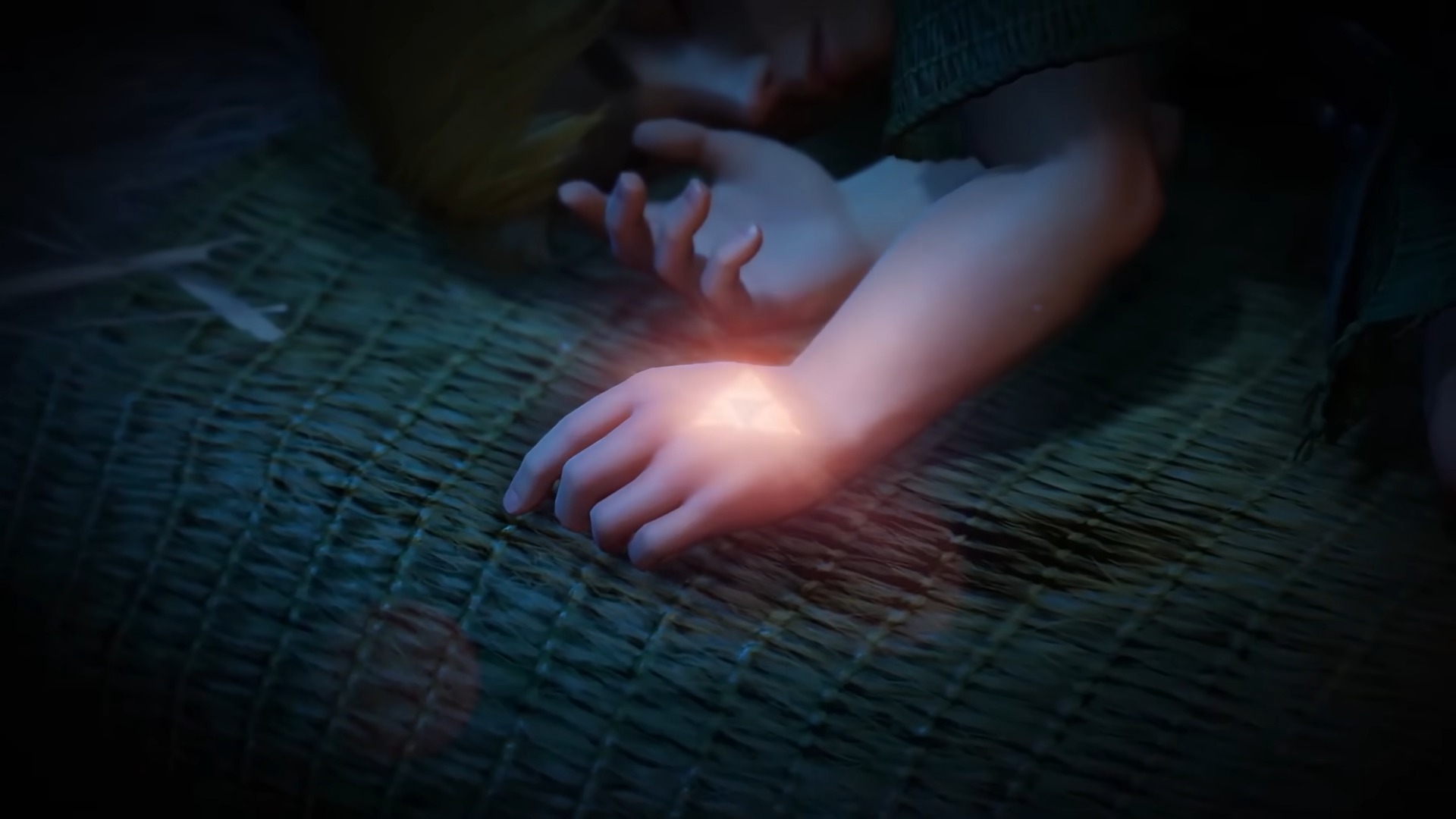
One of the biggest talking points in the trailer is the glowing mark on Link’s hand.
We see the Triforce symbol appear, with the lower-right triangle shining brightest. That represents the Triforce of Courage, the piece associated with Link.
At first glance, this might seem odd. In the original Ocarina of Time, Link does not possess the Triforce of Courage at the beginning of the story. Ganondorf eventually enters the Sacred Realm and tries to claim the full Triforce, but because his heart is unbalanced, it splits. Ganondorf receives Power, Zelda receives Wisdom, and Link receives Courage.
So why would Link already have the mark?
The best explanation is that this is not necessarily the Triforce itself. It may be a sign of worthiness or destiny.
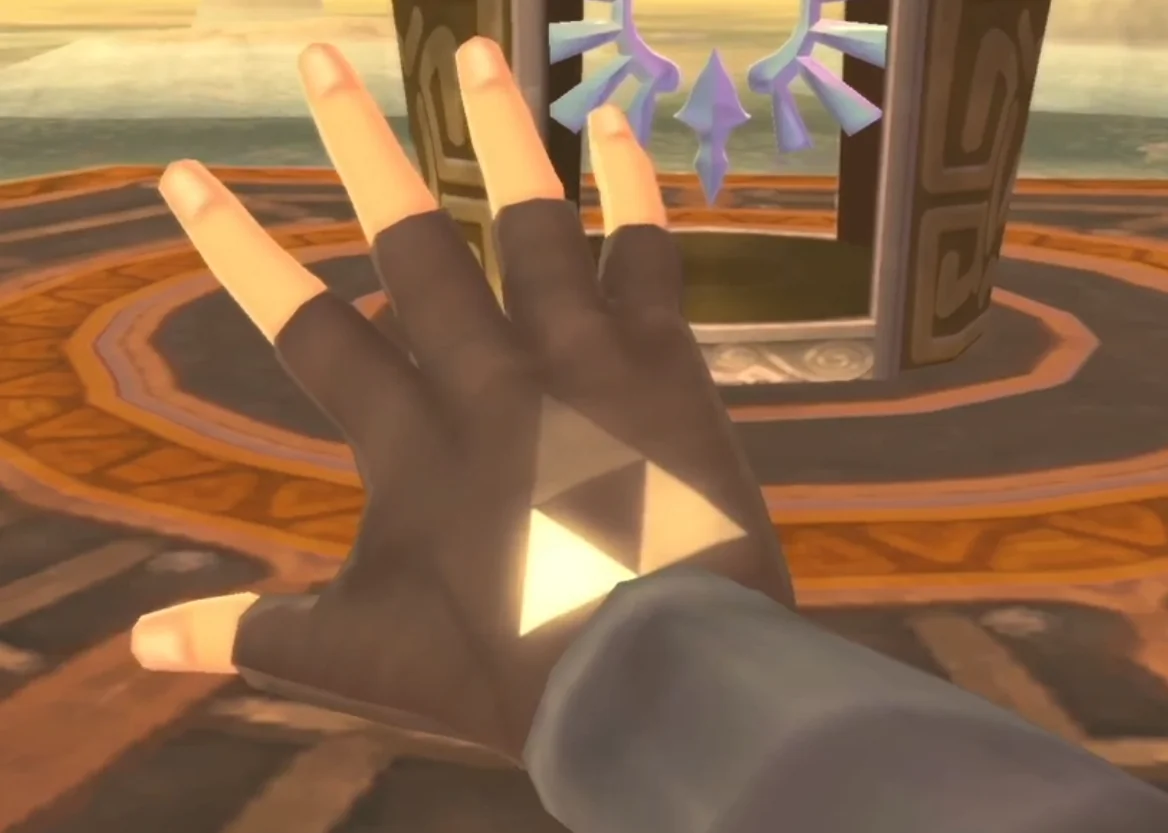
Zelda has done this before. In Zelda II: The Adventure of Link, the mark appears on Link’s hand before he claims the Triforce of Courage. In Skyward Sword, Link also receives the Triforce mark as proof that he has grown into someone worthy of wielding its power.
Link’s mark in Skyward Sword
That may be what we are seeing here. Link’s courage is already within him, even if his role in the larger conflict has not fully begun.
There is also something interesting about the timing. If the mark appears while Link is dreaming of Ganondorf, it hints that their connection is already forming. Link, Zelda, and Ganondorf are bound together by the Triforce long before the story reaches its biggest moments.
A Quiet Trailer With a Big Message
What is interesting about this trailer is how little Nintendo actually shows.
We do not see adult Link. We do not see Zelda. We do not see Ganondorf clearly. There are no dungeon reveals, no boss fights, no Master Sword pull, no Epona, and no big montage of famous locations.
Nintendo could have easily made this trailer a nostalgia explosion. Instead, it chose restraint.
That makes the reveal feel more confident. The trailer does not need to prove why Ocarina of Time matters. It assumes you already know. Rather than shouting, “Remember this?” every five seconds, it carefully reintroduces the world through myth, music, and mood.
For a game as important as Ocarina of Time, that is probably the right call.
The Return of Hyrule Field
Near the end of the trailer, the music begins to shift toward the feeling of Hyrule Field. That is another smart choice, because the first time players stepped out of Kokiri Forest and into Hyrule Field in 1998 was unforgettable.
It is hard to overstate how massive that moment felt at the time. The world suddenly opened up. The adventure stopped being a small forest mystery and became something much bigger.
The trailer seems to be building toward that same feeling. Link is still asleep in the forest, but the music is already pointing beyond the trees.
The adventure is waiting.
A Modern Zelda Logo for a Classic Story
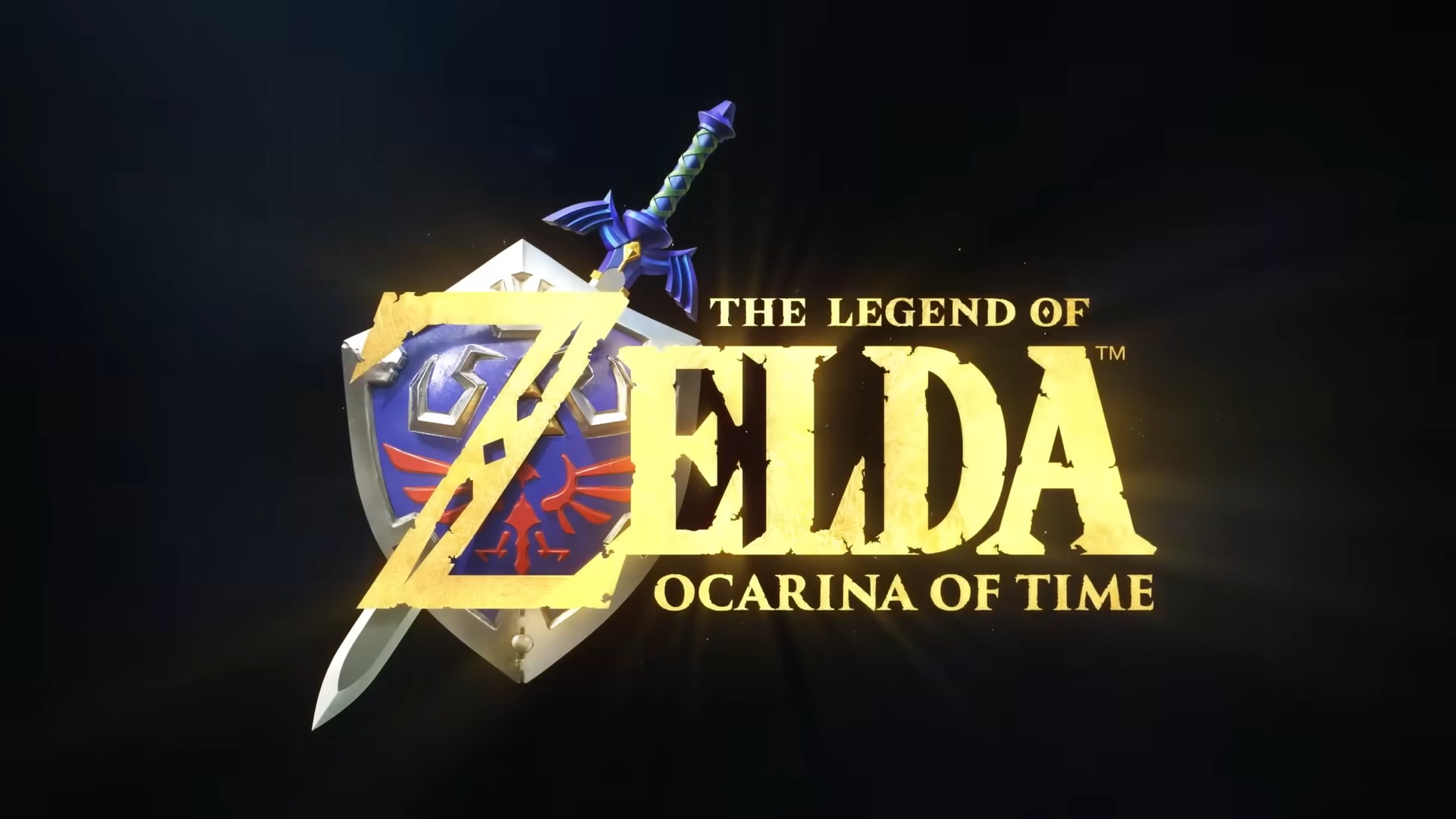
The logo reveal uses the newer distressed Zelda branding that Nintendo has leaned on in recent years. It first felt tied closely to Breath of the Wild, but it has since become part of the broader modern Zelda identity.
Seeing that style attached to Ocarina of Time is interesting. It helps position the remake not as a museum piece, but as a major modern Zelda release. This is not just Nintendo dusting off an old game. It is bringing one of its most important stories into the Switch 2 era.
Is Nintendo Aligning the Ocarina of Time Remake With the Zelda Movie?
One detail worth watching is how closely Nintendo’s modern Zelda branding seems to be lining up across different projects.
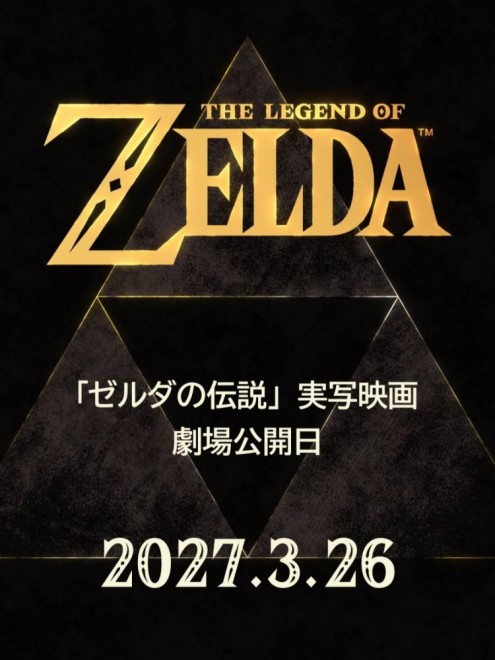
The live-action Legend of Zelda movie marketing has leaned into a very classic fantasy look: gold lettering, a dark background, and the Triforce sitting prominently behind the title. It is simple, dramatic, and designed to tell general audiences exactly what this world is about before they know anything else — ancient power, destiny, and myth.
That makes the Ocarina of Time remake reveal feel even more interesting.
Rather than using the old Nintendo 64 logo style with the Master Sword and Hylian Shield front and center, the remake trailer appears to favor a cleaner, more mythic presentation. The focus is not on inventory iconography or familiar game imagery. It is on the legend itself: the tapestry, the creation of Hyrule, the Golden Goddesses, the Triforce, the Great Deku Tree, and the child chosen by courage.
That overlaps neatly with the kind of broad fantasy identity Nintendo would want for a movie audience.
This does not necessarily mean the Ocarina of Time remake and the Zelda movie are directly connected. Nintendo has not officially said the film is based on Ocarina of Time, and shared branding is not proof of a shared story. But the similarity in tone is hard to ignore. Both projects seem to be pushing Zelda as a sweeping high-fantasy legend rather than just a game franchise with familiar characters.
The timing also makes the comparison feel natural. With a major Zelda film on the way and Ocarina of Time returning on Switch 2, Nintendo may be using both projects to reintroduce the core image of Zelda to a wider audience: Link, Zelda, Hyrule, the Triforce, ancient prophecy, and a kingdom threatened by darkness.
If the movie does pull from Ocarina of Time, this remake suddenly makes even more sense. Ocarina is still the cleanest “classic Zelda” story for general audiences: a young Link, Princess Zelda, Ganondorf, the Master Sword, the Triforce, Hyrule Castle, the forest origin, and a coming-of-age adventure that already feels built for a fantasy film.
For now, it is best to call this a visual and thematic similarity, not confirmation. But Nintendo rarely treats Zelda branding casually. If the remake trailer and movie logo feel like they belong to the same fantasy era, that may be exactly the point.
The Shield Difference Fans Are Already Noticing
One of the biggest logo details fans have started pointing out is the Hylian Shield itself.
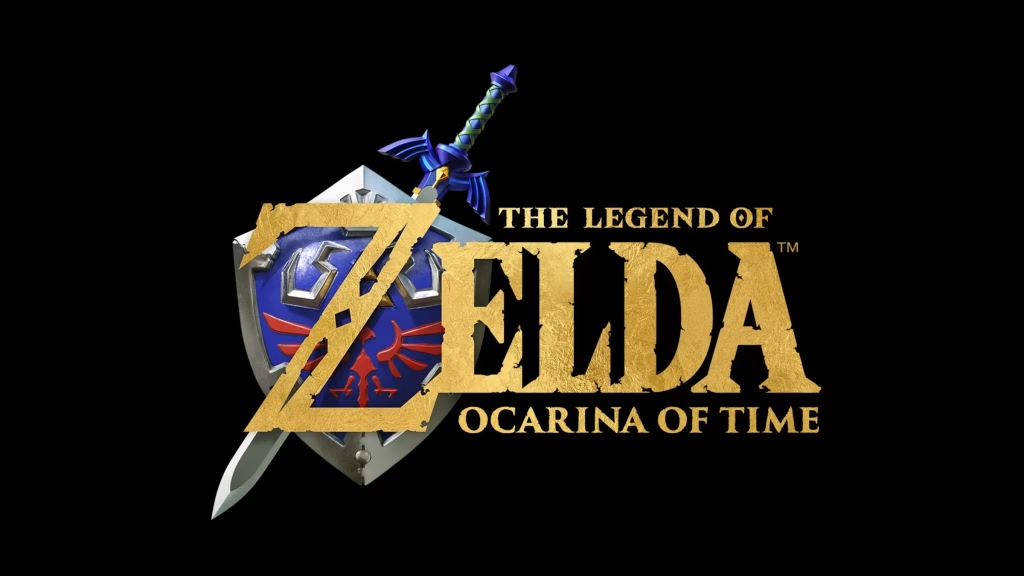
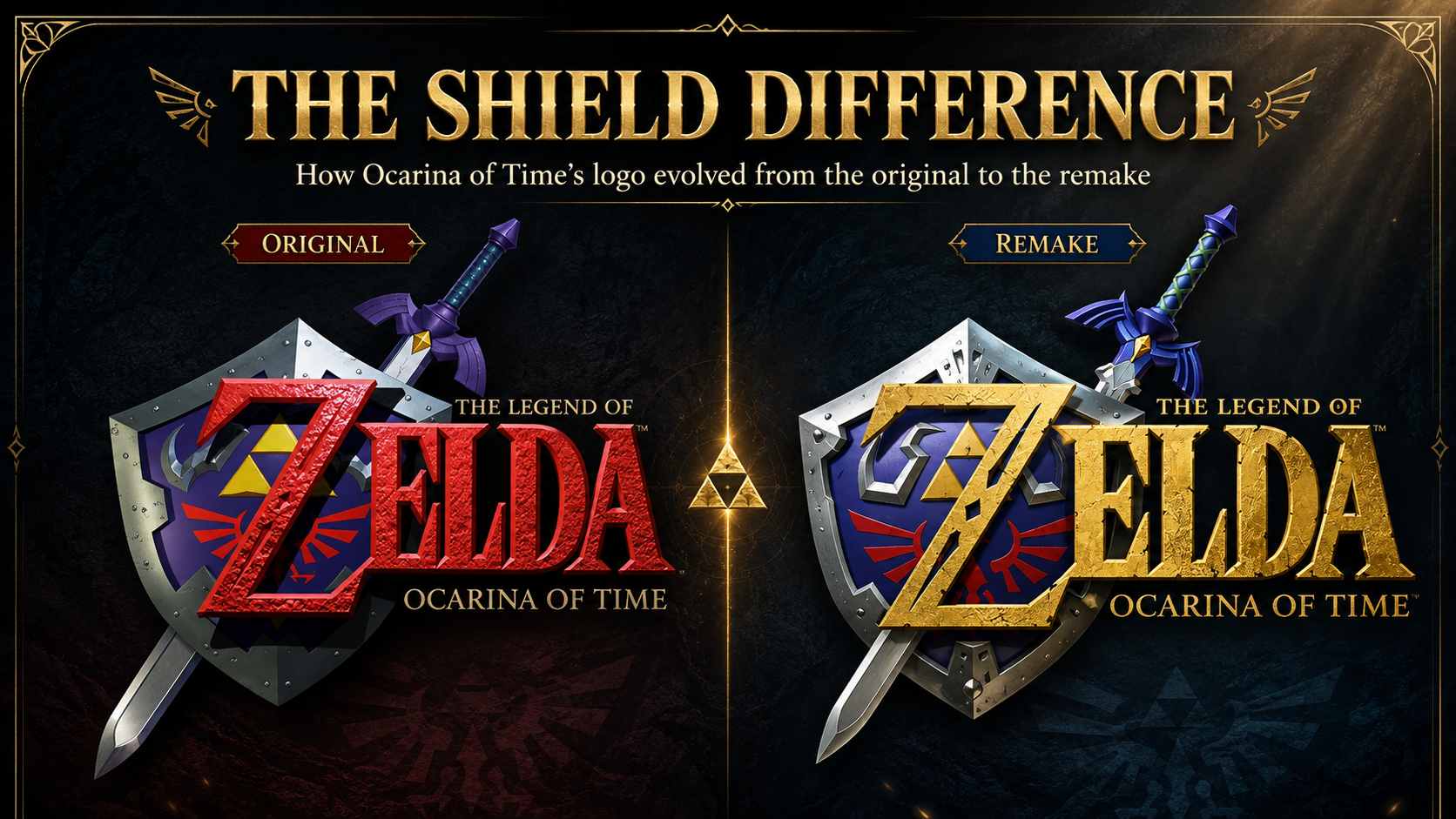
At a glance, the remake logo looks like classic Ocarina of Time: gold Zelda lettering, the Master Sword behind the title, and the shield sitting behind the giant “Z.” But look closer and the shield does not appear to be a one-to-one recreation of the original Nintendo 64-era design.
Instead, the remake seems to use a more modern Hylian Shield style — closer to the shield design Nintendo has leaned on in later Zelda games. The blue face, red bird crest, Triforce placement, and cleaner metal framing feel more in line with the broader modern Zelda brand than the exact shield used in the original Ocarina of Time logo.
That may seem like a small change, but for Zelda fans, small logo choices matter.
The original Ocarina of Time logo is burned into the memory of anyone who grew up with the Nintendo 64 game. Its shield and sword were not just decoration; they became part of the game’s identity. So when the remake keeps the basic layout but updates the shield, it naturally raises questions. Is Nintendo simply modernizing the artwork? Is this meant to create consistency with recent Zelda branding? Or is the remake being visually positioned closer to the upcoming Zelda movie’s gold-and-Triforce identity?
Right now, the safest answer is that Nintendo is likely standardizing the series’ visual language. The remake logo still clearly evokes Ocarina of Time, but the shield looks polished for the modern era rather than frozen in 1998.
That also fits the movie comparison. The live-action Zelda movie logo does not use the shield at all, instead focusing on the gold “Zelda” wordmark and a large Triforce shape behind it. The remake logo keeps the classic sword-and-shield identity, but the updated shield design makes it feel less like a direct reuse of the old N64 branding and more like part of Nintendo’s current Zelda image.
In other words, the logo is doing two things at once: reminding fans of the original Ocarina of Time while subtly bringing it in line with the Zelda brand Nintendo is presenting today.
What We Still Don’t Know
Of course, the trailer leaves us with more questions than answers.
How faithful will the remake be to the original? Are the dungeons being redesigned? Will the world be more open? Will the story be expanded? How different will combat feel? Will Nintendo keep the original structure mostly intact, or use this as a chance to rethink parts of the game for modern players?
Right now, we do not know.
But based on this first look, Nintendo seems to understand the weight of what it is remaking. Ocarina of Time is not just beloved because of nostalgia. It is beloved because it gave Zelda a new language. It brought Hyrule into 3D, made Ganondorf feel larger than life, gave Princess Zelda one of her most memorable roles, and turned Link’s journey from childhood to adulthood into one of the defining adventures in gaming.
A Legend Reborn
The trailer ends before giving too much away, but the message is clear.
A child sleeps in Kokiri Forest. The mark of courage glows on his hand. The Great Deku Tree watches over the woods. Hyrule waits beyond the forest. And somewhere in the distance, Ganondorf’s shadow is already beginning to stretch across the kingdom.
Nintendo did not need to show much more than that.
Ocarina of Time is back, and if this trailer is any indication, the remake is not just trying to recreate the original. It is trying to make the legend feel alive again.
The Legend of Zelda: Ocarina of Time Remake Officially Announced for Nintendo Switch 2
After years of rumors, wish lists, fan projects, and “Nintendo, please” speculation, it finally happened: The Legend of Zelda: Ocarina of Time is getting a full remake for Nintendo Switch 2.
Nintendo revealed the project during its June 2026 Nintendo Direct, confirming that one of the most important games in the history of the Zelda series is being rebuilt for a new generation. The remake is currently planned for release sometime in 2026, though Nintendo has not announced a specific launch date yet.
For Zelda fans, this is more than another remake. This is Ocarina of Time — the game that defined 3D Zelda, introduced millions of players to Hyrule in a completely new way, and helped shape the language of modern action-adventure games.
The Return of a Zelda Classic
Originally released for the Nintendo 64 in 1998, The Legend of Zelda: Ocarina of Time sent players on a journey across Hyrule as Link, a young boy from Kokiri Forest who becomes caught in a battle against Ganondorf for the fate of the kingdom.
The game introduced now-iconic locations like the Deku Tree, Hyrule Field, Lon Lon Ranch, Death Mountain, Zora’s Domain, the Temple of Time, and the haunting ruins of the future Hyrule Castle Town. It also gave the series some of its most memorable moments, from Link first drawing the Master Sword to the reveal of Sheik, the awakening of the Sages, and the final battle against Ganon.
While Ocarina of Time has been re-released multiple times over the years, including the well-regarded Ocarina of Time 3D on Nintendo 3DS, this new version appears to be something much more ambitious than a simple remaster.
What Nintendo Has Shown So Far
Nintendo’s announcement trailer was brief, but it was enough to send Zelda fans into a frenzy.
Rather than showing a long gameplay demonstration, the teaser focused on atmosphere. The footage reportedly offered a glimpse of a visually reimagined Hyrule, a redesigned young Link, and a tone that feels more cinematic than previous versions of the game.
One of the biggest talking points so far is the game’s updated art direction. From what has been shown, the remake does not appear to copy the cel-shaded style of The Wind Waker, the painterly look of Breath of the Wild, or the more stylized presentation of Tears of the Kingdom. Instead, it seems to be aiming for a more detailed, semi-realistic interpretation of the original Nintendo 64 world.
That choice is already creating debate among fans. Some are thrilled to see Ocarina of Time treated with the visual weight of a major modern release. Others are cautious, wondering whether a more realistic style can preserve the strange, dreamlike atmosphere that made the original so memorable.
Honestly, that debate was inevitable. You do not remake Ocarina of Time without everyone having an opinion.
A 2026 Release Window, But No Exact Date Yet
Nintendo has confirmed a 2026 release window for the Ocarina of Time remake, but the company has not given a final release date.
That means fans should be careful about treating any specific month, preorder listing, or “leaked” date as official until Nintendo says more. For now, all we know is that the remake is expected to arrive on Nintendo Switch 2 sometime this year.
With 2026 marking the 40th anniversary year of The Legend of Zelda, the timing makes sense. The franchise began in Japan on February 21, 1986, and Ocarina of Time remains one of the most beloved entries in the entire series. If Nintendo was going to celebrate Zelda’s legacy with one major return, it is hard to imagine a bigger choice.
Why Ocarina of Time Still Matters
There are plenty of great Zelda games, but Ocarina of Time holds a special place because of what it represented in 1998.
It was the first 3D Zelda game. It gave players a Hyrule that felt vast, mysterious, and alive. Its Z-targeting system helped solve the problem of 3D combat in adventure games. Its dungeons became some of the most discussed in the series, especially the Forest Temple, Spirit Temple, Shadow Temple, and, of course, the infamous Water Temple.
It also gave the Zelda series one of its most powerful themes: the loss of childhood.
The jump from Young Link to Adult Link was not just a gameplay twist. It changed the emotional tone of the entire adventure. The bright world Link left behind became darker, broken, and ruled by Ganondorf. That contrast is a huge part of why the game still sticks with players decades later.
A remake has the chance to make those moments hit even harder.
The Big Questions Fans Have Now
Nintendo’s reveal answered the biggest question — yes, the remake is real — but it also opened the door to many more.
Will the remake keep the original dungeon layouts, or will Nintendo redesign them?
Will the Water Temple be adjusted again, as it was in Ocarina of Time 3D?
Will the game include Master Quest?
Will there be full voice acting, or only selective narration?
Will Ganondorf’s role be expanded?
Will Hyrule Field remain mostly faithful to the original, or will it become larger and more open?
And perhaps the biggest question of all: how much should Nintendo change?
That is the challenge with remaking a game like Ocarina of Time. Change too little, and some fans may wonder why it needed a full remake at all. Change too much, and Nintendo risks losing the pacing, mystery, and structure that made the original work.
A Huge Moment for Zelda Fans
Whether you first played Ocarina of Time on Nintendo 64, discovered it through the GameCube bonus disc, revisited it on Wii Virtual Console, played the 3DS version, or experienced it through Nintendo Switch Online, this announcement feels massive.
For longtime fans, it is a return to one of the most important versions of Hyrule ever created. For newer players who came in through Breath of the Wild or Tears of the Kingdom, it could be the first time Ocarina of Time feels truly modern.
That matters. Zelda has changed dramatically over the years, especially with the open-air direction of the most recent mainline games. Revisiting Ocarina of Time now gives Nintendo a chance to reintroduce the classic dungeon-driven Zelda formula at a time when many fans have been openly asking for its return.
Final Thoughts
The Ocarina of Time remake is no longer just a rumor. It is real, it is coming to Nintendo Switch 2, and it is currently expected in 2026.
There is still a lot Nintendo has not shown. We do not know the exact release date, how much gameplay has changed, whether the remake includes new story content, or how closely it follows the original. But the fact that Nintendo is returning to Ocarina of Time at all is one of the biggest Zelda announcements in years.
For a game built around time, memory, and growing up, maybe it is fitting that fans are being asked to return to it nearly three decades later.
Hyrule is calling again.
Rumor: Ocarina of Time Remake May Be a Full Switch 2 Rebuild, But Don’t Panic About the “Two Parts” Talk Yet
The long-rumored The Legend of Zelda: Ocarina of Time remake has picked up another round of chatter, and this time the claim is a little stranger than the usual “Nintendo is bringing back a classic” whisper.
A New Ocarina of Time Remake Rumor Has Surfaced
According to a new rumor shared by Nintendo content creator Nash Weedle and reported by My Nintendo News, the alleged Ocarina of Time remake is being built from scratch for Nintendo Switch 2. Weedle claims he first heard about the project back in 2022 and says Monolith Soft has been brought in to assist with development.
The rumor also points to a possible June Direct reveal and a release toward the end of 2026.
The “Two Parts” Claim Is the Big Talking Point
That’s already enough to get Zelda fans leaning forward. But the part that has people raising eyebrows is the suggestion that the remake could potentially be split into two releases, with one part focused on Young Link and the other on Adult Link.
The comparison being made is Square Enix’s Final Fantasy VII Remake project, though even the reports around this claim make it clear that this specific “two parts” idea sounds far less certain than the rest of the rumor. VICE, for example, noted that this portion appears closer to Weedle’s speculation than a firm sourced detail.
Why Splitting Ocarina of Time Would Be Complicated
For now, that distinction matters. A full Ocarina of Time remake for Switch 2? Easy to imagine. A massive reimagining that dramatically expands Hyrule, dungeons, towns, side quests, and story beats? Also possible, especially after Nintendo’s last decade of Zelda experimentation.
But splitting Ocarina of Time cleanly into “Child Link” and “Adult Link” halves is where the rumor gets messy.
The original game is built around the contrast between those two eras. Yes, Link’s childhood section has several key dungeons and some of the most iconic early-game moments in the series, but the adventure really opens up once the Master Sword sends him seven years into the future. More importantly, the game repeatedly uses time travel as a core part of its structure.
Separating those halves into different releases could work only if Nintendo were making something much bigger and much looser than a traditional remake.
A Creative Swing, or a Risky One?
That is not impossible, but it would be a huge creative swing.
Ocarina of Time is not just beloved because of its story beats; it is beloved because of its pacing, mystery, and the shock of seeing Hyrule changed after Link awakens as an adult. Stretching that into multiple releases could either give the world room to breathe or risk turning a perfectly shaped adventure into something padded.
Why Some Fans Are Taking the Rumor More Seriously
The rumor does have one thing working in its favor: the broader NateTheHate/NateDrake rumor trail has looked a little more credible lately.
Back in March, VGC reported claims that Nintendo was planning both a major Zelda remake and a classic-style Star Fox revival for Switch 2, with the Zelda project allegedly targeting the second half of 2026. Nintendo has since officially announced Star Fox for Switch 2, a cinematic take on Star Fox 64 launching June 25, complete with a visual overhaul, new modes, and online multiplayer.
That does not confirm Ocarina of Time, of course. It only means one part of the earlier rumor cycle ended up being real. Zelda fans have been burned before, especially by endless Wind Waker HD and Twilight Princess HD Switch rumors that never turned into official announcements.
Monolith Soft’s Involvement Would Make Sense
As for Monolith Soft, that part of the rumor is at least believable on paper.
The studio is fully owned by Nintendo, according to Monolith Soft’s own company profile, and a large-scale Zelda remake would be exactly the kind of project where extra world-building and technical support could come in handy.
Nintendo Has Not Announced Anything Yet
For now, Nintendo has not announced an Ocarina of Time remake. The official Zelda site is currently highlighting confirmed projects such as Hyrule Warriors: Age of Imprisonment for Switch 2, not a return to Kokiri Forest.
Keep the Salt Handy
So, where does that leave us? Somewhere between “this is getting interesting” and “please keep the salt handy.”
A rebuilt Ocarina of Time on Switch 2 would be one of the biggest Zelda announcements Nintendo could make. A two-part remake would be far more controversial.
Either way, if there really is a June Direct coming, Zelda fans may not have to wait long to find out whether the ocarina is about to play the Song of Time again.
Ocarina of Time Running on Apple Watch Is the Wildest Fan Port Yet
The Legend of Zelda: Ocarina of Time has seen its fair share of re-releases over the years, from the Nintendo 64 to the 3DS and beyond. But just when it feels like we’ve seen it all, a fan developer has taken things in a completely unexpected direction.
Now, Hyrule can fit on your wrist.
A Legendary Game, Now on a Tiny Screen
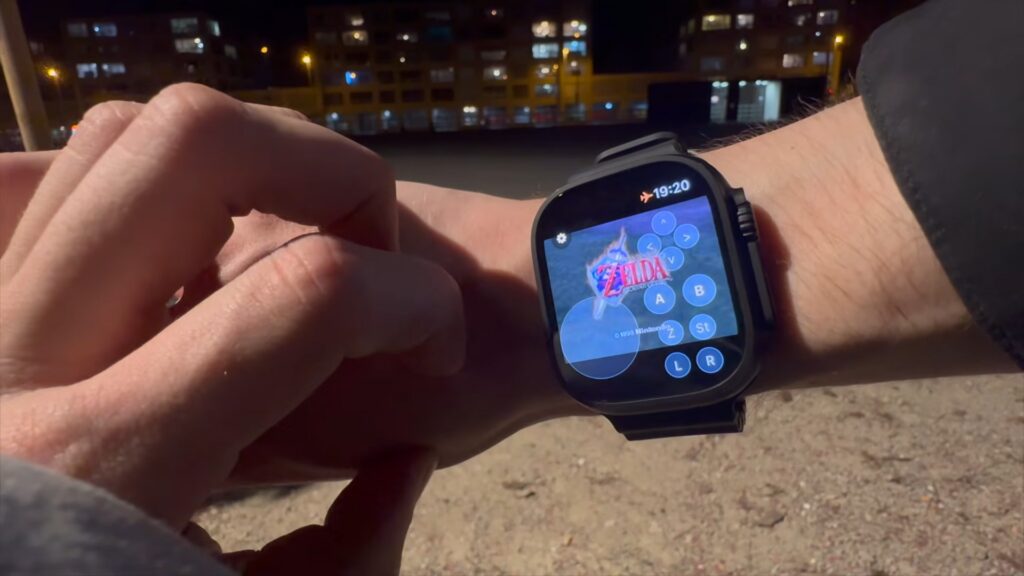
A developer known online as “Game of Tobi” has successfully ported Ocarina of Time to the Apple Watch, turning one of gaming’s most iconic adventures into something that can technically be played on a smartwatch.
Yes, that means Link can explore Hyrule Field, swing his sword, and take on enemies… all from a display barely larger than a coin.
This isn’t an official release, of course. It’s a passion project driven by curiosity and a love for pushing hardware beyond its limits. And in that sense, it fits right in with the long tradition of fans doing the impossible with classic games.
Built on a Powerful Fan Foundation
The port wouldn’t have been possible without the fan-made project known as the Ship of Harkinian.
This project is based on a full decompilation of Ocarina of Time, which essentially converts the original game code into a readable and editable format. That breakthrough has opened the door for fans to bring the game to platforms it was never designed for.
Using this foundation, Tobi adapted the game to run on watchOS, even leveraging Apple’s 3D rendering tools to display the game’s environments on such a small device.
Impressive… But Not Exactly Practical
As cool as it sounds, playing Ocarina of Time on an Apple Watch is more of a novelty than a viable way to experience the game.
The biggest hurdle is control. With only a touchscreen and limited input options, the game relies on virtual buttons that take up a significant portion of the screen.
That makes precise actions, like Z-targeting or navigating tight spaces, especially difficult. Even basic gameplay can feel cramped when your fingers are covering half the display.
There are also technical limitations. The Apple Watch was never designed for 3D gaming, so the developer had to work around memory constraints and stability issues. Some bugs still remain, including problems with text rendering.
Still, the fact that the game runs at all is a testament to how far fan projects have come.
A Tradition of Pushing Limits
This isn’t the first time fans have taken classic games to bizarre platforms. In many ways, this project feels like the Zelda equivalent of the long-running joke about running Doom on anything with a screen.
What makes this one stand out is just how ambitious it is. Ocarina of Time is a massive 3D adventure originally designed for the Nintendo 64, a console that was cutting-edge for its time.
Seeing it squeezed onto a smartwatch highlights both the creativity of the community and the flexibility made possible by modern reverse engineering efforts.
What Comes Next?
The developer has hinted that more ports could be on the way, and may even release the source code in the future.
If that happens, it could open the floodgates for even more experimental versions of Ocarina of Time across unusual platforms.
Whether or not anyone actually wants to play the game this way is another question entirely. But as a technical achievement and a piece of Zelda fan history, it’s undeniably impressive.
TerminalMontage Brings Dark Humor to Ocarina of Time’s Shadow Temple
The team behind TerminalMontage has returned in spooky-season form with the latest entry in their “Something About” series, this time diving into the deeply unsettling corridors of the Shadow Temple from The Legend of Zelda: Ocarina of Time. This one is, by far, one of their darker (and funniest) parodies yet.
Where past episodes played on the more familiar thematic temples of the game (forest, fire, water), this installment leans fully into horror comedy territory, and treats the Shadow Temple’s creep factor like a playground for absurdity. The hero, the legendary Link, is portrayed as increasingly rattled, sweating through menu pauses and item mix-ups that would be frustrating in a normal speed-run but here become hysterical. One scene in particular has him repeatedly opening and closing his menu just to toggle the Hover Boots because he simply cannot get them to stick. The result: hilariously repeated pratfalls.
Throw in a moment where he simply forgets to equip Din’s Fire during a section that demands it (yes, the one with the moving wooden spikes and walls), and you’ve got a parody that not only lampoons the original gameplay but pushes the trauma of the dungeon up to eleven. The final boss moment? A double appearance by the infamous Dead Hand, each time triggering more panic, more dropped items, and deep existential dread (all within five minutes of screen time). The result is triumphantly absurd.
What stands out about this entry is how the creators balance reverent references with gut-punch comedy. For longtime fans of Ocarina of Time the nostalgia hits are clear: you’ll recognise the layout of the dungeon, the hollowed echoes of the skulls and walls, the visual motif of the rotating skull door, but you’ll also delight in seeing those familiar beats twisted. One moment you’re checking your map like you’ve played the dungeon five hundred times; the next you’re smacking the menu button because the Hover Boots are doing cartwheels off a ledge.
Visual gags abound: from the pause menu being treated like a horror-scene intermission, to jarring sound cues when Link realises he’s left a key behind, to the credits stinger which promises more trauma for our protagonist in future episodes. That post-credits bit is a hallmark of the series: previously it’s teased what’s next in the saga, and here it doesn’t disappoint (yes, we’re likely heading toward the Spirit Temple and the game’s endgame).
For those who have followed the series from the earlier temples (Forest, Fire, Water) you’ll recognise the pattern: each installment ramps up not just the stakes but the comedic direction. The Shadow Temple piece feels almost like the breakout horror-comedy chapter in the saga. If you’ve only caught one or two, this might hook you to revisit the others and see how Link’s trauma has been escalating.
If you’re planning to watch: make sure you have captions on and give yourself a little buffer for rewinding. There are Easter eggs hiding in menu screens, background assets, and the odd cameo that reward re-watching. Also, for maximum effect, maybe watch with the lights off because the Shadow Temple is creepy, and the parody doubles that energy.
Have you seen this episode yet? What do you think of how the team treats horror vs. humour in this one compared to their earlier work?
LEGO Ocarina of Time Ganondorf Diorama Rumored for March 2026
A new The Legend of Zelda LEGO set may be on the horizon – and it’s all about Ganondorf. According to reports from the LEGO fan community, the next Zelda-themed LEGO release in 2026 is rumored to be set 77093, “Ocarina of Time Ganondorf Diorama.” This unconfirmed set would mark LEGO’s first depiction of the King of Evil himself and only the second official Zelda LEGO product ever (following 2024’s Great Deku Tree model). It’s said to contain about 1,003 pieces and is reportedly slated for release on March 1, 2026.
Rumored Set Details
If these rumors are accurate, the Ganondorf diorama will be a more modest build compared to the sprawling Great Deku Tree set from last year. The 77092 Great Deku Tree contained 2,500 pieces and had a hefty price tag (~$300), whereas the Ganondorf set’s 1,003-piece count suggests a smaller, more affordable model. No price has been leaked yet, but the lower piece count implies it should come in well under the Great Deku Tree’s cost. The diorama is expected to focus solely on The Legend of Zelda: Ocarina of Time, calling back to the series’ first 3D game and its iconic villain. In other words, fans can likely expect a brick-built scene celebrating Ganondorf’s role in Ocarina of Time – perhaps even featuring Ganondorf’s debut as a LEGO minifigure alongside other characters from the game. It also stands to reason that Link could make an appearance in this set; since LEGO already designed an Ocarina of Time Link figure for the Deku Tree kit, they could easily include him again here (complete with his unique hairpiece).
Ganondorf Diorama Possibilities
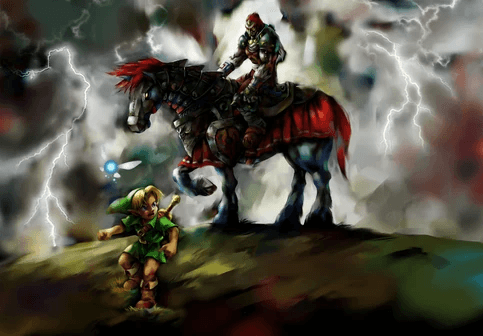
So what might the Ganondorf Diorama actually depict? There’s plenty of material to draw from, as Ganondorf has a huge role in Ocarina of Time with several memorable scenes. LEGO could recreate one of the game’s iconic boss battles – for example, the climactic confrontation in Ganon’s Tower – or even the famous horseback chase from early in the story. In that dramatic moment, Ganondorf charges out of Hyrule Castle Town on his black steed, knocking young Link to the ground while Princess Zelda and Impa make their escape. A diorama of such a scene, complete with Ganondorf on horseback, Link, and perhaps Zelda watching from afar, would certainly be an exciting display piece for fans. There are many possibilities, and the mere idea of revisiting Ocarina of Time in LEGO form has already generated considerable excitement among Zelda enthusiasts.
Beyond the specifics of this set, the timing of its potential release is interesting. February 2026 will mark the 40th anniversary of the Legend of Zelda franchise, and many fans suspect Nintendo and its partners have big plans to celebrate. A collectible Ocarina of Time diorama featuring Ganondorf could fit right in as part of that anniversary celebration, paying tribute to one of the series’ most beloved entries and villains. (Not to mention, Nintendo and LEGO are also rumored to be launching a lineup of Pokémon sets around the same time – meaning early 2026 could be a very exciting time for Nintendo toy collectors.)
Tempering Expectations
As thrilling as this sounds, it’s important to remember that nothing has been officially confirmed by LEGO or Nintendo yet. All the details about set 77093 Ganondorf Diorama – from the name and piece count to the March 2026 release date – are still rumors at this point. The information originates from community leaks (via a reliable LEGO news source on Reddit known as BrickTap), which have been accurate in the past, but plans can always change. Until an official announcement is made, Zelda fans should take this with a grain of salt.
That said, the prospect of building an Ocarina of Time Ganondorf scene in LEGO is undeniably enticing. If the rumors do pan out, we’re now only about six months away from seeing Ganondorf stride onto LEGO store shelves. For now, we’ll be keeping our fingers crossed and our eyes peeled for any confirmation. Stay tuned to Zelda Central for updates on this potential set and all things Legend of Zelda!
Nintendo Music Adds Ocarina of Time 3D OST — Every Track Listed!
Nintendo Music Adds Ocarina of Time 3D OST — Every Track Listed!
Nintendo Music continues to grow its library, and today’s update brings the beloved The Legend of Zelda: Ocarina of Time 3D soundtrack to the service. This version is a faithful port from the 3DS remake, originally released in June 2011, and includes all 51 tracks—totaling just over 1 hour and 14 minutes of music.
The full Ocarina of Time 3D set joins the original N64 OST and several other Zelda soundtracks already available on Nintendo Music.
Tracklist (51 Tracks)
Journey & Adventure Themes
Title Theme
Deku Tree
Fairy Flying
House
Kokiri Forest
Shop
Battle
Inside the Deku Tree
Boss Battle
Hyrule Field Main Theme
Kaepora Gaebora’s Theme
Market
Hyrule Castle
Zelda’s Theme
Lon Lon Ranch
Kakariko Village
Windmill Hut
Goron City
Lost Woods
Middle Boss Battle
Dinosaur Boss Battle
Great Fairy’s Fountain
Zora’s Domain
Temple of Time
Master Sword
Ganondorf’s Theme
Chamber of the Sages
Sheik’s Theme
Horse Race
Kakariko Village “Orchestral Version”
Ocarina Songs & Dungeons
Ocarina Songs
Potion Shop
Minuet of Forest
Forest Temple
Prelude of Light
Bolero of Fire
Fire Temple
Ice Cavern
Serenade of Water
Water Temple
Nocturne of Shadow
Shadow Temple
Gerudo Valley
Requiem of Spirit
Spirit Temple
Kotake & Koume’s Theme
Ganondorf Battle
Last Battle
Ocarina of Time
End Credits
End Credits 2
(Yes—spoiler alert: the final track End Credits 2 is a real-instrument orchestral performance exclusive to this release.)
Why It Matters for Zelda Fans
Rediscover legendary tracks: While the N64 OST is iconic, the 3DS version features subtle re-arrangements and clearer audio, courtesy of Mahito Yokota and Takeshi Hama under Koji Kondo’s direction.
Plenty of listening options: Nintendo Music offers easily loopable tracks and curated playlists for HEROIC themes, dungeon ambiance, or soothing Hyrule vibes.
Fully accessible: All tracks are included in the update—no missing gems, so dive in for a musical marathon!
How to Listen
You’ll need a valid Nintendo Switch Online subscription. Then simply:
Download or open the Nintendo Music app on iOS or Android.
Search for “Ocarina of Time 3D” or check the 3DS releases section (added July 8, 2025).
Cue your favorite themes—battle it out, solve puzzles, or just relax to Hyrule’s orchestrated landscape.
Why not stream through the Title Theme or loop the End Credits 2 orchestral finale and soak in those nostalgic notes? Whether you’re catching every cue from Kokiri Forest or reliving Shadow Temple chills—this update is a full-on Zelda music celebration ?
Let us know: which track takes you back to your first Hyrule adventure?
Big N64 Upgrades Coming to Switch Online! …With a Catch for Some Hero of Time Hopefuls
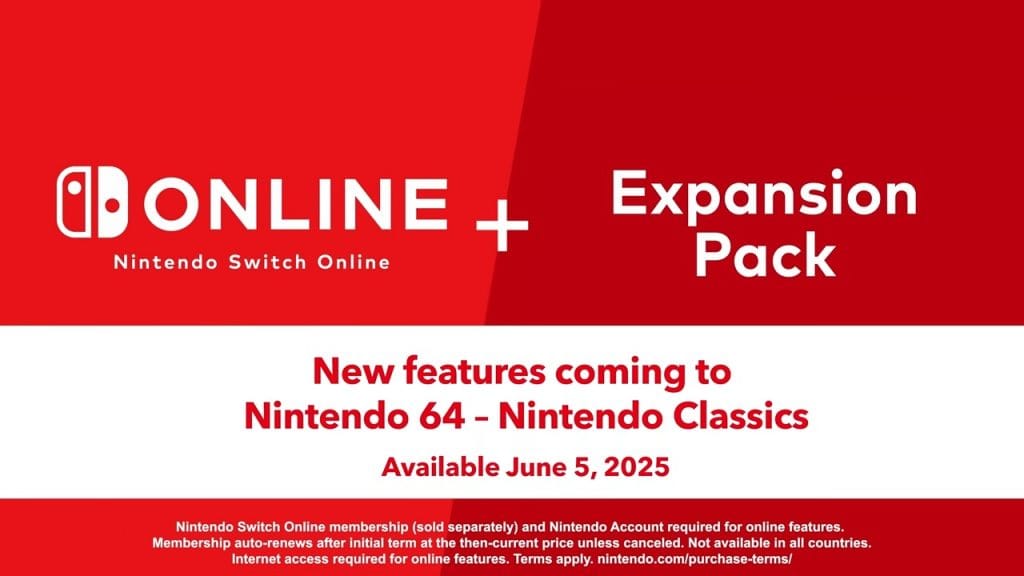
Calling all Hyrule warriors and nostalgic adventurers! Nintendo has just dropped some exciting news for fans of its Nintendo 64 catalog on Nintendo Switch Online + Expansion Pack. Starting June 5th, three significant new features will be rolling out, promising to enhance your retro gaming sessions. However, there’s a Goron-sized “but” that Zelda fans will want to note.
The three new features announced are:
Customizable Controls: Finally, the ability to remap those iconic N64 buttons to your liking!
Rewind Feature: Made a misstep in a tricky dungeon? Now you’ll be able to turn back the clock.
CRT Screen Filter: For that authentic blast-from-the-past visual experience.
These are fantastic additions that many have been hoping for, especially for navigating the sometimes-unconventional N64 controller layouts and tackling notoriously challenging sequences in classic games.
Zelda Fans, Here’s What This Means For You (and Your Switch)
For those eager to dive back into Ocarina of Time or Majora’s Mask with these new bells and whistles, here’s the crucial breakdown:
Customizable Controls (Available on original Nintendo Switch and Nintendo Switch 2): This is a universal win! Players on all Nintendo Switch models with the Expansion Pack subscription will be able to tweak the N64 controller layout. This could be a game-changer for Ocarina of Time and Majora’s Mask, allowing players to map items or actions to more intuitive buttons, potentially making aiming with the slingshot or bow, or playing the ocarina, a smoother experience. Remember the C-button complexities? Now you’ll have more say in how they work for you!
Rewind Feature (Exclusive to Nintendo Switch 2): This highly anticipated feature, allowing you to rewind gameplay a short period to correct mistakes, will unfortunately only be available on the upcoming Nintendo Switch 2 console, also launching on June 5th. For Zelda players, this means those on the original Switch won’t be able to use it to undo a missed jump in the Deku Tree or a fatal error during a boss battle like Goht in Snowhead. However, for future Switch 2 owners, this will be a fantastic tool for tackling some of the Zelda N64 era’s tougher challenges without the frustration of a full game over. Think of retrying those tricky silver rupee collections in Majora’s Mask or nail-biting final blows on Ganon.
CRT Screen Filter (Exclusive to Nintendo Switch 2): Similarly, the option to apply a CRT screen filter to mimic the look of old-school televisions will also be exclusive to the Nintendo Switch 2. While not a gameplay-altering feature, it’s a nice touch for those seeking maximum nostalgia when adventuring through Hyrule Field or Clock Town.
The Road Ahead
While the exclusivity of the Rewind and CRT filter to the Nintendo Switch 2 might be a Deku Nut to swallow for some current Switch owners, the introduction of customizable controls for everyone is a significant step forward.
Nintendo’s official announcement, which you can view here (though the video primarily showcases the features on Switch 2), highlights these updates as part of an ongoing effort to enhance the Nintendo Switch Online + Expansion Pack service.
So, come June 5th, Expansion Pack members on the original Switch will still benefit from much-needed controller customization for their N64 Zelda adventures. And for those planning to pick up a Nintendo Switch 2, an even richer N64 experience awaits, bringing modern conveniences to timeless classics.
What are your thoughts, Zelda Central readers? Are you excited about customizable controls? Will the new features on Switch 2 tempt you to upgrade? Let us know in the comments below!