
If Nintendo’s recent Ocarina of Time remake reveal has you thinking about the original game again, a newly released documentary has arrived at almost the perfect time.
YouTube creator Sakharu Baguette has released a new documentary and analysis chronicling the difficult, experimental road that led to The Legend of Zelda: Ocarina of Time. Titled The Slow and Chaotic Odyssey Toward Perfection, of “the Greatest Game of All Time”, the video digs into the development of Nintendo’s first 3D Zelda and the years of experimentation that ultimately produced one of the most influential games ever made.
And the timing couldn’t be much better.
Nintendo just gave fans their most extensive look yet at the upcoming Ocarina of Time remake during its Legend of Zelda 40th Anniversary Direct. The Switch 2 remake launches on November 5, 2026, making this an unusually appropriate moment to look back at how the original version came together.
Ocarina of Time Wasn’t an Obvious Success
Today, it’s difficult to separate Ocarina of Time from its reputation.
It remains one of the most critically celebrated games ever released and is frequently included in conversations about the greatest video games of all time. As recently as 2024, more than 200,000 votes were cast in Game Informer’s reader tournament to determine the greatest game ever, with Ocarina of Time ultimately taking the top spot.
But the finished game can make its development look far more straightforward than it actually was.
Nintendo was attempting to solve problems that hadn’t really existed for the series before. Zelda had to make the jump from a predominantly 2D design language into a three-dimensional world, and that meant reconsidering everything from sword combat and movement to cameras, targeting and how players interacted with enemies.
What makes Sakharu Baguette’s documentary interesting is that it focuses on that process rather than simply retelling the plot of Ocarina of Time or explaining why people like it.
The story behind the game is considerably more chaotic.
Nintendo Was Figuring Out 3D Zelda as It Went
Many mechanics that feel perfectly normal today had to be invented, adapted or discarded during Ocarina of Time’s development.
Z-targeting is perhaps the most famous example. Giving players the ability to lock onto an enemy helped solve one of the fundamental problems of fighting in three-dimensional space and influenced action games long after Ocarina of Time appeared on the Nintendo 64.
But that was only one part of a much larger experiment.
The game’s development involved numerous concepts, prototypes and ideas that changed as Nintendo worked out what a Zelda adventure should actually feel like in 3D. The scale of the project also grew considerably from its earliest stages.
That history is what makes archival footage like the material featured in the documentary so fascinating today. You’re seeing Nintendo work through problems at a time when many of the conventions of modern 3D games simply hadn’t been established yet.
The Timing Is Almost Perfect
There’s another reason this particular documentary is worth watching now rather than six months from now.
We’re about to see Nintendo confront Ocarina of Time from the opposite direction.
In the 1990s, Nintendo was asking:
How do we turn Zelda into a 3D game?
In 2026, the question has become:
How do we modernize one of the most important 3D games ever made without losing what made it special?
Nintendo’s new Switch 2 version appears to remain deliberately faithful to the structure of the original while modernizing the experience around it. The recent gameplay presentation showed redesigned environments alongside additions such as freer camera control and updated movement, while still retaining recognizable locations and progression from the Nintendo 64 adventure.
Knowing how much experimentation went into establishing those systems in the first place makes the remake considerably more interesting.
Some of the mechanics Nintendo is now modernizing were once solutions to problems the developers were encountering for the very first time.
A Great Watch for Ocarina of Time Fans
Sakharu Baguette has put together exactly the kind of video that’s easy to recommend to Zelda fans who enjoy seeing what happened behind the finished product.
It’s less about telling you that Ocarina of Time is important — most Zelda fans already know that — and more about showing just how uncertain the path toward that finished game could be.
And with Nintendo preparing to introduce the Hero of Time to another generation this November, it’s difficult to imagine a better moment for a documentary about how his original adventure was made.
You can watch Sakharu Baguette’s full documentary above.
Afterward, we’d love to hear your thoughts: does learning more about the original game’s development change anything you want Nintendo to preserve — or change — in the remake?
Ocarina of Time Remake Pre-Order Bonuses: Every Regional Exclusive So Far
Pre-ordering The Legend of Zelda: Ocarina of Time remake is quickly turning into a side quest of its own.
Nintendo’s Nintendo Switch 2 remake launches on November 5, 2026, but what you get for ordering early depends heavily on where you live — and in some cases, which retailer gets your rupees.
Fans in Canada can get packaging based on the original Nintendo 64 release. European players have access to replicas of the three Spiritual Stones. Japan is getting an entirely different set of physical collectibles, while retailers in France, Spain, Germany, Israel, and New Zealand have added their own bonuses on top.
Meanwhile, American fans are looking across the border with more than a little envy.
Here’s every Ocarina of Time remake pre-order and early-purchase bonus we’ve been able to verify as of September 12, 2026.
Table of Contents
First, About That Textured Foil Cover
Before getting into the regional exclusives, there is one collectible that is much more widely available.
The first physical print run of Ocarina of Time features special packaging with textured metallic foil cover artwork. This is not technically a retailer-exclusive pre-order bonus. It is part of the initial production run, meaning early physical copies should include it while supplies last. Nintendo has not disclosed how many foil copies are being produced.
That distinction is worth remembering. A retailer may advertise no additional bonus while still shipping the limited foil version of the game.
Region / Retailer
Pre-order or Early-Purchase Bonus
United States
Textured foil first-print packaging
Canada – EB Games
Holographic N64-style slipcover
Nintendo Store UK/Europe
Three Spiritual Stone replicas
Nintendo Store UK/Europe
Optional Ocarina of Time pin
France – Micromania
Spiritual Stones + Zelda wallet
France – FNAC
Ocarina keychain + Zelda coasters
Spain – Nintendo Store
Spiritual Stone replicas
Spain – FNAC / MediaMarkt
Ocarina of Time sticker set
Spain – GAME
Ocarina keychain
Germany – Nintendo Store
Spiritual Stones; optional Ocarina pin
Germany – Otto
Ocarina-shaped keychain
Israel – Nintendo
Choice of four different bonuses
Japan – Physical
Art cards + paper stand + sticker
Japan – Digital
Zelda 40th Anniversary wallpaper
New Zealand – Mighty Ape
Paid bundle with ceramic ocarina
Australia
No additional retailer-exclusive gift confirmed
United States: The Foil Cover, But No Exclusive Gift Yet
For the moment, the United States has received the least elaborate treatment.
Physical pre-orders are available through Nintendo, Amazon, Walmart, Best Buy, GameStop, Target, and other major retailers, but we could not verify a US retailer offering an additional physical collectible as of September 12.
That means the main incentive for ordering early is the textured foil packaging from the first print run.
There is at least a price incentive. Walmart dropped its physical preorder to $59.88, effectively matching the $59.99 digital edition despite the physical version carrying a $69.99 MSRP. Amazon has also been offering discounted physical copies.
GameStop and Target currently list the game without an additional retailer-specific bonus.
Considering what Canada and Europe are getting, we wouldn’t be surprised if American Zelda fans keep asking Nintendo where their treasure chest went.
Canada: EB Games Gets an Excellent N64 Throwback
Canada may have one of the best exclusives of the bunch.
EB Games Canada is offering a holographic slipcover inspired by the original Nintendo 64 packaging for Ocarina of Time. The design recreates the look of the classic N64 box, right down to the nostalgic branding and holographic presentation.
The slipcover is being offered at no additional charge with qualifying pre-orders while supplies last.
It should also be separate from the textured foil packaging inside, meaning Canadian collectors who order from EB Games potentially get both treatments.
For anyone who owned the original 1998 release, this is probably the bonus most likely to trigger some dangerous nostalgia-driven spending.
United Kingdom: The Three Spiritual Stones
The Nintendo Store UK has something considerably more substantial than a keychain or sheet of stickers: physical replicas of the three Spiritual Stones.
The set includes the Kokiri’s Emerald, Goron’s Ruby, and Zora’s Sapphire inside a black display box. Nintendo describes them as three-dimensional replicas made from PVC and acrylic plastic.
The approximate dimensions are 3 cm apiece, so these aren’t huge collectibles, but the presentation makes them particularly appealing for a Zelda shelf.
Nintendo Store UK has offered the Spiritual Stones alongside both the physical and digital editions while stock lasts.
There is also an Ocarina of Time pin badge available as an upgraded option. Nintendo Life reported the pin adds £2.99, bringing the physical bundle from £58.99 to £61.98.
One clarification worth making: the Spiritual Stones themselves are replicas, not pins. The Ocarina is the separate pin badge.
Europe: Nintendo’s Spiritual Stone Promotion Extends Beyond the UK
The Spiritual Stone set isn’t limited to Britain.
Nintendo’s European storefronts have been offering the same display set in other countries. Germany’s Nintendo Store, for example, lists both physical and digital versions with the Heilige Steine, or Spiritual Stones, along with another physical option containing the Ocarina pin.
The promotion has also appeared through Nintendo’s Dutch storefront, indicating this is a broader European campaign rather than a UK-only item.
Individual retailers are where things get much more interesting.
France: Wallets, Stones, Keychains and Coasters
French Zelda fans have quite a few choices.
Micromania has offered the physical game with a Zelda-themed wallet and the three Spiritual Stones, along with €10 in store credit during its promotional period. Reports indicate supplies of the Spiritual Stones at Micromania began disappearing quickly.
FNAC went in a different direction, offering an Ocarina of Time keychain and Zelda-themed coasters. Eligible FNAC members have also been offered €10 in promotional credit.
Nintendo’s French store has carried the Spiritual Stone promotion as well, with an Ocarina pin available through its own bundle.
Several other French retailers have concentrated on price rather than collectibles. Auchan and Carrefour have both offered €10 promotional vouchers alongside discounted copies at various points during the preorder campaign.
France might currently have the strongest selection if you’re willing to shop around.
Spain: Stickers, Spiritual Stones and an Ocarina Keychain
Spain has another unusually good assortment.
The official Nintendo Store offers the three Spiritual Stone replicas, while FNAC and MediaMarkt are offering an official Ocarina of Time-themed sticker set featuring Link and other imagery from the game.
GAME Spain has what may be the more practical collectible: an Ocarina of Time keychain modeled after Link’s instrument.
XtraLife also has a more unusual option. Its normal copy does not include a retailer preorder gift, but the retailer is selling a more expensive package bundling the game with a King of Red Lions collectible from The Wind Waker. That one is better viewed as a paid bundle rather than a true preorder bonus.
Germany: Spiritual Stones and Another Ocarina Keychain
German buyers can get the Spiritual Stones through Nintendo’s own store, with an additional bundle that includes the Ocarina pin.
Retailer Otto is also throwing in an Ocarina-shaped keychain while supplies last.
Other major German retailers including Amazon, MediaMarkt, and Saturn are taking preorders, but we haven’t verified an additional exclusive physical gift from those stores beyond the first-print foil packaging.
Israel: Choose Your Own Pre-Order Bonus
Nintendo Israel may have the most unusual setup because customers aren’t locked into a single collectible.
The regional promotion lets buyers choose from four different Ocarina of Time bonuses: an Ocarina keychain, the three Spiritual Stones, a double-sided poster, or a metallic sticker set.
It’s almost a Zelda item-selection screen in real life.
If Nintendo offered that approach everywhere, collectors might have a much easier decision to make — or a much harder one, depending on how badly they want all four.
Japan: Completely Different Early-Purchase Bonuses
Nintendo is taking a very different approach in Japan.
Rather than the European Spiritual Stones or Canadian N64 slipcover, Japanese physical copies purchased during the early-purchase promotion include a collection built around artwork from the remake and Zelda’s 40th anniversary.
Japanese retailers including Amazon Japan and Rakuten Books are also advertising their own retailer-exclusive bonuses, but as of September 12, the actual items remain listed as “to be determined.”
That makes Japan one of the regions worth keeping an eye on over the next several weeks.
Japan Also Gets a Digital Bonus
Japan is also one of the few markets with a clearly advertised incentive for buying digitally.
Anyone who purchases or redeems the download version by November 23 at 11:59 p.m. Japan time is eligible for an original Zelda 40th Anniversary digital wallpaper designed for smartphones and computer.
The wallpaper is expected to begin reaching Nintendo Accounts in November.
Australia: Foil Packaging, But No Exclusive Collectible Yet
Australian retailers have preorders underway, but so far we’re not seeing the same avalanche of retailer-exclusive collectibles available elsewhere.
New Zealand: Mighty Ape Has a Ceramic Ocarina Bundle
New Zealand is getting an interesting option from Mighty Ape, although this one technically isn’t free.
The retailer is selling an Ocarina of Time Mighty Ape Bundle containing the physical game and a ceramic ocarina. The package is currently listed at NZ$138 for members compared with NZ$114 for the standalone game, so the ocarina is part of a paid bundle rather than a complimentary preorder bonus.
Still, considering what game we’re talking about, bundling Ocarina of Time with an actual ocarina is difficult to argue with.
What About Taiwan, South Korea and Other Asian Markets?
Preorders have appeared across Taiwan and other Asian markets, but we haven’t yet been able to verify a unique official regional bonus comparable to Japan’s art cards or Europe’s Spiritual Stones.
Taiwanese retailers currently list the local physical edition for November 5, but the major listings we checked do not advertise an Ocarina of Time-specific preorder collectible.
We’ll update this guide if Nintendo or regional retailers announce additional bonuses.
Which Ocarina of Time Bonus Is the Best?
There’s no shortage of good options, but Canada and Europe clearly have an early advantage.
The EB Games N64 slipcover is probably the most nostalgic of the bunch, especially for anyone who remembers seeing the original gold-logo box in stores in 1998. The Spiritual Stones, on the other hand, feel like the most substantial collectibles Nintendo is currently giving away with a standard preorder.
Japan’s art card package is another strong contender, particularly because its artwork appears to be tied directly to the new remake and Zelda’s 40th anniversary.
Then there’s the United States, where our grand regional treasure so far is… the box being shiny.
We’re still nearly two months away from launch, though. Retailer-exclusive bonuses often appear after the initial wave of preorders, so there is plenty of time for Nintendo or another US retailer to offer something more.
The Legend of Zelda: Ocarina of Time launches exclusively for Nintendo Switch 2 on November 5, 2026. We’ll keep this page updated as additional preorder bonuses, retailer exclusives, and regional promotions are announced.
The Legend of Zelda Movie Will Tell an Original Story Inspired by 40 Years of Hyrule
Nintendo has spent years keeping the story behind its live-action Legend of Zelda movie under wraps. We know who will carry the Master Sword. We know who will wear Zelda’s crown. We even have a pretty good idea who will be playing Ganondorf.
What we haven’t known is which version of Hyrule the movie intends to bring to theaters.
Now, Nintendo has finally given us an answer — sort of.
During The Legend of Zelda 40th Anniversary Direct on September 8, Nintendo confirmed that the upcoming film is officially titled simply The Legend of Zelda and described it as an original movie built from the “stories, ideas and concepts” established across four decades of Zelda games. In other words, this doesn’t appear to be Ocarina of Time: The Movie or a live-action retelling of Breath of the Wild.
For a series with one of the strangest timelines in gaming, that may be the smartest approach Nintendo could have taken.
This Isn’t an Adaptation of One Zelda Game
Until now, fans have had little more than costumes and casting choices to work with when trying to determine which game might inspire the film.
The first official photos of Benjamin Evan Ainsworth as Link and Bo Bragason as Zelda only made things more complicated. Link’s green clothing immediately evoked the classic hero designs seen throughout the series, while Zelda’s blue outfit felt closer to the visual language established in Breath of the Wild.
It turns out those mixed influences may have been intentional.
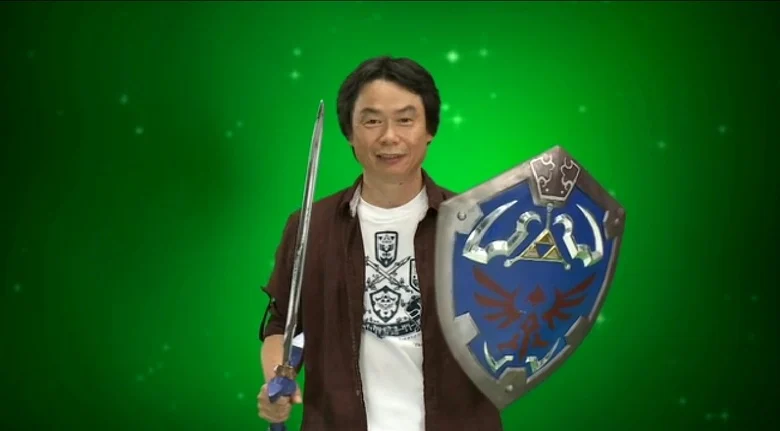
Nintendo now says the movie is an original story based on the franchise as a whole. Shigeru Miyamoto also suggested during the anniversary presentation that there is a reason the film carries no subtitle, adding that fans will understand the decision after seeing it. He specifically drew attention to the Triforce and teased that the iconic relic will have a role in the story.
That opens the door to something much more flexible than a direct game adaptation.
Rather than attempting to compress the sprawling plot of Ocarina of Time or the open-world structure of Breath of the Wild into two hours, director Wes Ball can pull recognizable pieces from multiple eras of Zelda and assemble a version of Hyrule designed specifically for film.
For longtime fans, that also means spotting the influences could become half the fun.
Link and Zelda Are Officially Cast
Nintendo officially announced the movie’s two leads in 2025.
Benjamin Evan Ainsworth will play Link, while Bo Bragason will portray Princess Zelda. Production later released the first official images of both actors in costume after filming began in New Zealand.
Ainsworth has appeared in projects including The Haunting of Bly Manor and Disney’s live-action Pinocchio, while Bragason has appeared in productions including Renegade Nell and The Jetty.
The decision to cast relatively young performers also gives Nintendo room to build the movie around the coming-of-age adventure that has defined many of Link’s journeys.
And if the studio has bigger plans for the franchise, those casting choices could matter for years.
Ganondorf Has Reportedly Found His Actor
Nintendo and Sony have still been unusually quiet about much of the supporting cast, but reports over the summer filled in several major pieces.
Deadline reported in August that Australian actor Uli Latukefu will play Ganondorf. Latukefu is best known for portraying a younger Dwayne Johnson in Young Rock, along with appearances in Black Adam and MaXXXine. The report also claimed that he signed a multi-picture deal.
That last detail is especially interesting.
Nintendo has not announced a Zelda sequel or trilogy, so it would be premature to assume one is already planned. Still, a multi-film contract for Ganondorf would certainly give Sony and Nintendo the option to continue the story if the first movie performs well.
Considering Ganondorf’s tendency to return throughout Zelda history, it would certainly be appropriate.
Impa, a Mysterious Queen and Sam Neill Are Also Reportedly in the Movie
Additional Deadline reporting revealed several more actors believed to be involved.
Dichen Lachman, known for Severance and Jurassic World Dominion, is reportedly playing Impa, Zelda’s longtime protector and advisor.
Yvonne Strahovski, known for The Handmaid’s Tale, Dexter and Chuck, has also reportedly joined the cast. Her exact character hasn’t been revealed, though Deadline’s sources described her as playing a queen.
That description immediately raises questions.
Zelda’s mother has been referenced in multiple games but has rarely been explored directly. Strahovski could be portraying the Queen of Hyrule, although Nintendo has not confirmed that theory and she could just as easily be playing an original character or another royal figure.
The late Sam Neill also reportedly filmed an undisclosed role before his death in July 2026. Production on the movie had wrapped several months earlier, meaning the film could become one of Neill’s final screen appearances.
New Zealand actress Lydia Peckham, who previously worked with Wes Ball on Kingdom of the Planet of the Apes, has also reportedly joined the cast in an unrevealed role.
Nintendo and Sony have not formally announced most of these supporting roles, so it is worth separating the reported casting from the officially confirmed Link and Zelda announcements.
Wes Ball Is Directing Nintendo’s First Live-Action Trip to Hyrule
The movie is being directed by Wes Ball, whose credits include the Maze Runner trilogy and Kingdom of the Planet of the Apes.
Ball has previously described his ideal Zelda film as something combining grand fantasy adventure with the kind of wonder associated with Hayao Miyazaki’s work. He has also stressed that he doesn’t want the project to exist simply because Zelda is a valuable franchise.
That approach could be important.
Zelda has always lived somewhere between Tolkien-style fantasy and fairy tale. Hyrule can be dark, but it is also filled with strange merchants, talking trees, eccentric villagers, magical instruments and creatures that would feel completely at home in a Studio Ghibli film.
Finding the balance between those sides of Zelda may be one of the movie’s biggest challenges.
Nintendo Is Keeping a Tight Grip on the Production
This is not simply a Zelda license being handed to Hollywood.
Shigeru Miyamoto is producing the film alongside Avi Arad, whose producing credits span numerous Marvel adaptations. Nintendo and Sony Pictures are co-financing the project, with Nintendo providing more than half of the financing. Sony will handle worldwide theatrical distribution.
Nintendo’s involvement is particularly notable considering how cautiously the company returned to filmmaking after the notorious 1993 Super Mario Bros. adaptation.
The enormous success of The Super Mario Bros. Movie changed that equation. Zelda is now Nintendo’s first major attempt to translate one of its franchises into a modern live-action fantasy film.
The expectations are considerably different.
When Does The Legend of Zelda Movie Release?
Nintendo has confirmed that The Legend of Zelda will arrive in theaters worldwide on April 30, 2027.
That date is slightly earlier than the May 7 date Nintendo had previously announced. Some older articles and promotional material still reference the May release, but Nintendo’s September 2026 announcement confirms April 30 as the current worldwide date.
Is There a Zelda Movie Trailer Yet?
Not yet.
Despite considerable anticipation heading into the Zelda 40th Anniversary Direct, Nintendo stopped short of showing a trailer. The presentation revealed the movie’s official logo and new story details, but no finished footage was shown.
With the movie now less than eight months away, the first trailer shouldn’t be too far off.
Nintendo has previously dedicated entire Direct presentations to its Mario movies, so it would not be surprising to see a similar strategy used for Zelda.
Whenever that trailer finally arrives, it should answer one of the biggest questions still hanging over the production: what does this version of Hyrule actually look like in motion?
An Original Zelda Story Might Be Exactly What the Movie Needs
Trying to choose one Zelda game to adapt was always going to create problems.
Adapt Ocarina of Time, and fans of Breath of the Wild wonder why Nintendo ignored the franchise’s modern era. Adapt Breath of the Wild, and decades of older Zelda mythology get pushed aside. Try to faithfully recreate any one game, and a movie risks becoming a checklist of familiar dungeons and story beats.
An original story avoids most of that.
Nintendo can use Link, Zelda, Ganondorf, Impa, the Triforce and Hyrule without being tied to a specific timeline branch. Familiar locations can appear in new forms. Characters from different games could potentially exist alongside one another. Even the mythology can be reshaped for a film audience while still feeling unmistakably Zelda.
There is certainly room for that approach to go wrong. Fans will notice quickly if the movie borrows Zelda’s names and costumes without capturing the atmosphere that made the games special.
But Nintendo’s latest comments suggest something more deliberate: not a movie version of one Zelda game, but an attempt to distill 40 years of Zelda into a new legend of its own.
For a franchise built around retelling the same eternal struggle in different eras, that feels surprisingly appropriate.
Nintendo Today! Adds Daily Zelda Collection Cards and New 40th Anniversary Features
Nintendo is continuing to celebrate The Legend of Zelda’s 40th anniversary, and one of the newest additions is aimed squarely at fans who enjoy collecting just about anything related to the series.
Starting today, the Nintendo Today! mobile app is offering The Legend of Zelda Collection Cards, with one new digital card becoming available each day. The cards feature characters, items, and other elements pulled from across the history of the franchise, giving fans another reason to check the app regularly throughout the anniversary celebration.
The feature was announced alongside Nintendo’s broader Zelda 40th anniversary plans, which also include The Legend of Zelda: Ocarina of Time for Nintendo Switch 2, new hardware and accessories, concerts, merchandise, and more.
A New Zelda Card Every Day
The idea is pretty simple: open Nintendo Today! each day and add another Zelda-themed card to your collection.
Nintendo says the cards will draw from games throughout the series rather than focusing on a single era. That means the collection has the potential to reach far beyond the most recent Breath of the Wild and Tears of the Kingdom designs and into Zelda’s long history of characters, weapons, creatures, and other recognizable imagery.
For a franchise that has accumulated four decades of artwork and memorable designs, it feels like a natural fit for a digital card collection.
There is also a little more to the feature than simply logging in.
Each card comes with an opportunity to take a quiz challenge. Answer correctly and you can earn additional digital rewards, including wallpapers and even collectible cards you may have missed on previous days.
That last part should be especially useful for anyone who forgets to open the app for a day or two. Nintendo is clearly encouraging daily check-ins, but missing a card doesn’t necessarily mean leaving a permanent hole in your collection.
Nintendo Today!’s Zelda Theme Is Getting an Upgrade Too
The collection cards aren’t the only Zelda-related change arriving in the app.
Nintendo has also updated the existing Legend of Zelda theme. When the theme is selected, the app’s animated calendar and home-screen widget will now display scenes inspired by games from throughout the series.
Nintendo first teased the change during its Zelda 40th Anniversary Direct, noting that the calendar animations would begin highlighting different games from the franchise.
It’s a relatively small feature compared with a new game announcement, but it fits the anniversary surprisingly well. Zelda has gone through so many distinct visual eras over the past 40 years that even something as simple as rotating calendar art can become a miniature trip through the series’ history.
To activate it, Nintendo says users can open their profile from the bottom-right corner of Nintendo Today! and select Theme to choose The Legend of Zelda.
What Is Nintendo Today!?
For anyone who hasn’t used it yet, Nintendo Today! is Nintendo’s free smart-device app built around daily Nintendo news and content.
Rather than functioning as another version of the Nintendo Switch App, Nintendo Today! is more of a personalized news and entertainment feed. Nintendo uses it for announcements, videos, calendar content, widgets, and other smaller features related to its games and characters.
A Nintendo Account and compatible smart device are required, but Nintendo says the app itself is free to use.
The addition of Zelda Collection Cards gives it something a little different, though. Instead of simply opening the app whenever Nintendo posts a new trailer or announcement, there is now an ongoing reason for Zelda fans to return every day.
And knowing Zelda fans, there are probably going to be more than a few people determined to collect every single card.
Another Piece of Zelda’s 40th Anniversary Celebration
The new Nintendo Today! features are part of a much larger 40th anniversary push from Nintendo.
During the September 8 Zelda Direct, Nintendo revealed a number of anniversary projects stretching through 2027. Among the biggest announcements was a rebuilt version of The Legend of Zelda: Ocarina of Time for Nintendo Switch 2, scheduled to launch on November 5, 2026. Nintendo also revealed Zelda-themed Switch 2 hardware and accessories, new amiibo, anniversary concerts, and additional merchandise.
Nintendo has even extended the celebration to the Nintendo Museum, where visitors can receive a special Zelda 40th anniversary play-ticket design beginning September 9.
The Nintendo Today! cards may not be the flashiest announcement to come out of the anniversary, but they’re one of the easiest for fans to participate in immediately.
There’s nothing to preorder and nowhere to travel. Just open the app, claim the day’s card, take the quiz, and see what piece of Zelda history Nintendo has chosen next.
For collectors, that could become a pretty addictive daily routine.
Are you planning to try to collect every Zelda card in Nintendo Today!, or are you mostly interested in seeing which games Nintendo pulls from?
Hyrule Warriors: Age of Calamity – Definitive Edition Is Coming to Switch 2
Nintendo is giving Hyrule Warriors: Age of Calamity another shot at the spotlight, and this time the hardware should be much better equipped to handle the chaos.
During the September 9 Nintendo Direct, Nintendo announced Hyrule Warriors: Age of Calamity – Definitive Edition for Nintendo Switch 2. The upgraded release launches on February 25, 2027, bringing the 2020 Warriors spin-off to Nintendo’s newer hardware with improved performance, all previously released DLC, and a new difficulty option.
For longtime players, one improvement stands out immediately: 60 frames per second.
That may sound like a fairly routine bullet point for a remaster, but Age of Calamity is a game where it could make a noticeable difference. Battles routinely throw huge groups of Bokoblins, Lizalfos, Guardians, and other enemies onto the battlefield at once, and the original Switch release was known for struggling during some of its busiest encounters.
The Switch 2 version won’t simply raise the frame rate, either. Nintendo says the Definitive Edition will be able to display more enemies on screen at once, potentially making its already crowded battles even larger.
All of Age of Calamity’s DLC Is Included
As the “Definitive Edition” name suggests, this release packages together the original game and its post-launch content.
The original Age of Calamity received an Expansion Pass in 2021, which was split into two major waves: Pulse of the Ancients and Guardian of Remembrance. Nintendo’s current listing for the Switch release still identifies those expansions as the game’s two primary DLC releases.
That means Switch 2 players picking up the Definitive Edition won’t have to purchase the Expansion Pass separately.
The DLC added additional playable characters, weapons, challenges, battles, story material, and other content to an already sizable game. Packaging everything together makes the 2027 version the easiest way for newcomers to experience the complete Age of Calamity package.
A New Calamity Difficulty Is Being Added
Nintendo is also adding a tougher Calamity difficulty mode specifically for players looking for another challenge.
Details on exactly how Calamity mode changes battles are still limited, but its inclusion gives veteran players at least one new reason to return beyond the technical improvements.
Considering how powerful some characters can become late in the game, a more demanding difficulty could be particularly welcome for players who have already spent dozens—or hundreds—of hours clearing the map.
Existing Age of Calamity Owners Will Get a Discount
There is also some good news if Age of Calamity is already sitting in your Switch library.
Nintendo confirmed that owners of the original Nintendo Switch version will be able to purchase the Definitive Edition at a discounted price through the Nintendo eShop.
Nintendo has not yet detailed the size of that discount, so one important question remains: how much will returning players actually have to pay?
That distinction matters because Nintendo is describing this as a separate Definitive Edition rather than simply announcing a free performance patch for the existing game.
The original Switch version is already playable on Switch 2 through backward compatibility. Nintendo’s store currently lists it as supported on the newer system, but that version remains fundamentally the original 2020 release.
For players who already bought the game and its Expansion Pass, the eventual upgrade price could therefore play a big role in whether the new edition feels worthwhile.
Age of Calamity Finally Gets the Hardware It Needed
Of all the Zelda-related games that could benefit from a Switch 2 re-release, Age of Calamity is a pretty logical candidate.
Released on November 20, 2020, the game took the world and characters of Breath of the Wild and placed them into Koei Tecmo’s large-scale Warriors combat. Link, Zelda, Impa and the four Champions were joined by a surprisingly large playable roster, with battles built around cutting through hundreds of enemies while capturing outposts and responding to objectives across the map.
It was also significantly more ambitious visually than the original Hyrule Warriors. Age of Calamity closely recreated Breath of the Wild’s environments, character models and visual style while simultaneously filling those environments with enormous enemy groups.
The trade-off was performance.
That’s what makes the Definitive Edition interesting. A smoother frame rate isn’t merely cosmetic in a Warriors game. When you’re bouncing between objectives, fighting a Lynel while dozens of smaller enemies crowd the screen, and firing off flashy special attacks, consistency can have a real effect on how the combat feels.
Adding even more enemies while targeting 60 FPS suggests Nintendo and Koei Tecmo are taking advantage of Switch 2 rather than simply repackaging the game.
The Zelda Warriors Games Are Building a Series of Their Own
The timing is also notable because Age of Calamity is no longer Nintendo’s newest Zelda Warriors game.
Hyrule Warriors: Age of Imprisonment launched for Nintendo Switch 2 in November 2025, meaning Age of Calamity – Definitive Edition will arrive alongside a newer Warriors title already built specifically for the system. Nintendo’s own store currently lists Age of Imprisonment among the related titles for the original Age of Calamity.
Between the original Hyrule Warriors, Age of Calamity, and Age of Imprisonment, the Warriors side of Zelda has quietly grown into a substantial subseries of its own.
Now one of its biggest entries is getting another chance.
Hyrule Warriors: Age of Calamity – Definitive Edition launches for Nintendo Switch 2 on February 25, 2027.
For anyone who enjoyed the original but wished it ran more smoothly, 60 FPS alone could make this the version worth revisiting. The bigger question for existing owners is going to be price—and we’ll be keeping an eye out for Nintendo to clarify exactly how that eShop discount will work.
What do you think? Is 60 FPS, larger enemy counts, all of the DLC, and a new difficulty enough to bring you back to Age of Calamity?
Zelda 40th Anniversary Direct: The Biggest Announcements
Nintendo used its September 8 Zelda 40th Anniversary Direct to put The Legend of Zelda: Ocarina of Time back at the center of the franchise. The roughly 30-minute presentation delivered the project’s first actual gameplay demonstration, a November 5, 2026 launch date exclusively for Nintendo Switch 2, and an extensive slate of anniversary hardware, concert tours, amiibo, and media milestones stretching into 2027.
After June’s initial reveal confirmed the project existed without showing a second of in-game action, this broadcast shifted attention from corporate nostalgia to concrete game design.
Ocarina of Time Gets Its First Gameplay and a Release Date
The centerpiece of the broadcast was Eiji Aonuma’s walkthrough of The Legend of Zelda: Ocarina of Time, built from the ground up for Nintendo Switch 2. It arrives November 5, 2026.
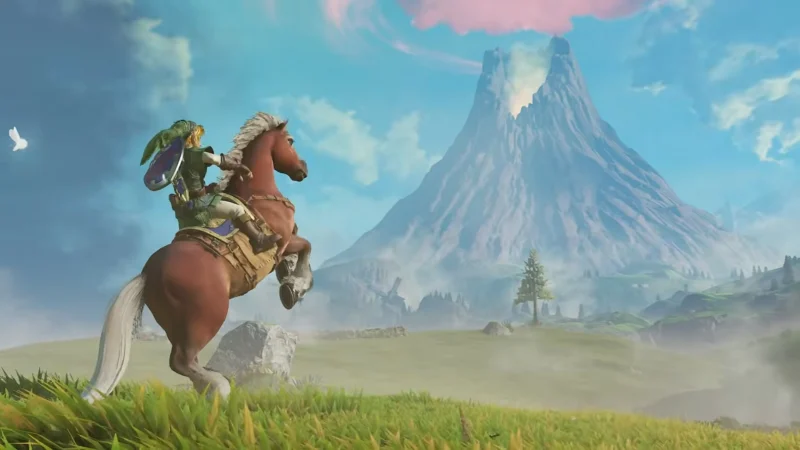
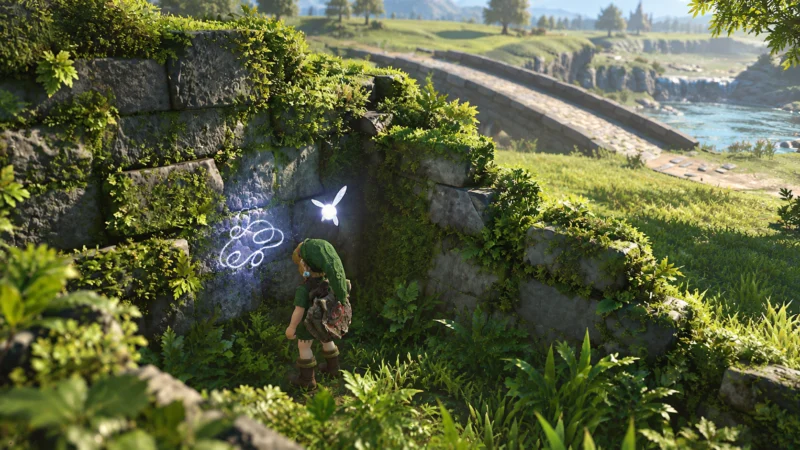
Nintendo made clear that this release is not an upscaled port of the 1998 classic or a touch-up of the 2011 3DS edition. The gameplay showcase demonstrated completely rebuilt visual assets, modernized materials, smoother performance, and substantially reduced load times. Environments across Kokiri Forest and beyond have been remodeled while retaining the compositional framing that defined their original layouts.
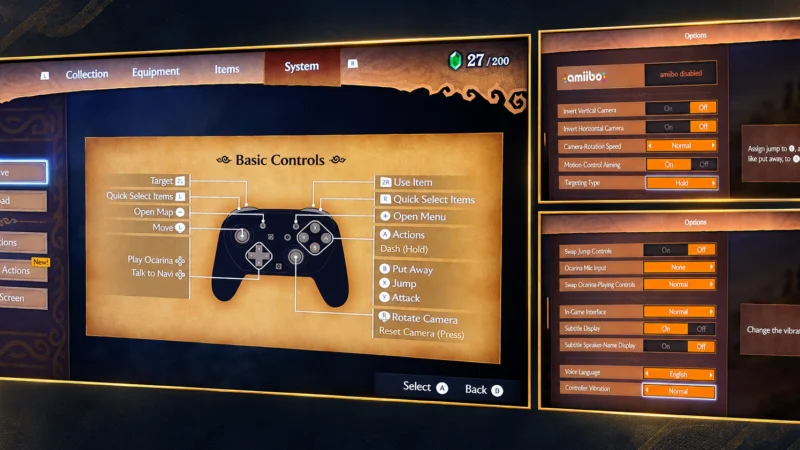
Traversal and camera handling have seen their most fundamental rework since the series transitioned to 3D. The presentation confirmed dedicated, button-controlled jumping and running commands, dismantling the contextual auto-jump mechanic that has governed 3D Zelda movement for nearly three decades. Camera control has finally shifted to the right analog stick, allowing free orbital perspective across spaces originally designed to be read through stationary angles and Z-targeting.
Nintendo also confirmed that cutscenes now feature voice acting alongside expanded character dialogue. The musical score has been re-recorded with a symphonic orchestra, replacing the MIDI arrangements of the original cartridge. Hyrule’s world logic has changed in ways that directly impact exploration. Nintendo revealed a continuous day/night cycle that no longer freezes when Link enters Castle Town or other settlements. Navigation has been augmented by “Threads of Time,” a system that tracks story progress, records active objectives, and dynamically weaves a visual tapestry as the narrative unfolds.
Meanwhile, the titular instrument gains hardware-level utility: players can hum or play learned melodies into the Switch 2’s built-in microphone to prompt Link to play them in-game.
Zelda’s 40th Anniversary Hardware Arrives Before the Game
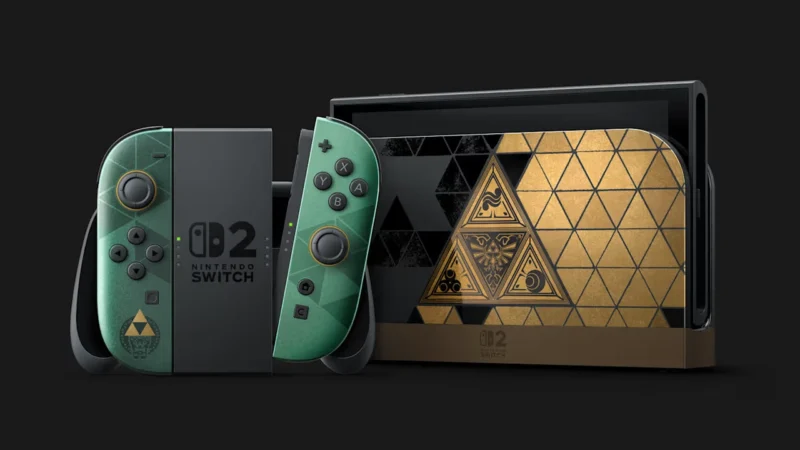
Hardware collectors will not have to wait until November. Nintendo announced the Zelda 40th Anniversary Edition Nintendo Switch 2 and a matching suite of accessories, scheduled to launch on October 29, 2026.
The custom system features thematic detailing across the dock, console chassis, and Joy-Con controllers, joined by standalone commemorative accessories releasing the same day. Arriving one week ahead of the Ocarina of Time launch, the hardware rollout mirrors Nintendo’s historical playbook of seeding commemorative systems into the market immediately before tentpole software arrivals.
Amiibo, Zelda Notes, and Ocarinas Extend the Celebration
The broadcast expanded the anniversary lineup with physical collectibles, digital companion tools, and dedicated merchandise:
Young Link and Young Zelda amiibo: Slated for release in 2027, these figures capture the duo’s updated Switch 2 character designs. Specific in-game scan compatibility was not detailed during the broadcast.
Physical and Electronic Ocarinas: Nintendo revealed official branded instruments, including standard ceramic models alongside electronic practice units designed to interface with the game’s microphone detection.
Zelda’s Notes Platform Expansion: The mobile companion platform receives an extensive anniversary overhaul, adding Daily Records, a Gossip Quest community feature, an interactive virtual ocarina, and a franchise trivia mode featuring more than 2,000 questions.
Brand Collaborations: Nintendo confirmed limited-edition collectible runs alongside LEGO and Hasbro, with additional promotional exhibits planned for the Nintendo Museum in Kyoto.
The Anniversary Is Going on Tour
Beginning in 2027, Nintendo will stage an international symphonic concert tour commemorating 40 years of franchise music. The program will feature complete orchestral arrangements highlighting landmark scores across the series, with special focus given to the newly arranged Ocarina of Time symphonic recordings previewed during the Direct.
The Zelda Movie Has Its Worldwide Release Date
Closing the non-software portion of the presentation, Nintendo officially dated the live-action The Legend of Zelda film. Produced in collaboration with Sony Pictures and directed by Wes Ball, the theatrical adaptation will release worldwide on April 30, 2027. Nintendo did not show production stills or casting footage, keeping the focus squarely on the locked theatrical calendar.
Nintendo’s 40th anniversary blueprint establishes a deliberate pattern: the company is treating Ocarina of Time not merely as a preserved relic to celebrate, but as an active template for modern systems. By pairing systemic revisions—such as manual jumping and free camera control—with a multi-year wave of merchandise, live performance, and a confirmed cinematic release, Nintendo is using the milestone to re-anchor the franchise’s heritage squarely on Switch 2.
Nintendo Confirms What the Zelda 40th Anniversary Direct Will Actually Cover
Nintendo has finally pulled back the curtain, at least a little, on what fans should expect from tomorrow’s The Legend of Zelda 40th Anniversary Direct.
In a new post from Nintendo’s Japanese X account, the company confirmed that the presentation will focus on two areas: new details aboutThe Legend of Zelda: Ocarina of Timefor Nintendo Switch 2 and anniversary initiatives that extend beyond video games.
Tomorrow, September 8th (Tuesday) at 11 PM, we will be broadcasting “The Legend of Zelda 40th Anniversary Direct 2026.9.8”. We will be sharing non-game related initiatives for The Legend of Zelda’s 40th anniversary, as well as details about the Nintendo Switch 2 software “The Legend of Zelda: Ocarina of Time”.
That clarification gives us a much better idea of where those roughly 30 minutes are going.
Ocarina of Time Is Officially Part of the Direct
The biggest confirmation is also the least surprising. Nintendo specifically named The Legend of Zelda: Ocarina of Time in its post, confirming that the upcoming Switch 2 remake will receive more information during the presentation.
Nintendo revealed the new version of Ocarina of Time during its June Nintendo Direct, describing the Nintendo 64 classic as being “reborn” for a new generation. The remake is exclusive to Nintendo Switch 2 and is still officially scheduled for 2026.
The initial reveal was deliberately brief, leaving quite a few unanswered questions. We still do not have an exact release date, and Nintendo has not gone particularly deep into how extensive the remake will be beyond what was visible in its first trailer.
With Nintendo now calling out Ocarina of Time by name ahead of the anniversary Direct, that should change tomorrow.
A release date seems like one of the most obvious pieces of information Nintendo could provide, especially with only a few months left in 2026. A longer gameplay demonstration, closer comparisons with the original Nintendo 64 game, and details about any gameplay or quality-of-life changes would also make sense.
Those specifics have not been confirmed, however, so we will have to wait for the presentation itself.
Nintendo Is Also Talking About Zelda Beyond Video Games
Perhaps the more interesting part of Nintendo’s announcement is the wording surrounding the rest of the show.
Nintendo says it will share information about “initiatives related to the 40th anniversary of The Legend of Zelda beyond games.”
That is a pretty significant distinction.
Ever since the 30-minute Zelda Direct was announced, speculation has ranged from additional remakes and remasters to merchandise, anniversary events and, of course, Nintendo’s upcoming live-action Legend of Zelda movie.
Nintendo’s latest statement appears designed to set expectations somewhat. Ocarina of Time is explicitly named on the gaming side, while the company is also making a point of telling fans that a portion of the Direct will cover things outside traditional video games.
That does not necessarily mean Nintendo has ruled out another game announcement, but it would probably be wise not to go into tomorrow expecting three or four surprise Zelda games. Based strictly on Nintendo’s wording, Ocarina of Time is the game it wants fans thinking about right now.
Is the First Zelda Movie Trailer Coming Tomorrow?
Nintendo has not said the movie will appear during the Direct.
Still, it is becoming increasingly difficult to ignore the possibility.
The live-action The Legend of Zelda movie is currently scheduled for a worldwide theatrical release on April 30, 2027. Nintendo is producing the film alongside Arad Productions, with Sony Pictures Entertainment co-financing the project and handling worldwide theatrical distribution. Wes Ball is directing, while Shigeru Miyamoto and Avi Arad are among the producers.
The timing is certainly interesting. Just ahead of the anniversary presentation, a report also surfaced that Sony had registered a domain associated with the Zelda movie.
That does not confirm a trailer is coming tomorrow, but combined with Nintendo now specifically promising anniversary announcements “beyond games,” it is enough to make the movie one of the strongest possibilities for the show.
If Nintendo has been waiting for the right moment to properly begin marketing the film, a worldwide Direct celebrating 40 years of The Legend of Zelda would certainly qualify.
Still, until Nintendo says otherwise, consider a trailer a very plausible prediction rather than a confirmed part of the broadcast.
Zelda’s 40th Anniversary Is Finally Taking Shape
For much of 2026, Nintendo had been surprisingly quiet about Zelda’s anniversary.
The original The Legend of Zelda debuted in Japan on February 21, 1986, meaning the franchise officially reached its 40-year milestone earlier this year. Back in February, Nintendo president Shuntaro Furukawa was asked about anniversary plans and said the company had nothing to announce at the time.
Things look very different seven months later.
We now have an Ocarina of Time remake on the way, a live-action Zelda movie arriving next spring, and an entire Nintendo Direct dedicated specifically to celebrating the franchise’s history and future.
Whatever Nintendo has planned outside of gaming could wind up being just as interesting as the Ocarina of Time news.
When to Watch the Zelda 40th Anniversary Direct
The Legend of Zelda 40th Anniversary Direct airs Tuesday, September 8 at 7:00 a.m. PT / 10:00 a.m. ET and will run for approximately 30 minutes. Nintendo will stream the presentation through its official channels and the Nintendo Today! app.
Nintendo is not finished after that. A separate, approximately 45-minute Nintendo Direct is scheduled for September 9 at the same time, followed by Nintendo Treehouse: Live featuring gameplay from select titles shown during that presentation.
For Zelda fans, though, September 8 is the one circled on the calendar.
At minimum, we are finally getting a proper look at what Nintendo has planned for Ocarina of Time on Switch 2. The bigger question is what Nintendo means by those anniversary initiatives “beyond games,” and whether tomorrow is the day we finally see Hyrule make the jump to the big screen.
What are you hoping to see during the Zelda 40th Anniversary Direct? Are you more interested inOcarina of Time, the movie, or is there still a surprise announcement you are holding out hope for?
Nintendo Announces Zelda 40th Anniversary Direct for September 8, Followed by Nintendo Direct September 9
Well, so much for waiting until next week to find out whether all those Nintendo Direct rumors were true.
Nintendo has lined up two presentations for next week, and the first one is a big one for Zelda fans: a special The Legend of Zelda 40th Anniversary Direct is set for September 8, followed by a broader Nintendo Direct on September 9.
For anyone keeping score, that means we’re getting two straight days of Nintendo news — and Zelda gets the first day all to itself.
Zelda’s 40th Anniversary Is Finally Getting the Spotlight
The original The Legend of Zelda launched for the Famicom Disk System in Japan on February 21, 1986, meaning the series officially turned 40 earlier this year.
Nintendo has been relatively quiet about the anniversary so far, which naturally led to plenty of speculation over whether the company was saving its plans for later in the year.
Apparently, it was.
A dedicated Zelda Direct immediately raises the question of just how much Nintendo has planned for the anniversary. A presentation devoted specifically to the franchise gives Nintendo considerably more room than a five-minute segment tucked into a normal Direct.
And there’s already one very obvious game waiting in the wings.
Ocarina of Time Seems Like a Safe Bet
Nintendo officially revealed a new version of The Legend of Zelda: Ocarina of Time for Nintendo Switch 2 during its June Nintendo Direct.
The N64 classic is being rebuilt for a new generation and is currently scheduled to arrive sometime in 2026. We still don’t have a firm release date, however, making September 8 an obvious place for Nintendo to finally fill in the blanks.
There have been plenty of rumors and retailer listings surrounding the game over the past few weeks, but with an actual Zelda presentation now on the calendar, we thankfully won’t have to spend much longer dissecting store pages and supposed leaks.
At minimum, we’d expect another look at Ocarina of Time. A release date, extended gameplay footage and more details about exactly how Nintendo is approaching the remake would make plenty of sense.
The bigger question is what else Nintendo has planned.
What Else Could Nintendo Announce?
This is where things get interesting.
A 40th anniversary celebration opens the door to considerably more than a single game. Nintendo could use the presentation to announce anniversary merchandise, Nintendo Switch Online additions, concerts, collaborations, amiibo or other projects tied to Zelda’s four-decade history.
And, yes, we know what many of you are thinking.
Wind Waker and Twilight Princess.
Switch versions of The Wind Waker HD and Twilight Princess HD have been rumored for what feels like roughly half of Zelda Central’s lifespan at this point. Neither game has been announced for Switch or Switch 2, so we’re not going to pretend they’re suddenly confirmed because a Zelda Direct exists.
But if there were ever a presentation where those two games would make sense, a 40th Anniversary Direct would certainly be it.
There is also the possibility Nintendo reaches further back into Zelda’s history. With Ocarina of Time already receiving the remake treatment, the anniversary gives Nintendo an excuse to revisit virtually any corner of the franchise.
For now, though, anything beyond the announced Ocarina of Time remake belongs firmly in the speculation pile.
And There’s Another Nintendo Direct the Next Day
Nintendo isn’t finished after the Zelda celebration.
A regular Nintendo Direct is scheduled for September 9, giving Nintendo a separate opportunity to lay out more of its upcoming Switch 2 and Switch lineup.
That distinction is worth paying attention to. Rather than squeezing Zelda’s anniversary into its normal September presentation, Nintendo is giving the franchise its own event before moving on to the rest of its lineup the following day.
It should make for a pretty packed couple of days.
For Zelda fans, though, September 8 is the date circled on the calendar.
After months of wondering exactly what Nintendo planned to do for the series’ 40th birthday, we’re finally about to find out.
And if Tingle somehow gets 20 minutes of the presentation, we’ll consider the anniversary a complete success.
What are you hoping to see during the Zelda 40th Anniversary Direct? More Ocarina of Time? Wind Waker HD and Twilight Princess HD? Something completely unexpected? Let us know.
Ocarina of Time Fan Project Rebuilds the Game’s Pre-Rendered Areas in Full 3D
Fan Projects August 30, 2026 Victor Williams 0 Comments
Nearly three decades later, The Legend of Zelda: Ocarina of Time still has a few tricks hiding behind the curtain.
While Nintendo’s 1998 classic was famous for bringing Zelda into 3D, not every location in Hyrule was actually rendered as a fully three-dimensional environment. Some of the game’s most familiar interiors and sections of Hyrule Castle Town relied on pre-rendered images and carefully placed fixed cameras to create the illusion of detailed 3D spaces.
Modder and 3D artist Reonu has spent more than a year taking those old backdrops apart and rebuilding them as places Link can actually walk around and view from any angle.
The work-in-progress project has the fitting provisional name OoT unJPEG, and the goal is ambitious: replace all of Ocarina of Time’s pre-rendered environments with real-time 3D geometry while keeping them faithful to the visual style of the original Nintendo 64 game.
Hyrule Castle Town Looks Surprisingly Different With a Free Camera
Reonu’s first public demonstration focuses on Hyrule Castle Town, and it immediately shows why this project is more interesting than a simple graphical upgrade.
In the original game, areas such as the Market use a fixed viewpoint. Link moves around in front of a detailed pre-rendered scene, but players can never rotate the camera to see what exists outside the intended frame.
OoT unJPEG replaces those images with actual models.
That means the camera can finally move behind Link as it would throughout much of the rest of Ocarina of Time. Players can also use the first-person view to look around locations that were never designed to be seen from those angles. Reonu has even preserved the original fixed-camera presentation, allowing players to switch back and forth and see how closely the new geometry matches the old backgrounds.
It produces a strange effect if you know the N64 version well. Castle Town still looks like Ocarina of Time, but suddenly there are corners, walls and pieces of architecture where our brains have spent the last 28 years accepting a flat image.
And Reonu isn’t trying to make these environments look like Ocarina of Time 3D.
The stated goal is specifically to recreate them as though Nintendo had built the locations using Nintendo 64-era 3D graphics in the first place.
Castle Town Is Now One Continuous Area
Rebuilding the scenery in 3D has also allowed Reonu to change something players will notice immediately: the loading transitions around Castle Town.
In the original Ocarina of Time, moving between the town entrance, Market, back alleys and the area outside the Temple of Time involves separate scenes and transitions.
For OoT unJPEG, Reonu combined those locations into one seamless environment.
You can move through the entrance, into the Market, down the back alley and toward the Temple of Time without hitting the original loading screens. Even details such as the changes in music volume between those areas are being preserved.
That’s the sort of change that could easily make an old game feel strangely modern, but what’s impressive here is how little the project otherwise seems interested in modernizing it. The blocky geometry, textures and overall presentation still look at home beside Link’s original N64 character model.
The Really Impressive Part: It Runs on a Nintendo 64
It would be one thing to rebuild these scenes for a modern PC port. Reonu is designing OoT unJPEG to run on real Nintendo 64 hardware as well.
That has created a considerably bigger technical challenge.
Replacing a static background with dozens of actual 3D objects puts additional strain on hardware that was already being pushed hard in 1998. To keep Castle Town running at an acceptable level, Reonu wrote custom CPU culling code that determines which portions of the environment need to be processed based on Link and the camera’s position. Buildings also use lower-detail models when viewed from farther away on the N64 version.
There are some compromises when using the free camera on original hardware, including more aggressive NPC culling at longer distances. Reonu says those restrictions aren’t necessary when using the original fixed camera, on an emulator, or eventually through the PC version.
The N64 ROM hack is also expected to support widescreen, something that becomes much more practical once the old fixed pre-rendered images are replaced with environments the game can actually draw beyond the original frame.
OoT unJPEG Is Also Planned for Zelda 64: Recompiled
There are currently two versions planned.
One will be a ROM hack capable of running on original Nintendo 64 hardware, while another will be released as a mod for Zelda 64: Recompiled once that project adds Ocarina of Time support.
Zelda 64: Recompiled currently supports Majora’s Mask and lists Ocarina of Time among its planned features. The project turns the original N64 game into a native PC application while allowing additions such as high frame rates, widescreen support, modern controls and extensive modding capabilities.
That version of OoT unJPEG won’t have to operate under the same strict N64 hardware limitations, so buildings can remain at full detail regardless of distance.
And Castle Town Was Intentionally the Hard Part
Reonu isn’t planning to stop at the Market.
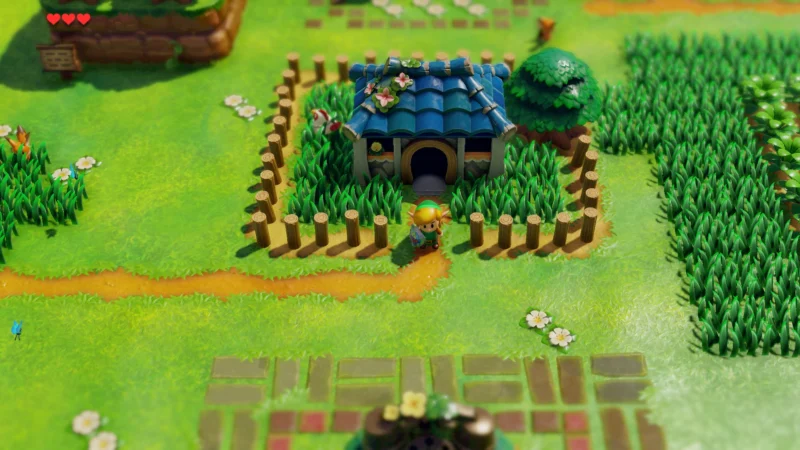
The eventual goal is to replace every pre-rendered area in the game, including houses and shops. Link’s house is among the locations planned after the current Castle Town work is polished.
Starting with Castle Town was deliberate. It’s one of the largest and most technically demanding collections of pre-rendered scenery in the game, so Reonu decided to tackle the difficult part first.
That makes the progress shown so far pretty encouraging.
There is currently no release date for OoT unJPEG, and the project remains a work in progress.
The timing is also interesting. Nintendo itself is preparing a new version of Ocarina of Time exclusively for Nintendo Switch 2, currently scheduled for sometime in 2026. But OoT unJPEG is chasing a completely different idea.
Rather than imagining what Ocarina of Time should look like nearly 30 years later, it asks a much more specific question: what if the Nintendo 64 had been able to render all of Hyrule in 3D back in 1998?
Judging by Castle Town so far, that’s a version of Ocarina of Time we’d very much like to explore.
My Nintendo Sweepstakes Is Giving Away the Massive Breath of the Wild 8-LP Vinyl Box Set
Nintendo is giving Zelda fans another reason to put those unused My Nintendo Platinum Points to work.
A new My Nintendo sweepstakes is offering fans a chance to win the Limited Edition Deluxe 8-LP vinyl soundtrack forThe Legend of Zelda: Breath of the Wild. Only five winners will be selected, but considering the set normally carries a suggested retail value of $194.99, this is easily one of the more interesting My Nintendo prizes we’ve seen recently.
The sweepstakes opened on August 26 and runs through November 16, 2026 at 11:00 p.m. Pacific Time — or November 17 at 2:00 a.m. Eastern.
Sweepstakes alert! Five lucky winners will receive the Legend of Zelda: Breath of the Wild Limited Edition Deluxe X 8LP Boxset, featuring 130 tracks and archival artwork.
How to Enter the Breath of the Wild Vinyl Sweepstakes
Entering is fairly straightforward if you already have a Nintendo Account.
Each entry costs 10 My Nintendo Platinum Points, and Nintendo allows a maximum of 10 entries per person, meaning you can spend up to 100 Platinum Points for the maximum number of chances.
Platinum Points can be earned without making purchases through various My Nintendo missions and Nintendo-related activities, so longtime users may already have enough sitting in their accounts.
Nintendo says the sweepstakes is available to residents of the 50 United States, Washington D.C., and Canada, excluding Quebec, who are at least 13 years old. Entrants under the age of majority in their region need permission from a parent or legal guardian.
Five potential winners are scheduled to be selected in a random drawing around November 23, with Nintendo expecting to contact them by email around December 1.
This Isn’t Just a Small Soundtrack Sampler
The prize is the centerpiece of Nintendo and Laced Records’ upcoming Breath of the Wild vinyl collection: the Limited Edition Deluxe 8-LP Box Set.
It includes a whopping 130 specially mastered tracks from Breath of the Wild, with music composed by Manaka Kataoka, Yasuaki Iwata, Hajime Wakai, and Soshi Abe. The eight records use alternating blue-and-gold splatter-effect heavyweight vinyl and come packaged inside a rigid dual slipcase decorated with archival artwork from Nintendo.
Rather than simply dumping the soundtrack onto eight records in game order, the collection is arranged thematically. Different sides focus on portions of Link’s adventure ranging from exploring Hyrule and battling monsters to the Divine Beasts, Champions, Shrines, Hyrule Castle, and the final confrontation with Calamity Ganon.
There’s even an entire eighth record featuring additional music including Tarrey Town, the ancient tech labs, the 2017 Nintendo Switch presentation trailer music, and selections from The Champions’ Ballad.
For collectors, there’s another noteworthy piece of history attached to the release. Nintendo says its collaboration with Laced Records represents the first time a Nintendo soundtrack has received a commercial vinyl release outside of Japan.
The Vinyl Collection Arrives September 4
After previously being scheduled for June, the Breath of the Wild vinyl collection is now set to release on September 4, 2026. Nintendo’s official store currently lists that date for both the eight-LP collection and the smaller two-LP edition.
The two-LP version pares things down considerably, offering 34 tracks rather than the 130 included with the full collection.
The eight-LP set, meanwhile, is about as close as you can get to putting the musical journey across Hyrule onto your record shelf. Tracks range from the understated piano of “Overworld (Day)” and familiar themes such as “Kass’s Theme” and “Great Fairy Fountain” all the way through the Divine Beast battles, “Hyrule Castle,” the Calamity Ganon encounters, “Epilogue,” and music from The Champions’ Ballad.
With the limited-edition eight-LP collection valued at $194.99, spending 10 Platinum Points on an entry isn’t exactly a bad gamble — especially if those points have otherwise been gathering digital dust.
Fans interested in entering have until November 16 at 11:00 p.m. PT, and you can submit up to ten entries before the sweepstakes closes.
Whether you’re a vinyl collector, a Breath of the Wild soundtrack obsessive, or simply someone with too many Platinum Points and nothing to spend them on, this might be one My Nintendo reward worth taking a shot at.