





















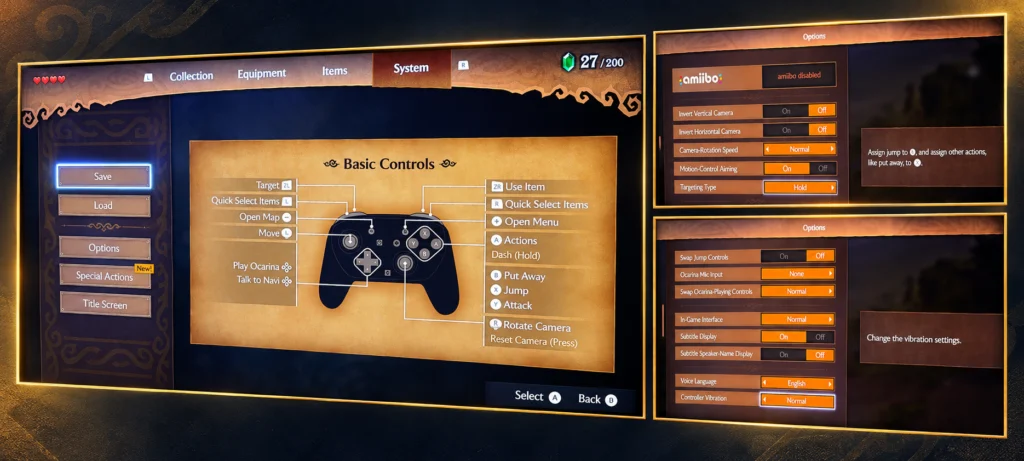
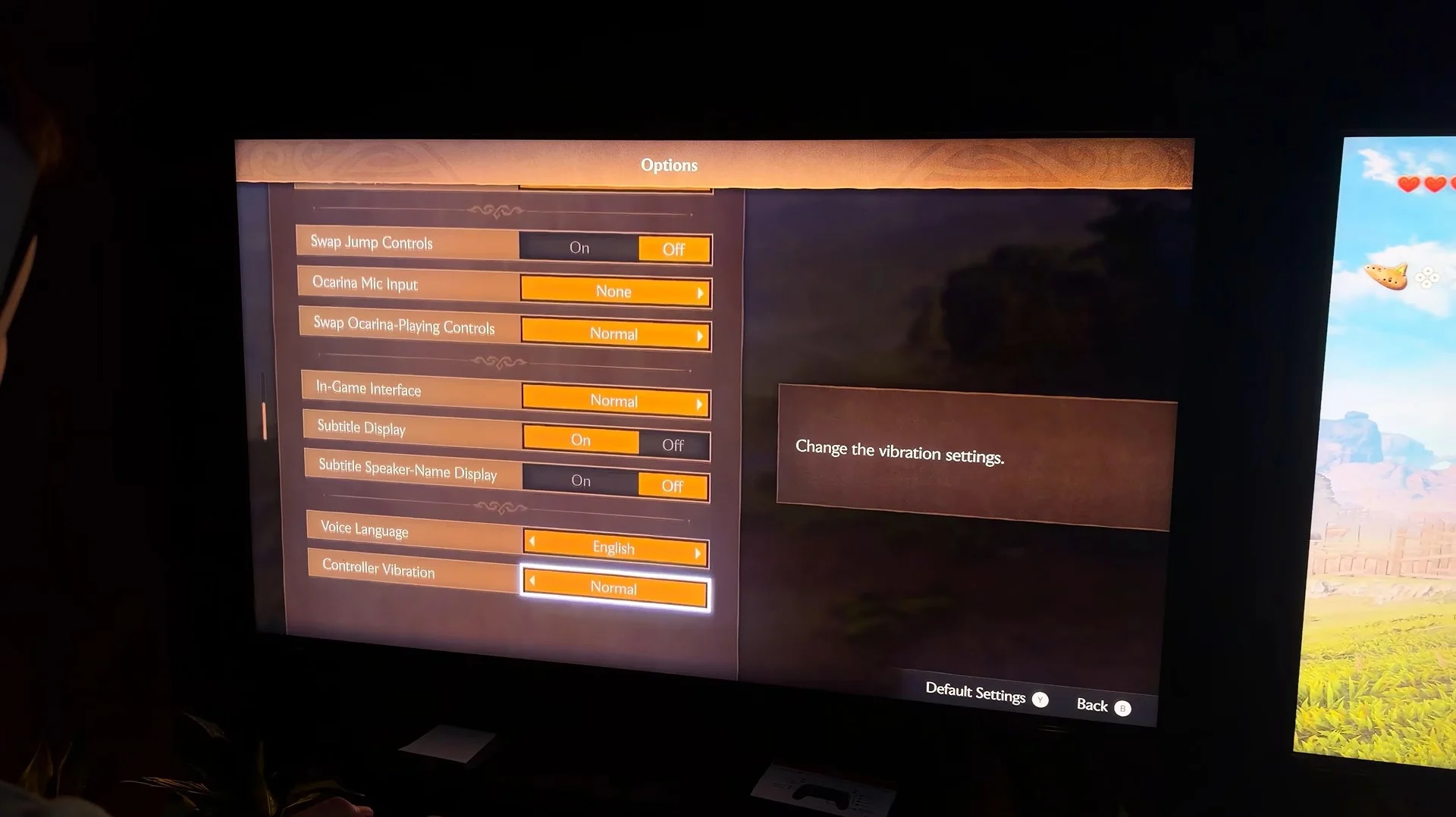
The three interface choices are Standard, Pro, and Master. Standard shows the full interface, Pro trims down the information on screen, and Master removes it. The settings menu also includes an In-Game Interface option, shown set to Normal in one of the preview images
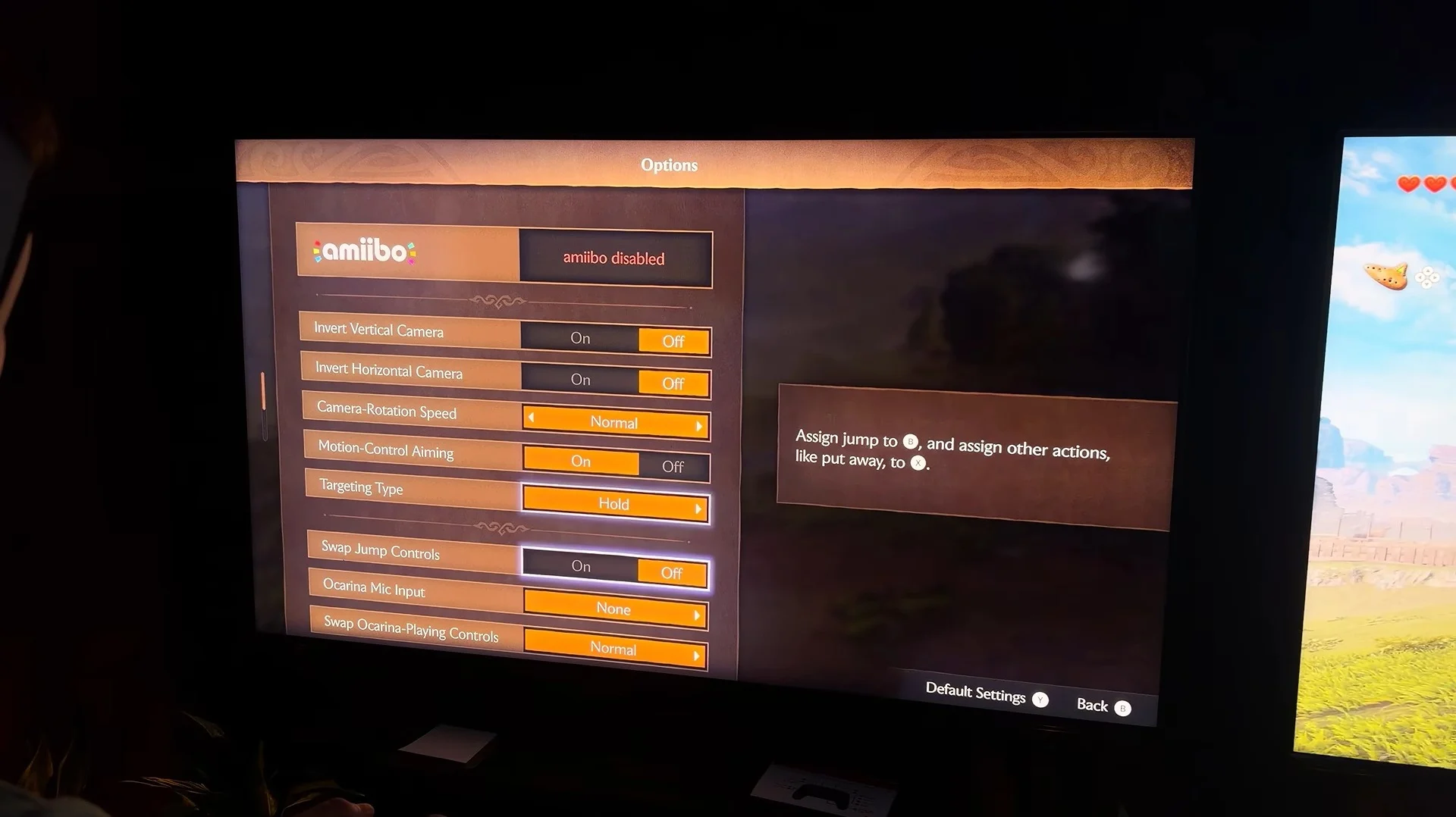
Players can choose whether ZL targeting uses Hold or Toggle. Hold keeps Link locked onto a target while ZL is pressed. Toggle lets players tap the button to lock on, then tap it again to stop targeting. Motion-control aiming can be turned on or off, and the camera settings include horizontal and vertical inversion along with a camera rotation speed option.
The menus show a few other adjustments, too. Subtitle display and speaker-name labels have separate switches, while voice language and controller vibration each have their own settings. The footage also shows an Ocarina Mic Input option and a setting for swapping the ocarina-playing controls.
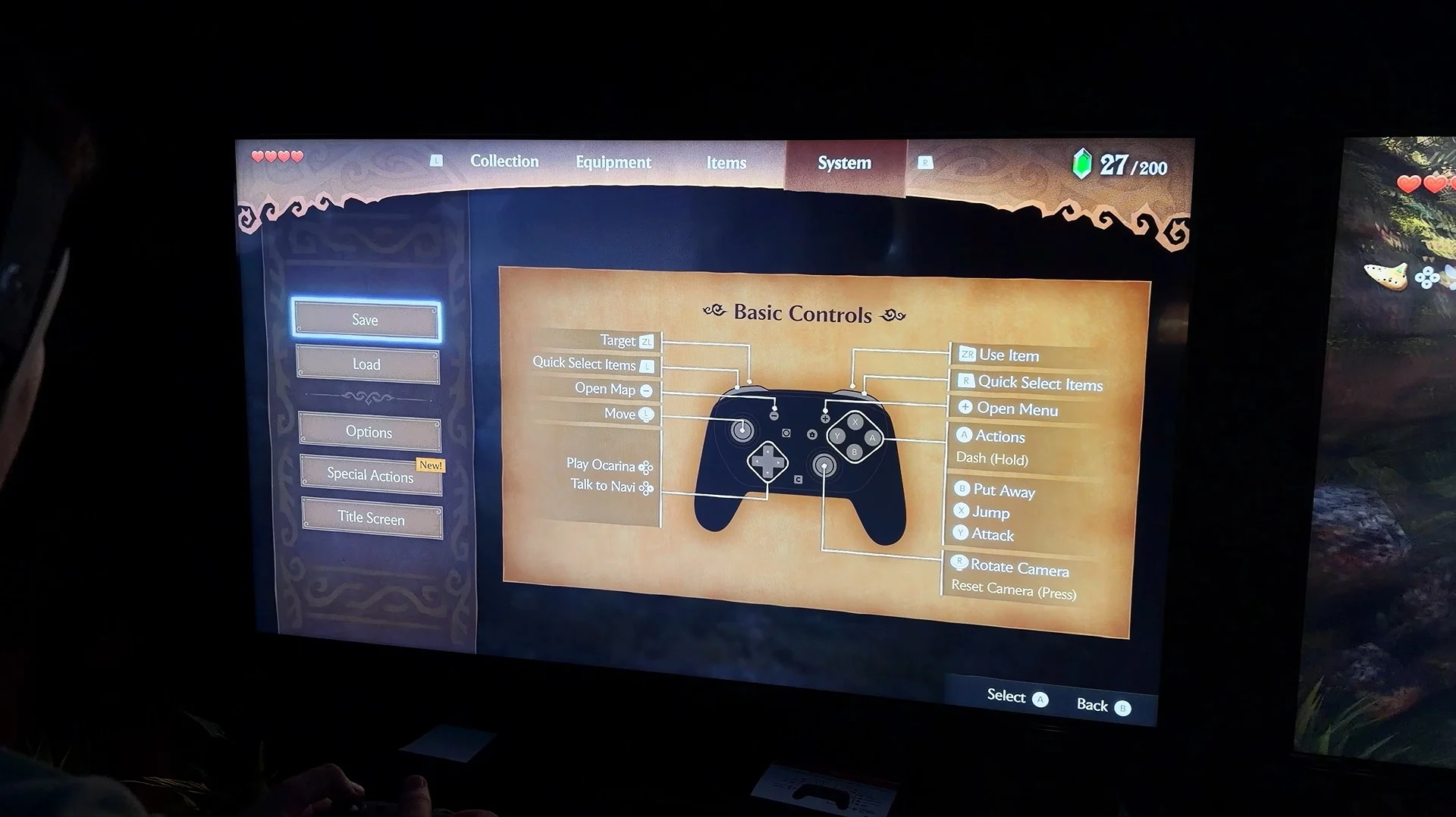
A controls screen lays out the button assignments, including jump, attack, put away, dash, and camera rotation. One menu description says players can assign jump to B and put away to X. Nintendo has already confirmed that the remake adds button commands for jumping and running, along with improved right-stick camera control.
Nintendo’s official listing describes the remake as a rebuilt version of the 1998 adventure, with overhauled visuals, voiced cutscenes, expanded dialogue, and symphonic music. Ocarina of Time launches for Nintendo Switch 2 on November 5, 2026.
