




















The Legend of Zelda: Ocarina of Time Remake
Nintendo Switch 2 · 2026 (upcoming)
Follow our coverage of the Ocarina of Time remake, including news, trailers, gameplay details, and comparisons with the original. Find the latest updates together in one place.
Explore the guide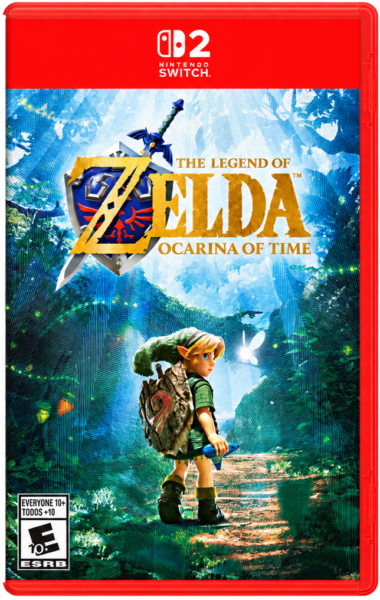
The Legend of Zelda: Ocarina of Time comes to Nintendo Switch 2 on November 5, 2026. Nintendo has rebuilt the 1998 adventure with overhauled visuals, voiced cutscenes, orchestral music, updated movement and camera controls, and new features such as Threads of Time and the Hall of Fallen Heroes.
This page collects confirmed details, trailer coverage, preorder information, and our guides to the Switch 2 release. We’ll keep updating it as Nintendo shares more and as the game’s changes become clear.
Table of Contents
Ocarina of Time Remake Quick Facts
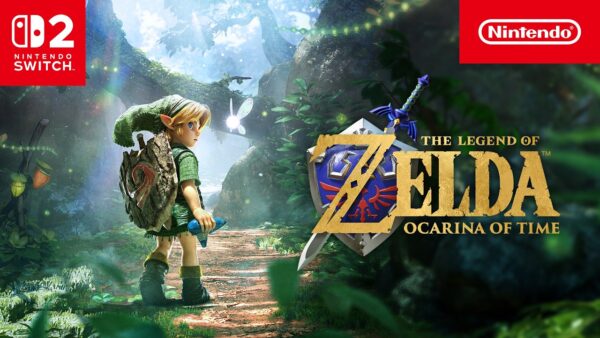
Release Date: November 5, 2026
Platform: Nintendo Switch 2 exclusive
Publisher: Nintendo
Price: $59.99 digital; $69.99 physical MSRP
Players: 1
Estimated download size: 27GB
Supported Features: amiibo, HDR output, VRR output
Latest Major Update: October 14, 2026: Nintendo released an overview trailer and revealed the Hall of Fallen Heroes
Ocarina of Time Remake Release Date
The Ocarina of Time remake releases on November 5, 2026.
Nintendo confirmed the date during the Zelda 40th Anniversary Direct on September 8, following the game’s initial reveal earlier in the year.
That puts the remake almost exactly 28 years after Ocarina of Time’s original Nintendo 64 release in November 1998.
Preorders are now open, with both digital and physical versions available depending on region and retailer.
Is the Ocarina of Time Remake coming to Nintendo Switch?
Right now, no.
Nintendo lists The Legend of Zelda: Ocarina of Time exclusively for Nintendo Switch 2, and an original Nintendo Switch version has not been announced.
The original Ocarina of Time remains playable through Nintendo Switch Online + Expansion Pack as part of the Nintendo 64 library, but that is the emulated N64 version rather than the 2026 remake.
Is the Ocarina of Time Remake Real?
Yes.
After years of rumors, alleged leaks, fan wish lists, and increasingly elaborate Unreal Engine recreations, Nintendo officially announced a new version of The Legend of Zelda: Ocarina of Time in June 2026.
More importantly, this isn’t simply another port of the Nintendo 64 game or an HD version of Ocarina of Time 3D.
Nintendo describes the game as being built from the ground up for Nintendo Switch 2.
The September 2026 Zelda Direct made the scale of that work much clearer. Nintendo showed extended gameplay featuring remodeled environments, new animation and movement systems, voice acting, updated combat and camera controls, orchestral music, and several entirely new features.
In other words, this is an actual remake.
What’s New in the Ocarina of Time Remake?
Nintendo appears to be taking a careful approach with Ocarina of Time.
The locations, characters, dungeons, enemies, story beats, and overall structure shown so far are immediately recognizable, but almost everything surrounding them has been rebuilt or modernized.
Some of the biggest confirmed changes include:
Completely Rebuilt Graphics
The most obvious difference is Hyrule itself.
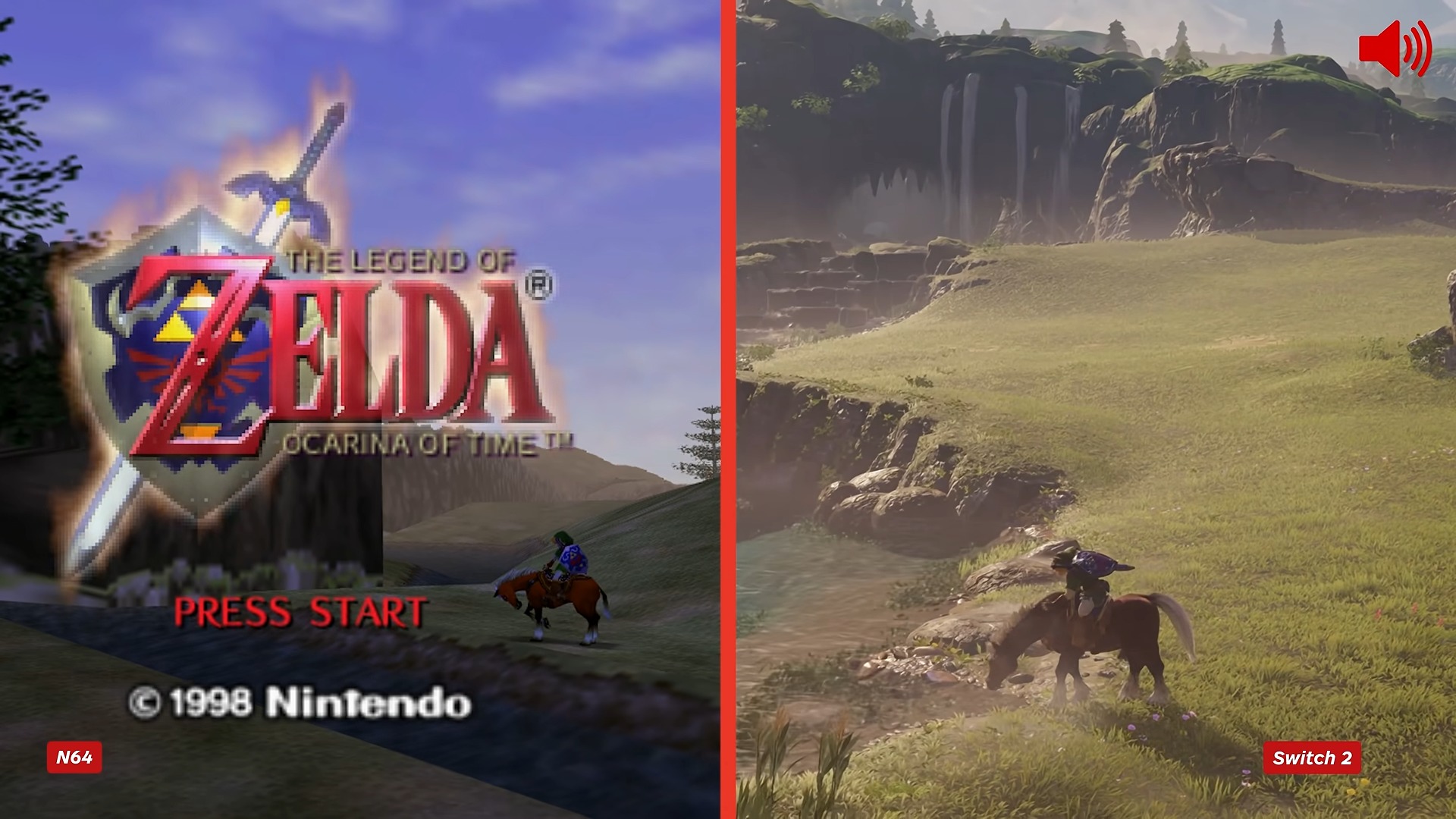
Rather than simply replacing the original textures with higher-resolution versions, Nintendo has remodeled locations and updated individual materials, lighting, environmental details, character models, and effects.
Kokiri Forest is still Kokiri Forest. Hyrule Field is still Hyrule Field.
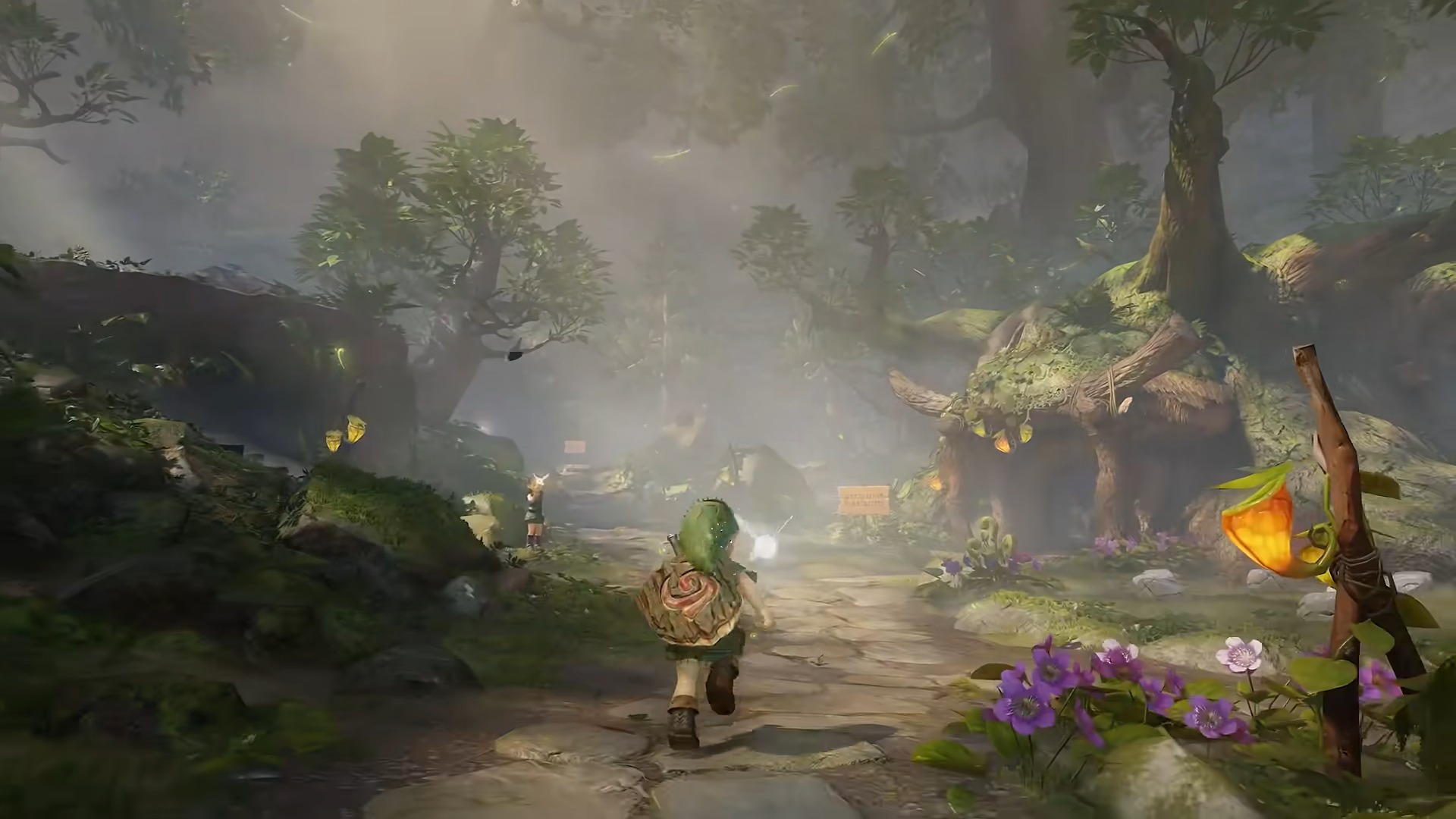
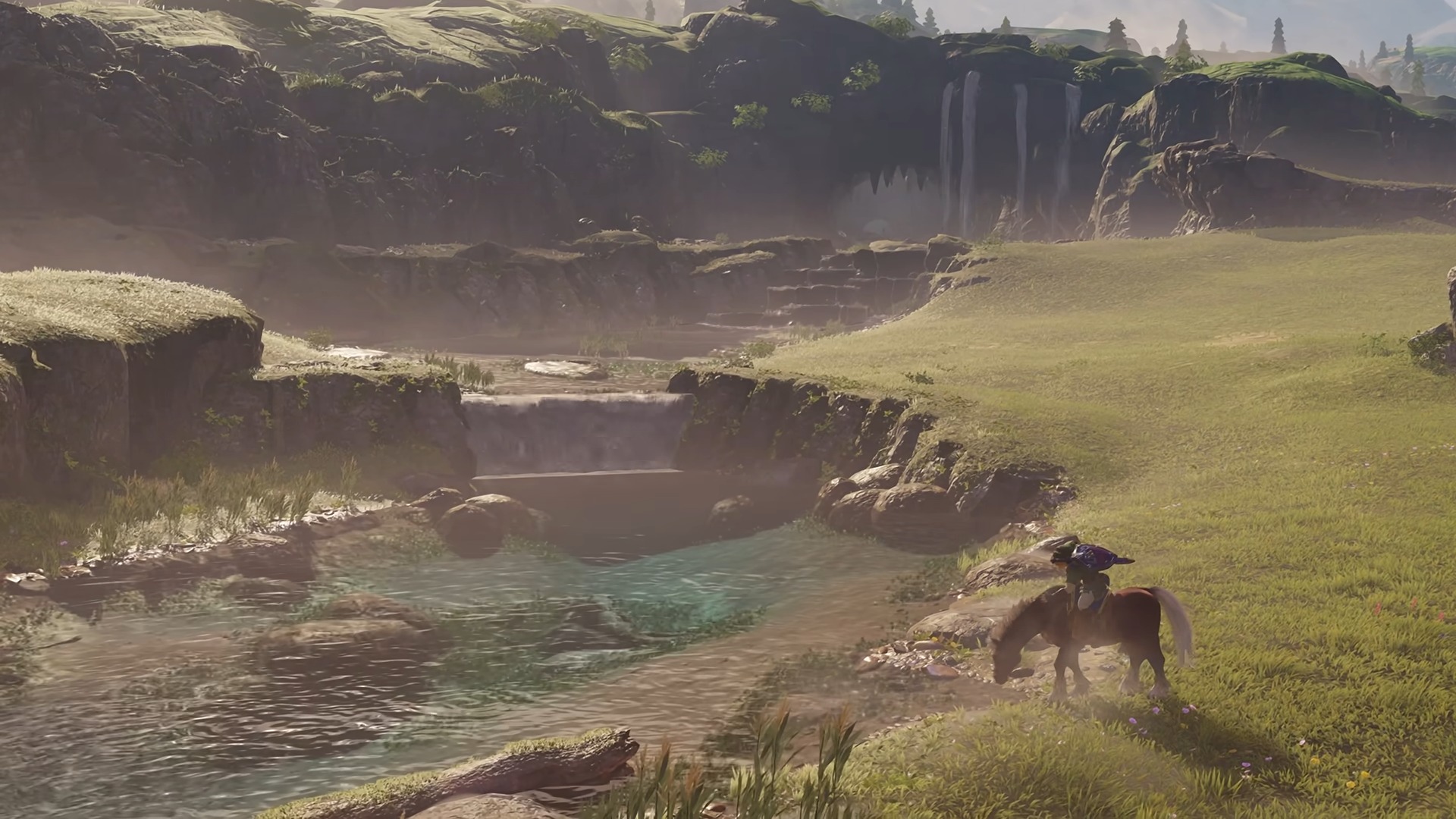
They simply look like places rather than collections of late-1990s polygons and painted backgrounds.
That distinction matters. Ocarina of Time has always relied heavily on atmosphere, and Nintendo so far appears more interested in recreating how those places felt in 1998 than radically redesigning them.
Fully Voiced Cutscenes
One of the largest departures from the original game is the addition of fully voiced cutscenes.
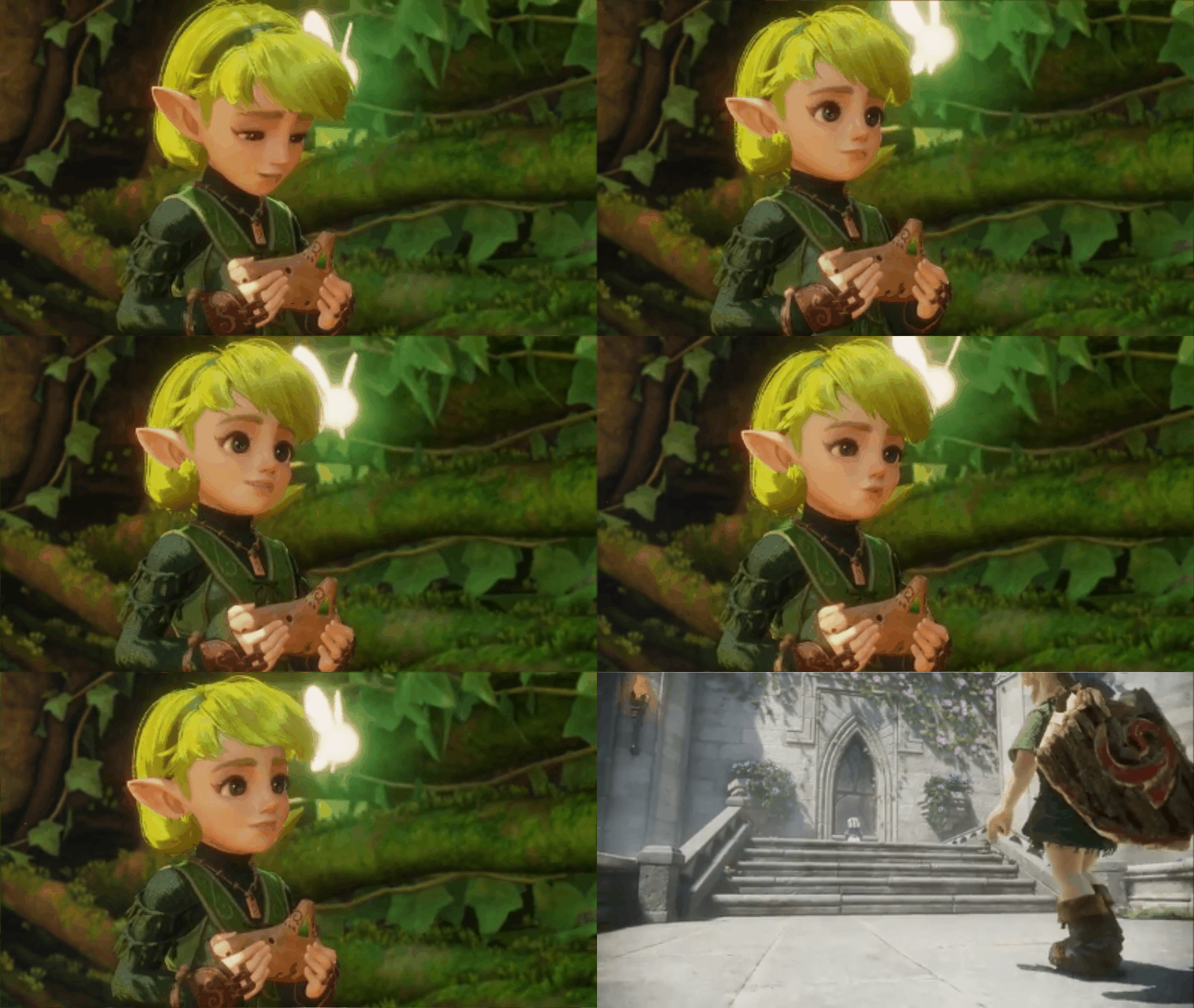
Characters also have expanded dialogue outside those scenes, giving Nintendo considerably more room to develop Hyrule’s inhabitants than it had on the Nintendo 64.
How far that expansion goes remains one of the more interesting questions surrounding the remake.
Nintendo has not indicated that the central story has been rewritten, but additional dialogue could give characters such as Zelda, Impa, Saria, Darunia, Ruto, Nabooru, and Ganondorf substantially more presence.
Symphonic Orchestral Music
Ocarina of Time has one of Nintendo’s most recognizable soundtracks, so replacing it was never going to be an option.
Instead, the remake features symphonic orchestral music, bringing themes such as Zelda’s Lullaby, Gerudo Valley, Saria’s Song, the Song of Storms, and the game’s dungeon music into a modern audio presentation.
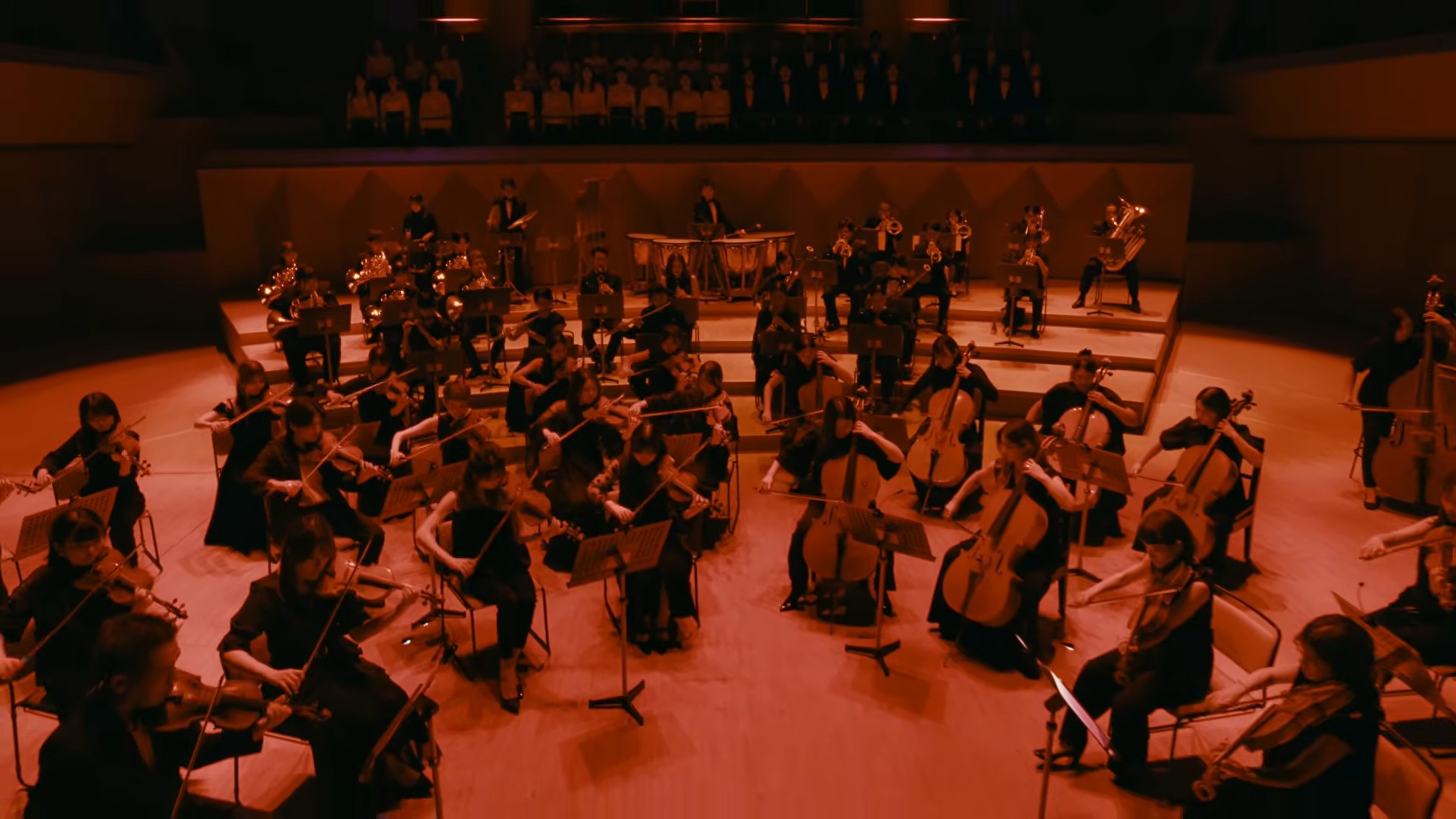
Nintendo has also refreshed the game’s wider sound design.
A Free Camera
Modern camera control may not sound as exciting as rebuilt graphics or orchestral music, but anyone returning directly to the Nintendo 64 version will probably appreciate this one immediately.
Players can freely control the camera with the Right Stick.
Ocarina of Time originally relied heavily on Z-targeting and automatic camera positioning because the Nintendo 64 controller didn’t have a second analog stick.
The remake finally removes that limitation.
Link Can Jump
Yes, Link has a jump button now.
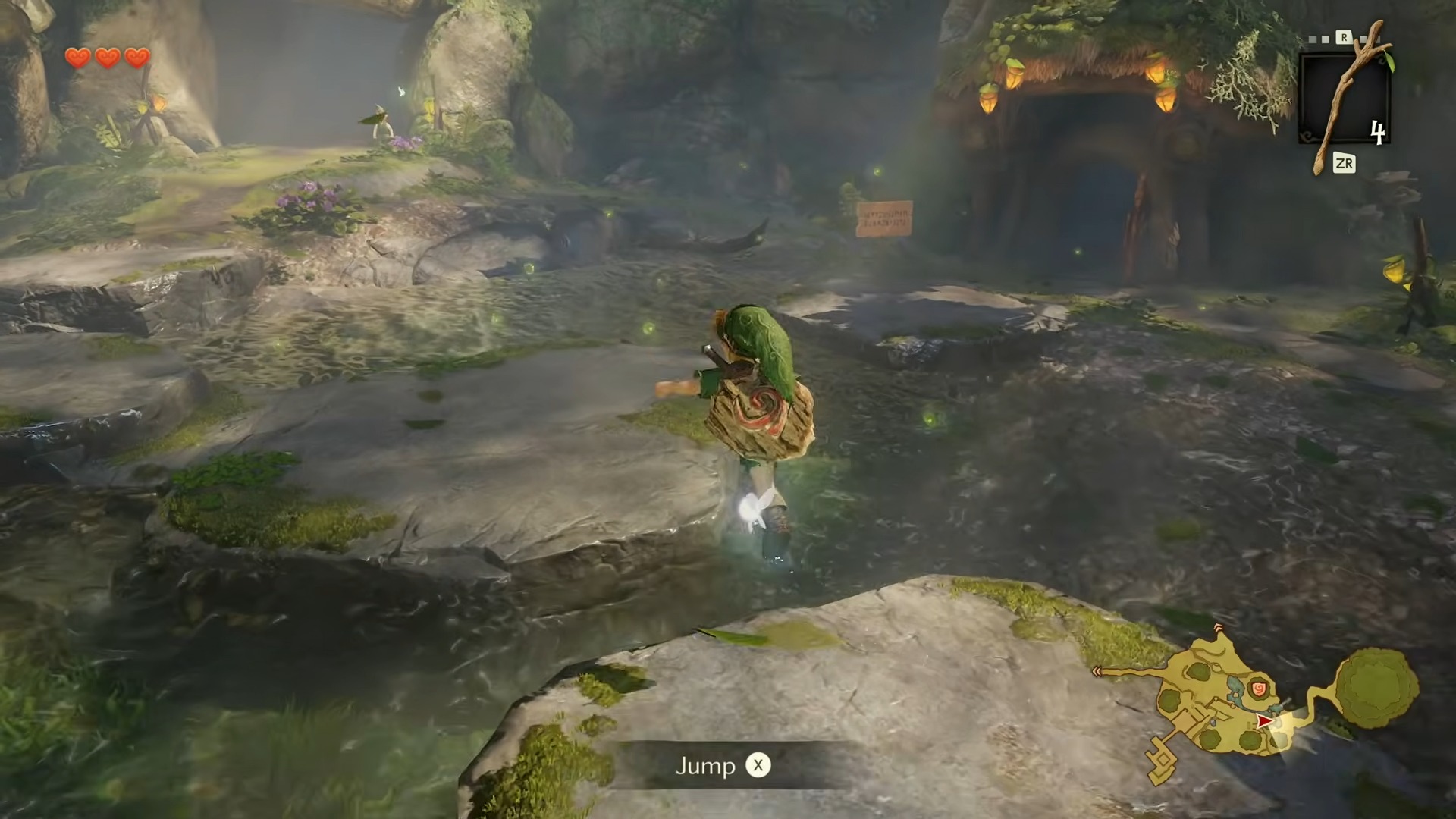
The original Ocarina of Time automatically made Link leap whenever he ran off an appropriate ledge. In the remake, Nintendo has introduced manual jumping alongside updated traversal controls.
Link can also dash, making it faster to cross larger areas.
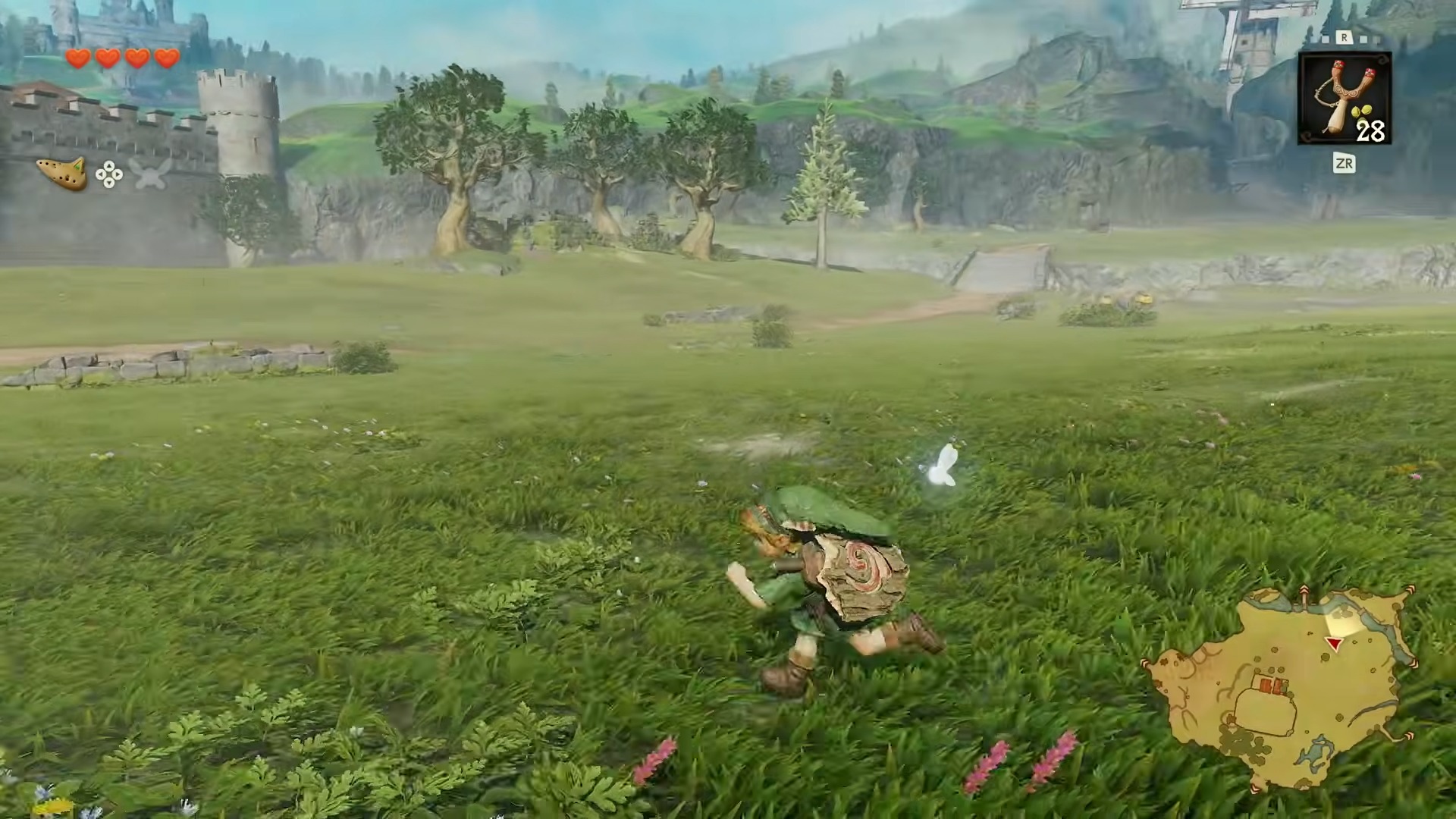
Those changes may seem small, but they fundamentally change how a game built around automatic jumping can be navigated. It’ll be particularly interesting to see whether Nintendo has altered dungeon layouts or hidden secrets to take advantage of the added freedom.
A Continuous Day and Night Cycle
Time now continues moving regardless of where Link goes.
In the original Ocarina of Time, entering places such as Hyrule Castle Town essentially froze the outdoor clock. The remake’s day/night cycle continues even inside towns, allowing different characters and enemies to appear depending on the time.
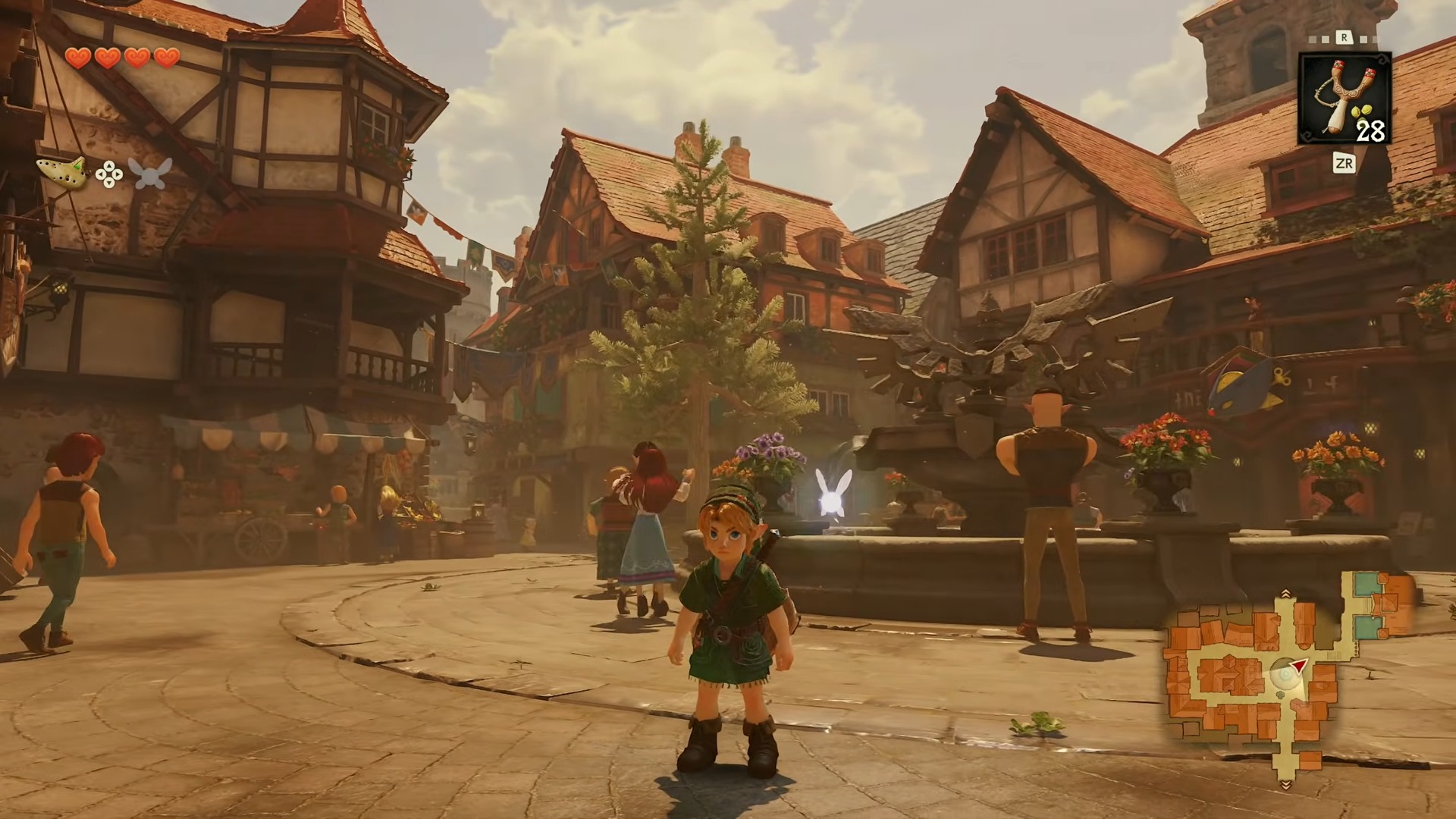
It’s the kind of change that could make Hyrule feel much more alive without fundamentally changing its geography.
Threads of Time
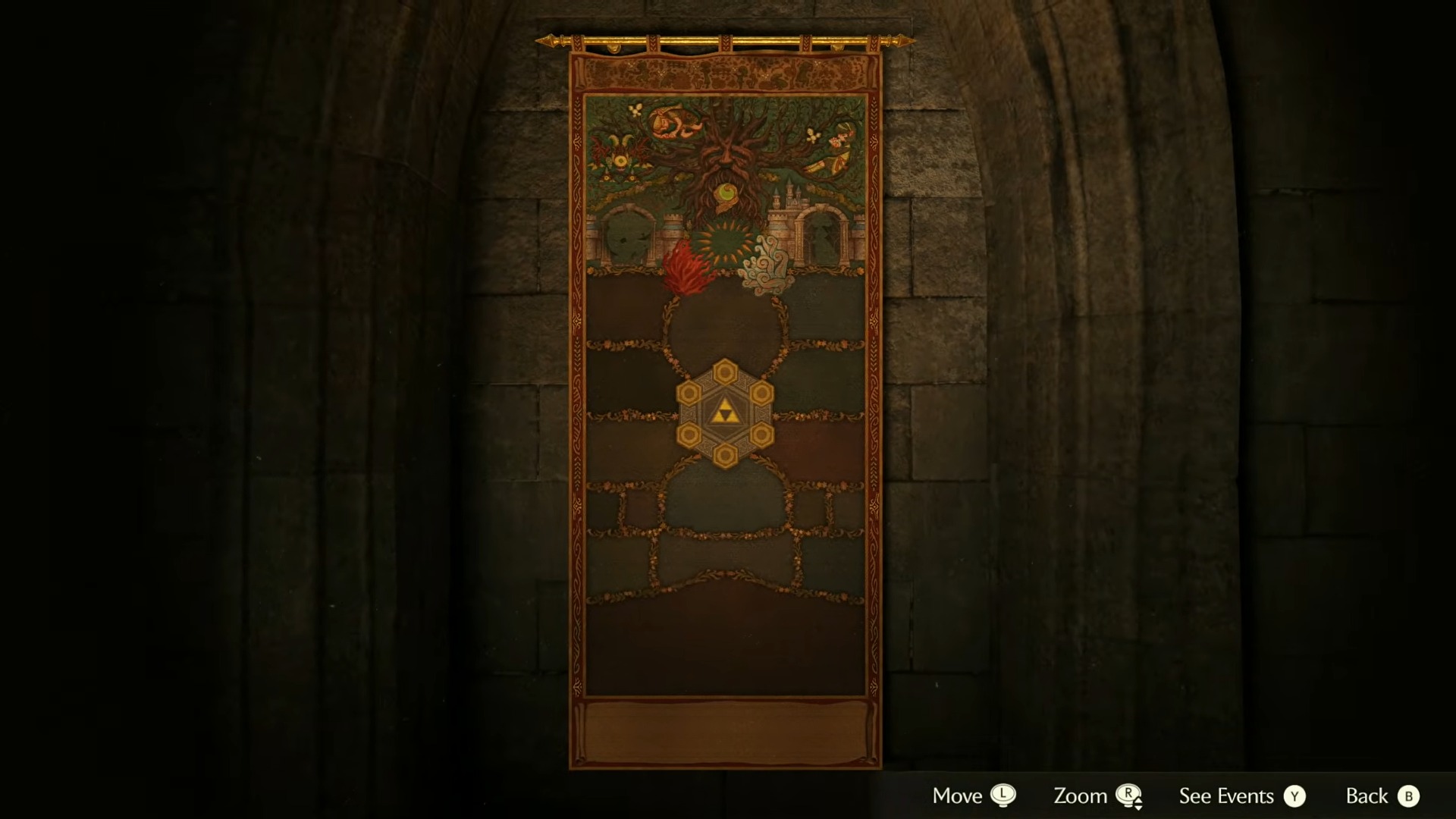
Nintendo is also adding a new feature called Threads of Time.
At any point in the adventure, players can use it to review what has happened in the story and see their current objective.
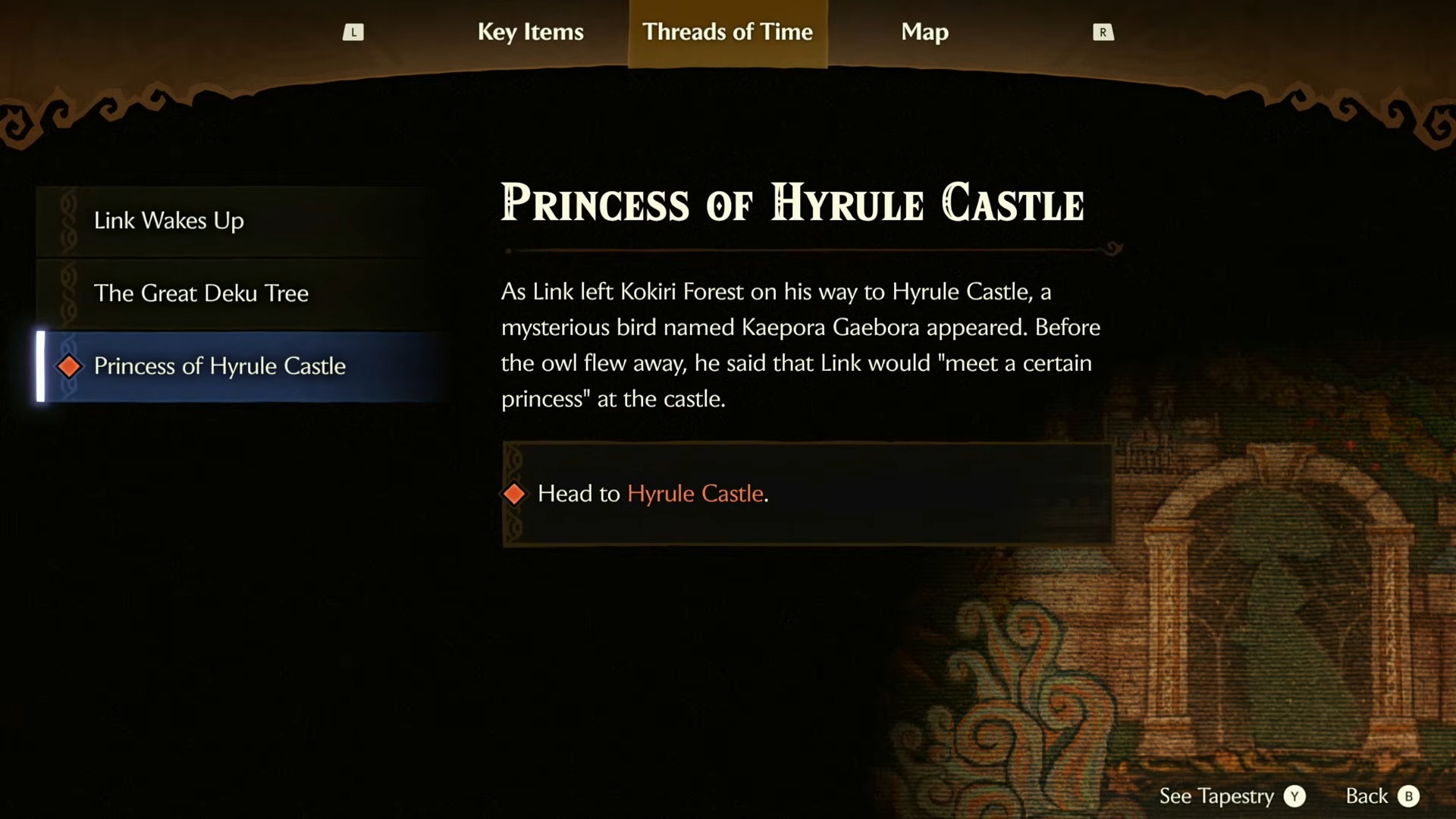
As Link progresses, a large tapestry gradually fills in to chronicle his journey.
It’s essentially a built-in answer to a problem anyone who has returned to an old Zelda save file knows well:
“What was I doing again?”
The original Ocarina of Time could be deliberately vague about where Link needed to go next. Navi occasionally provided reminders, but players who stopped playing for a few weeks could easily return with no idea where they were headed.
Threads of Time provides direction without turning the game into a waypoint-filled open world.
Playing the Ocarina Is Different
The Switch 2’s built-in microphone can recognize melodies Link has learned. Players can hum a tune or play it on an instrument, and Link will perform it in-game.
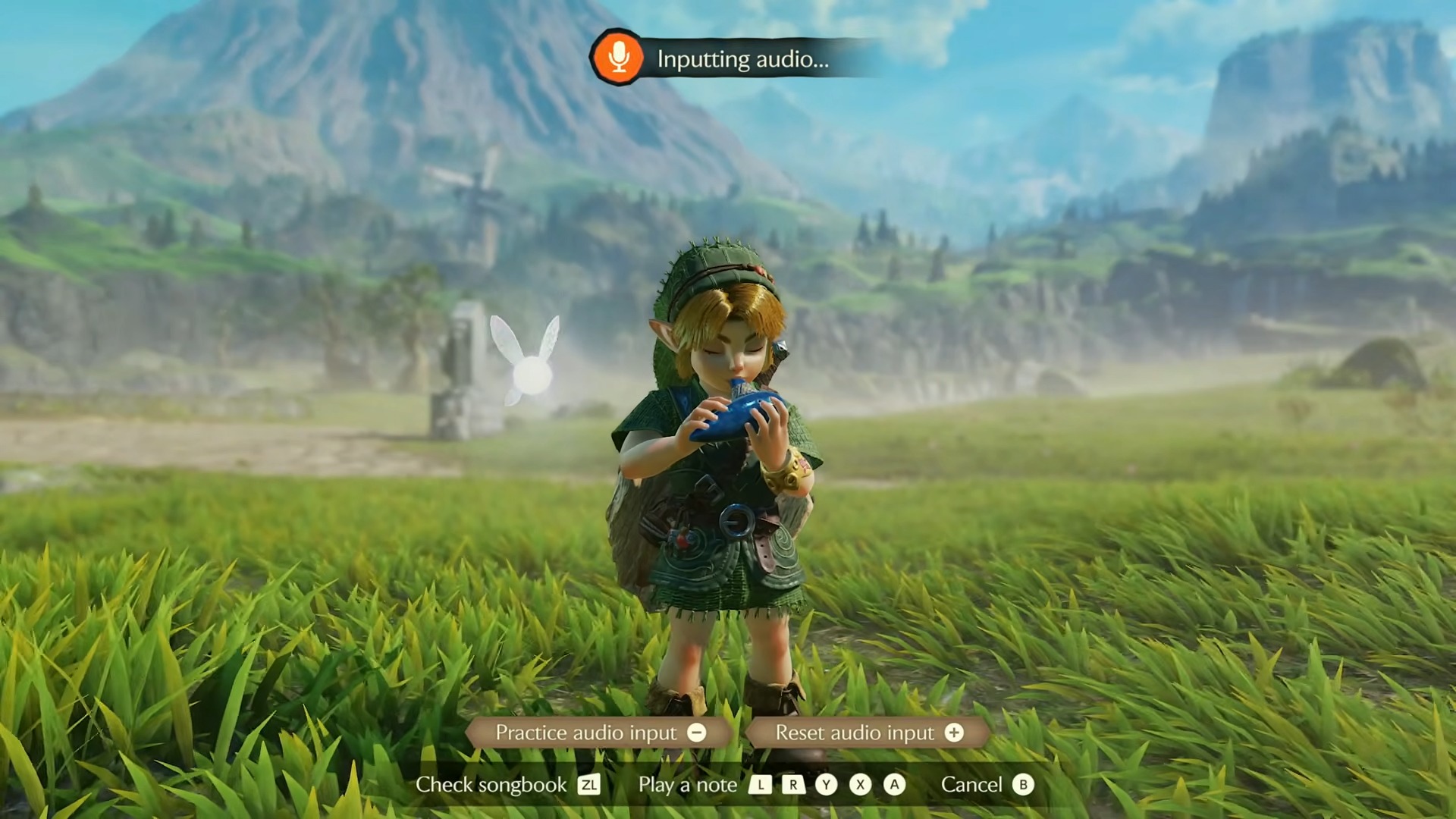
Nintendo has also announced playable and electronic ocarina products. The Electric OCARINA OF TIME is an electronic toy, not a real instrument, and it is not a game controller. ZELDA NOTES separately includes a virtual ocarina that players can use on a compatible smart device.
Zelda Notes Features
Ocarina of Time will also connect to ZELDA NOTES through the Nintendo Switch App.
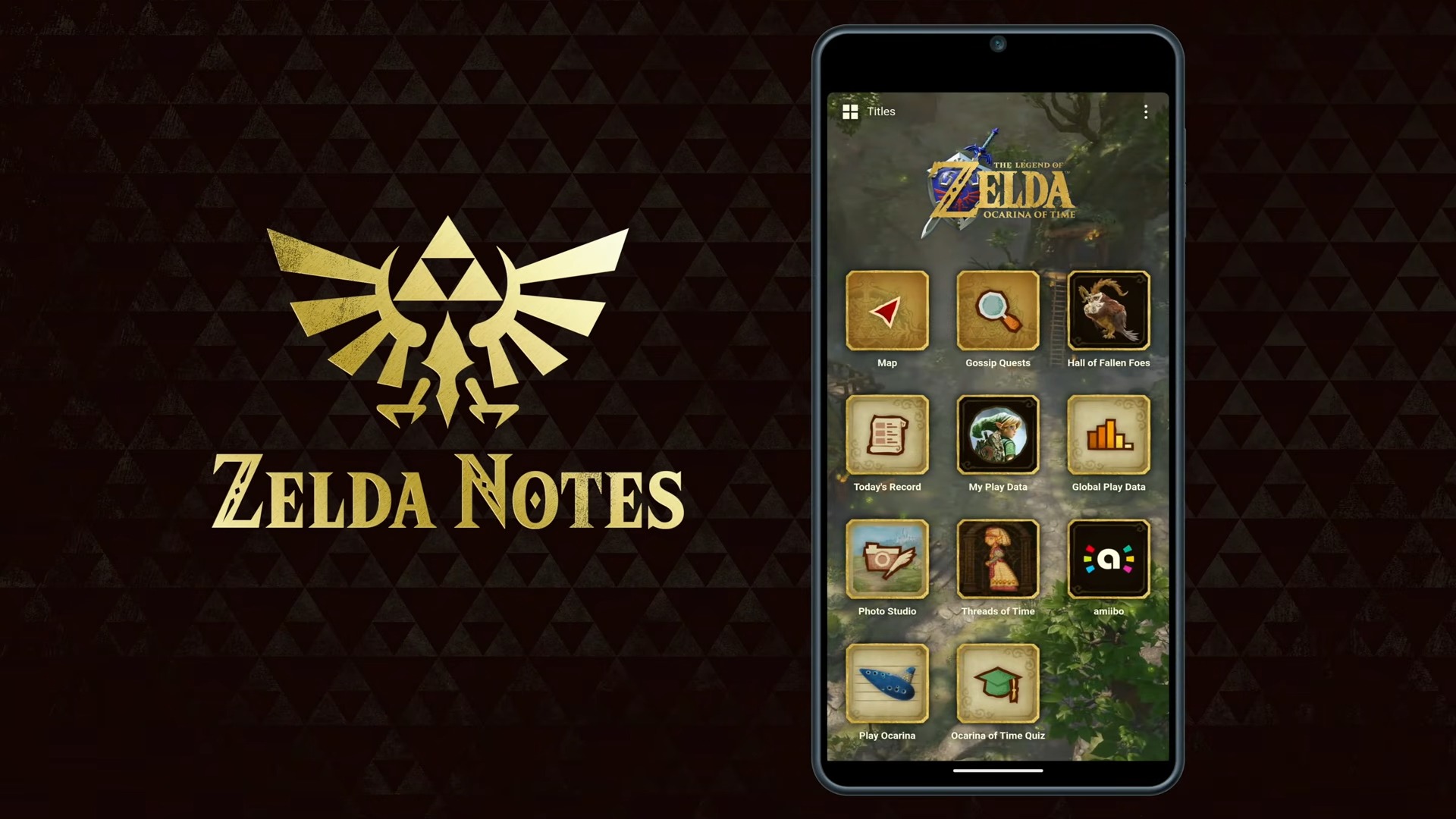
Nintendo has announced several remake-specific features.
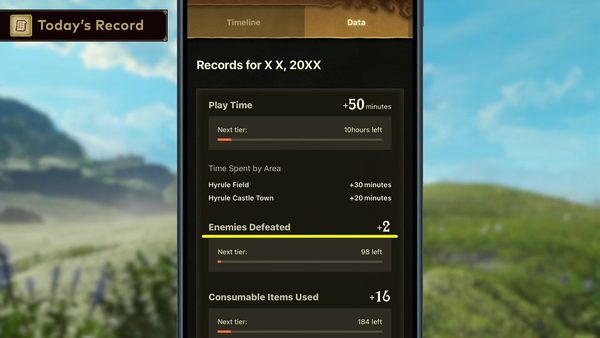
Today’s Record
Today’s Record keeps a chronological history of what you accomplished during a play session.
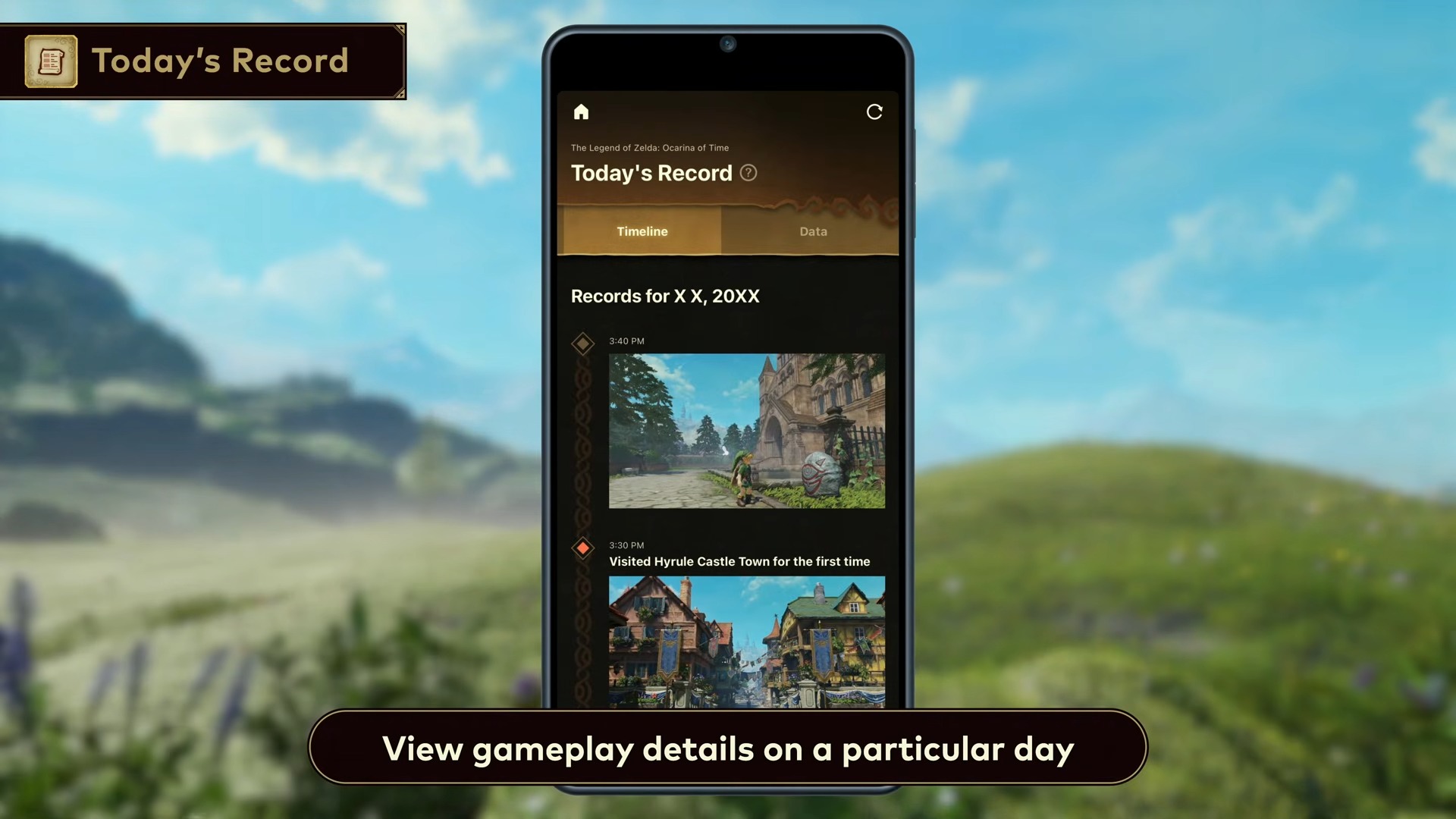
It can also track statistics such as enemies defeated and other activity.
Gossip Quest
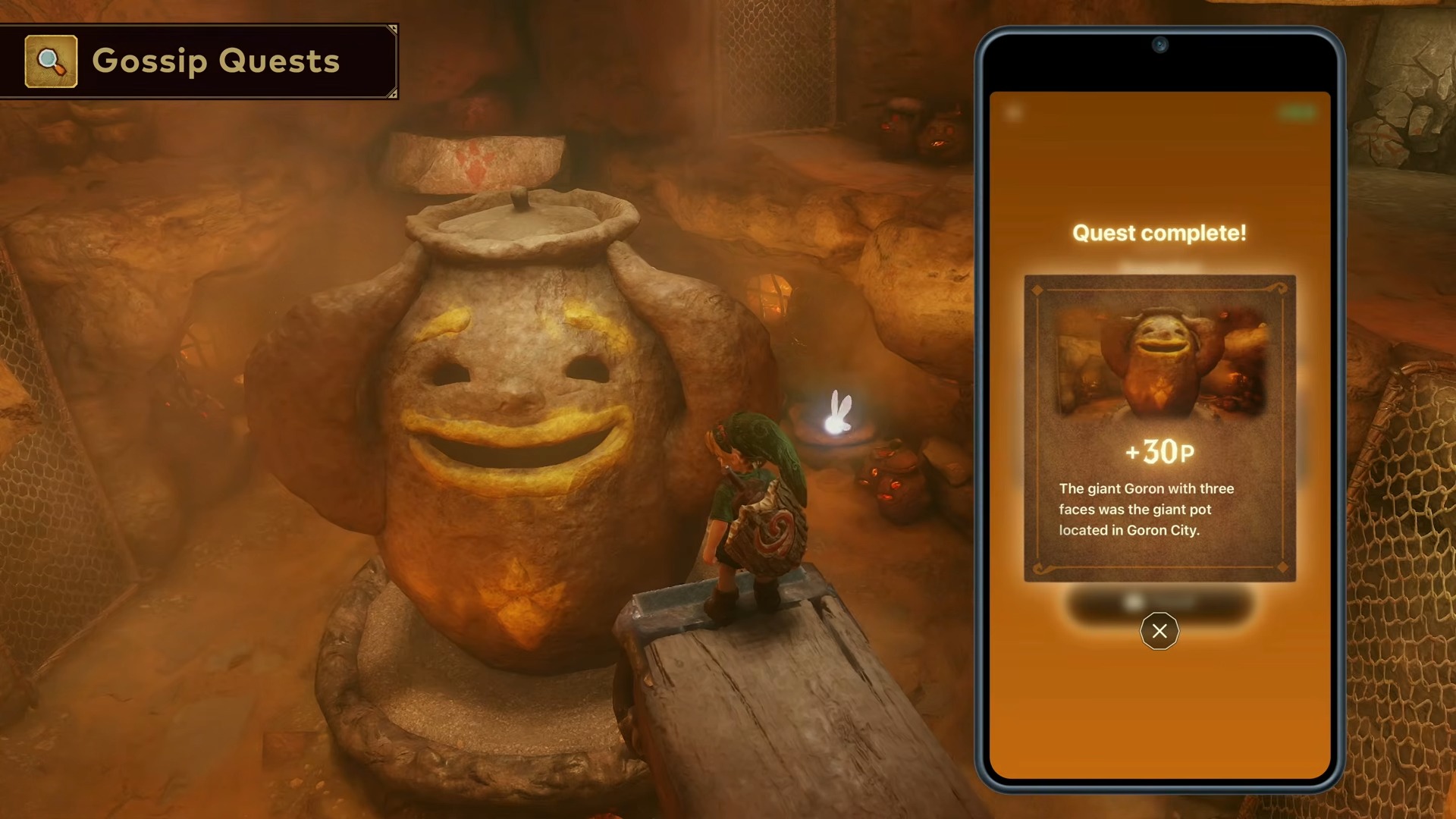
Gossip Quest gives players an image of a location somewhere in the game and challenges them to find it.
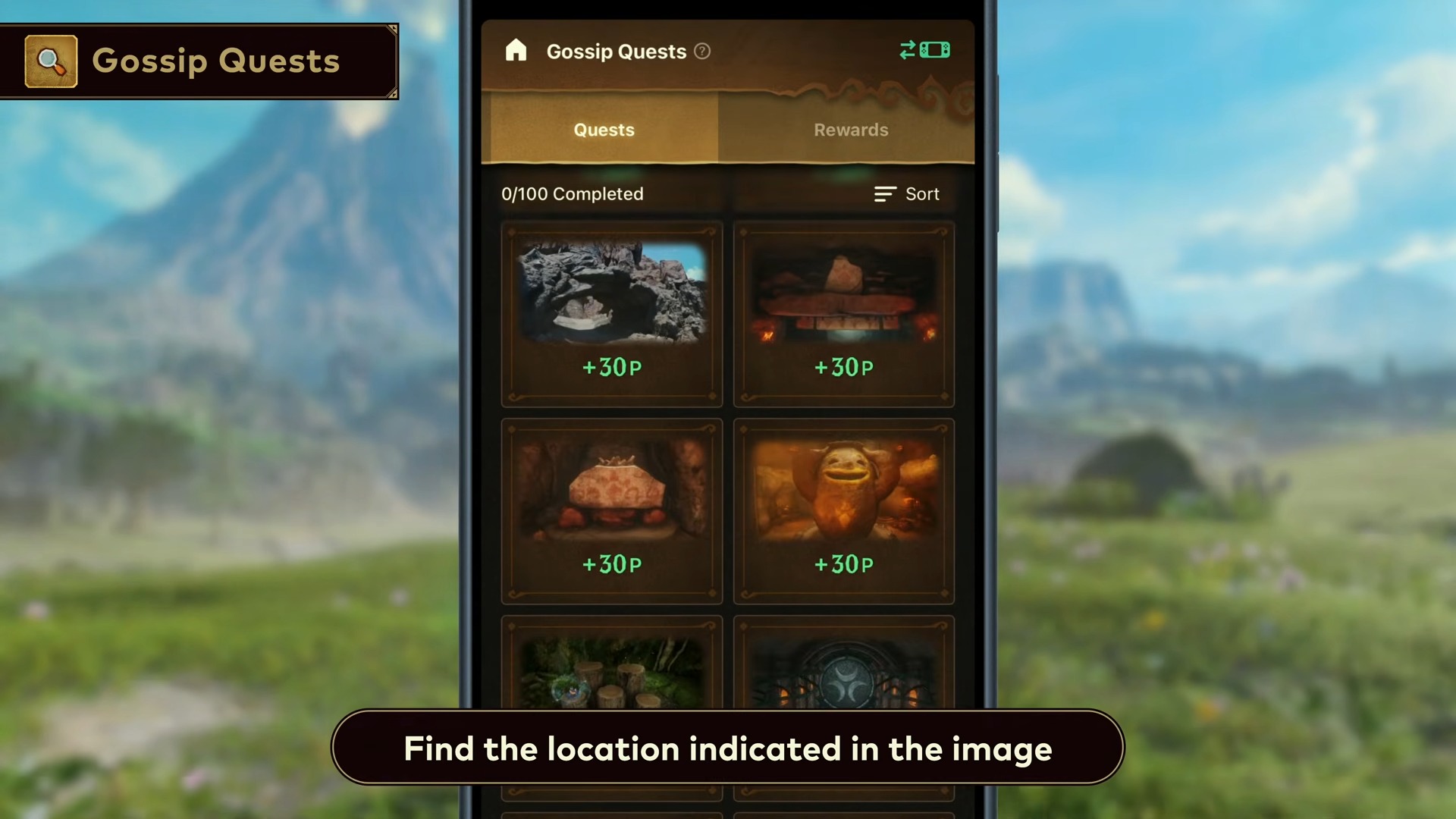
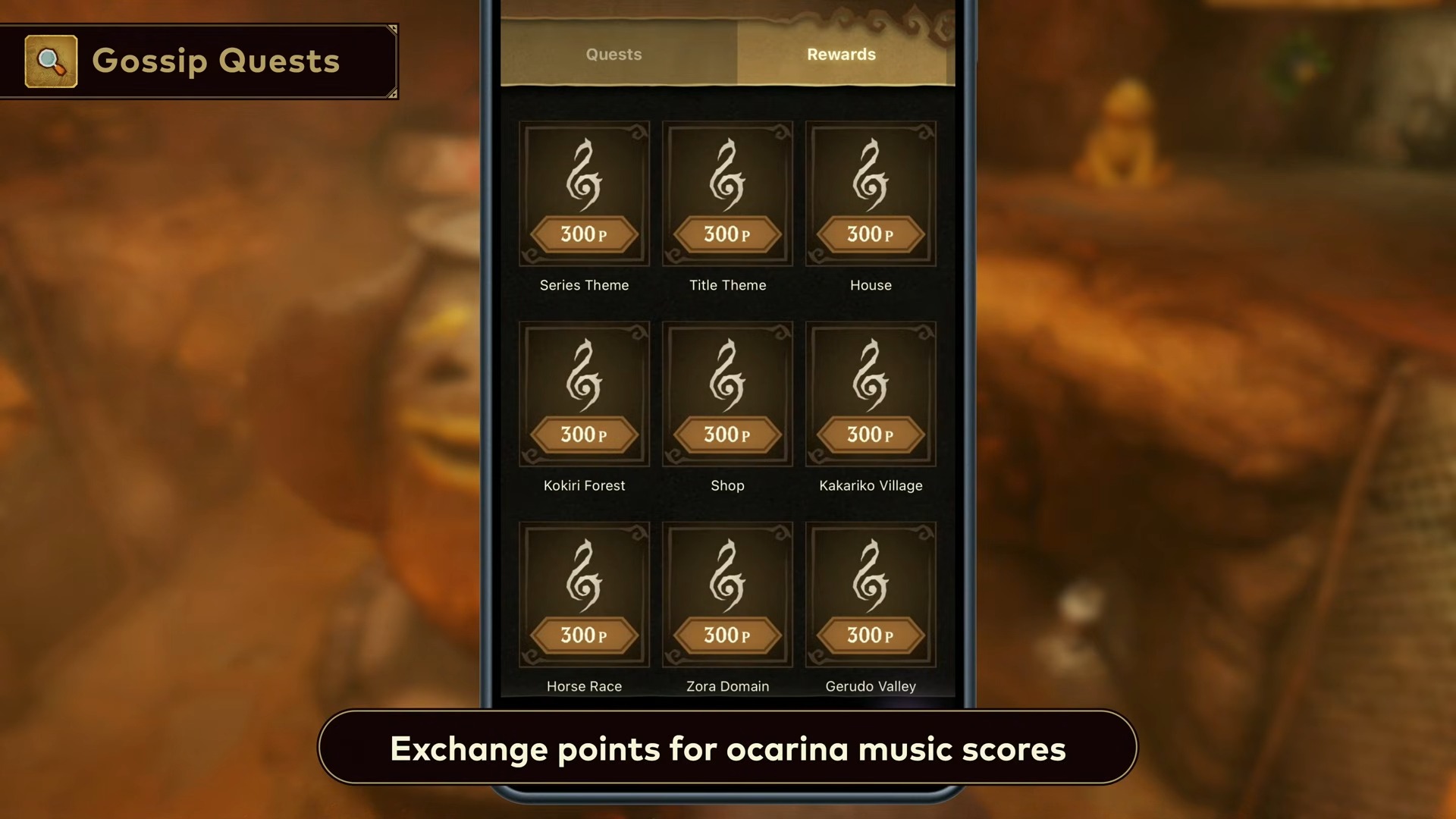
Successfully completing these challenges earns points that can unlock music scores for the Play Ocarina feature.
It’s an interesting addition for a game that already encouraged players to investigate suspicious-looking rocks, hidden grottos, strange walls, lone trees, and just about anything else that looked slightly out of place.
Play Ocarina
The Nintendo Switch App can become a virtual ocarina.
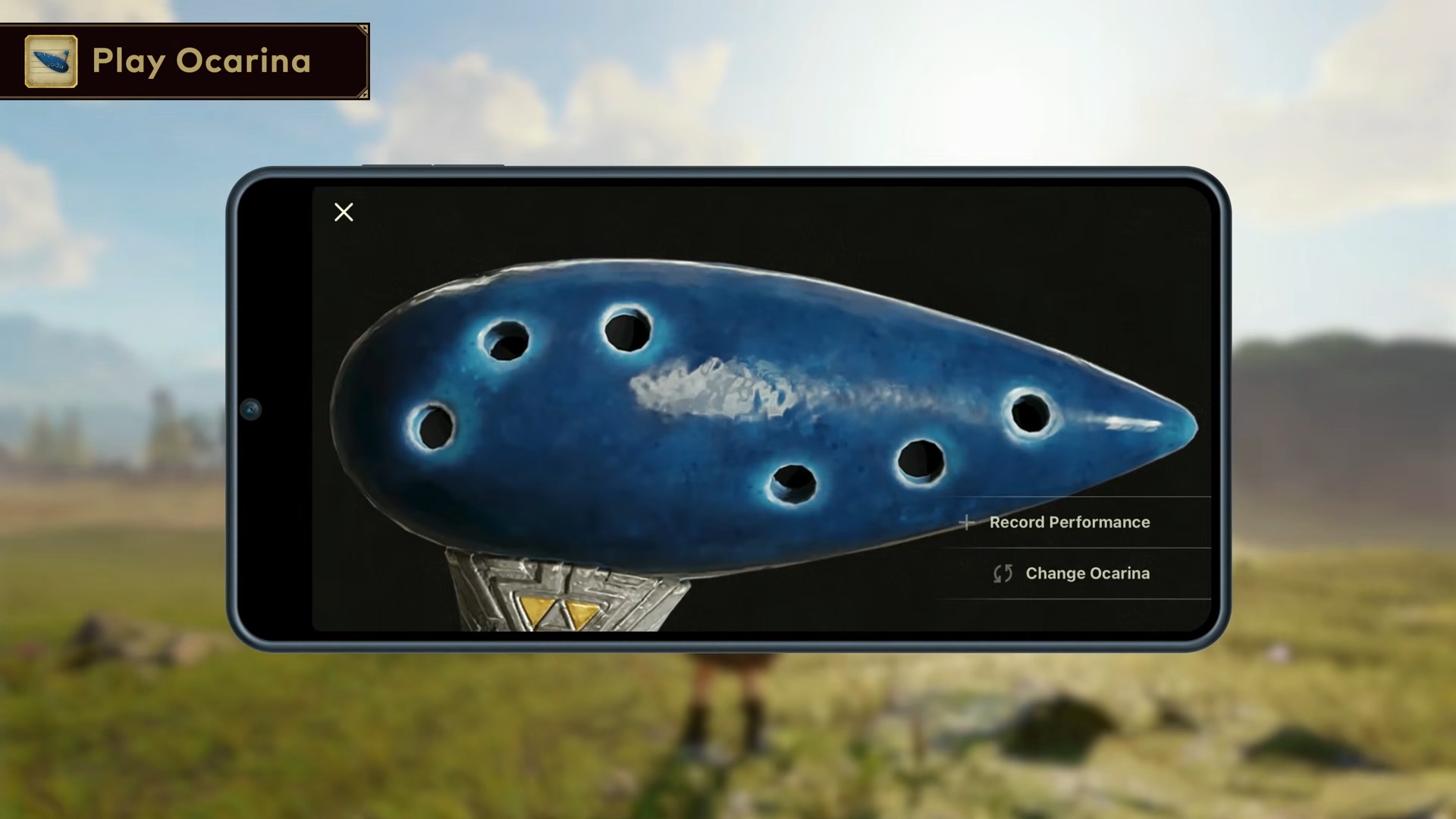
Players can perform freely using the touchscreen, follow music guides, let the application perform songs automatically, or create their own arrangements.
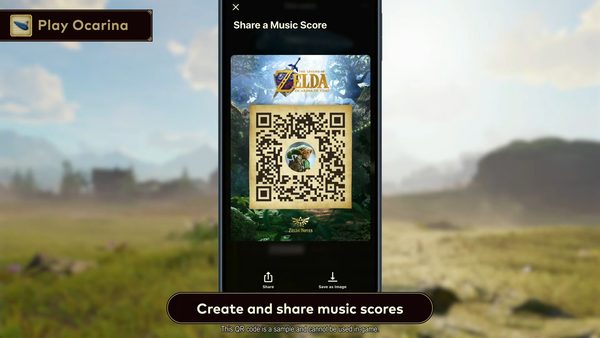
Custom music scores can also be shared using QR codes.
Ocarina of Time Quiz
Nintendo is leaning into the fact that some Zelda fans have been replaying this game for nearly 30 years.
ZELDA NOTES includes an Ocarina of Time quiz with more than 2,000 questions.
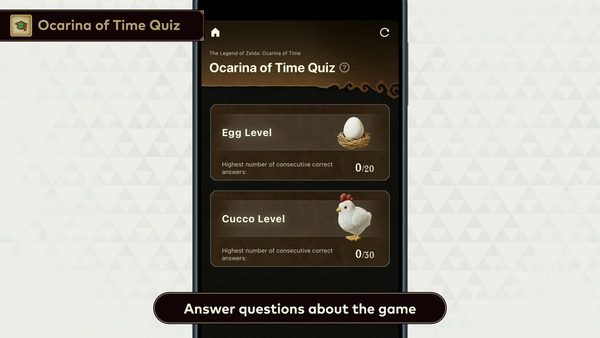
Players can attempt the quiz once per day, with additional attempts available by spending Rupees earned in the game.
We suspect a few Zelda Central readers are going to take that as a personal challenge.
Hall of Fallen Foes
The remake adds a new location called the Hall of Fallen Foes. It displays statues of monsters Link has defeated, with information about the creatures. Players can also return to battles against certain bosses in rematch fights.
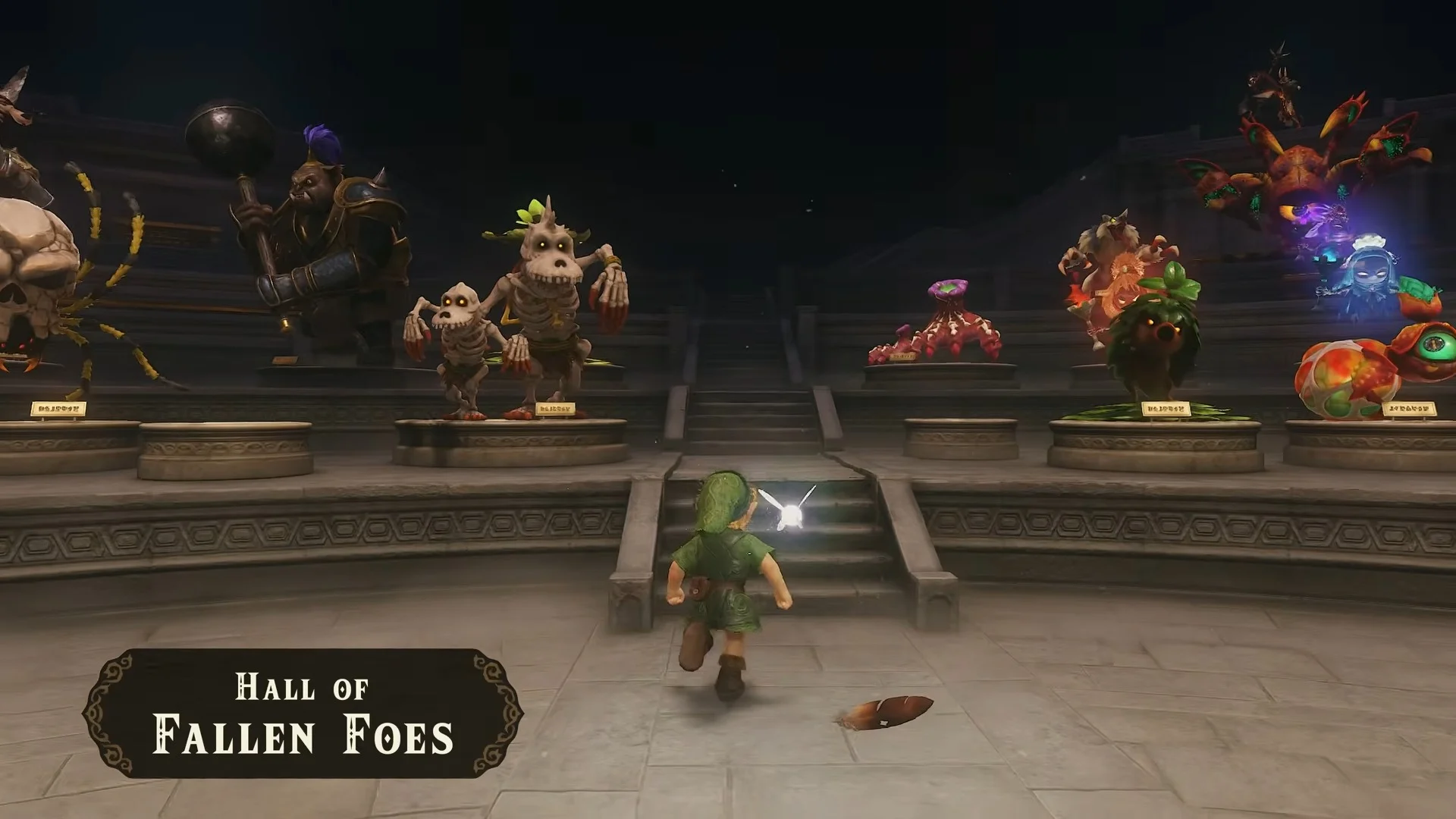
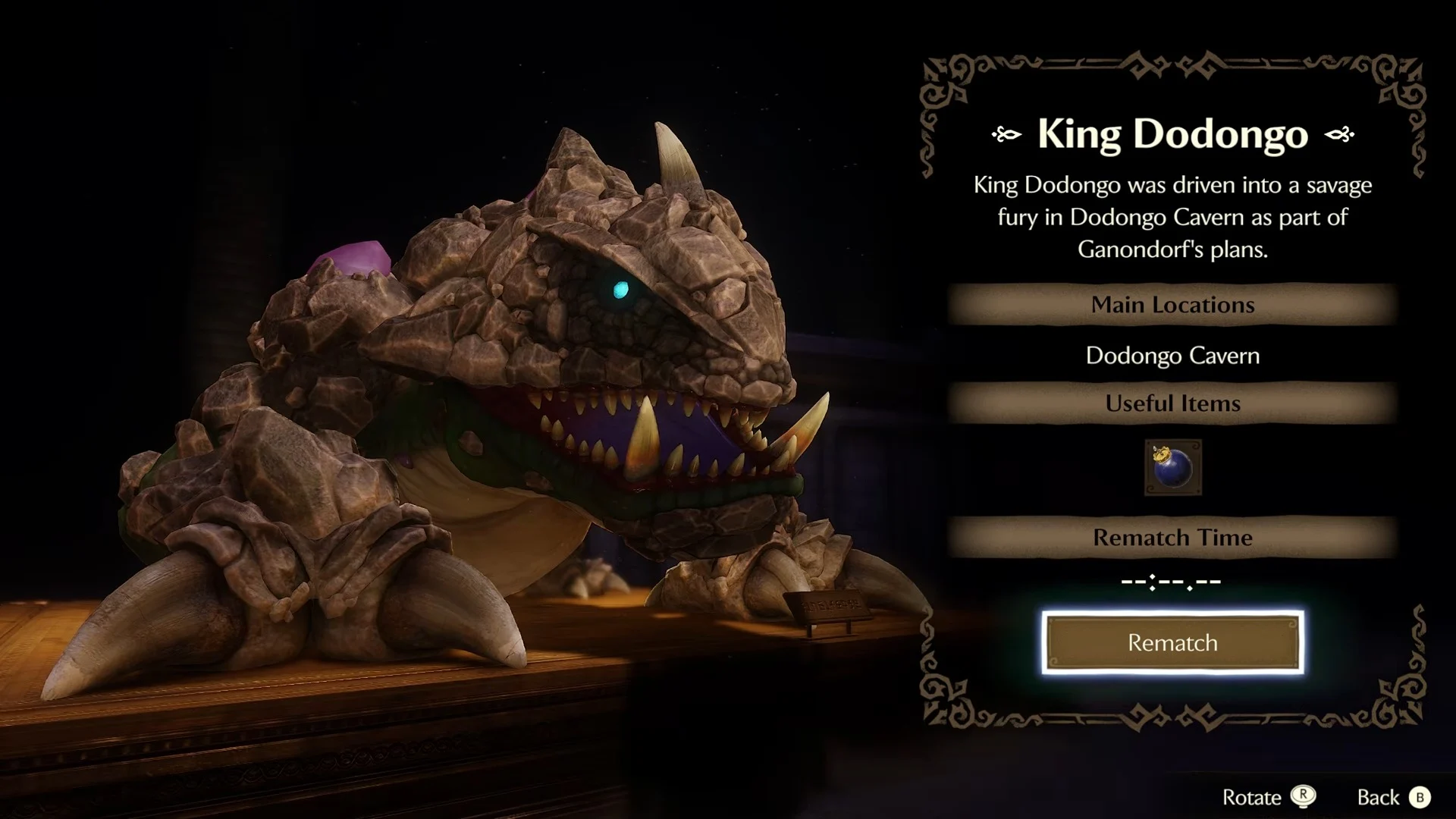
Nintendo has not explained where the hall is found, how many rematches it includes, or whether it unlocks anything. Those details remain unknown.
Ocarina of Time Remake vs. Ocarina of Time 3D vs. Nintendo 64
This is actually the second major overhaul Ocarina of Time has received.
Ocarina of Time 3D, developed for Nintendo 3DS and released in 2011, already introduced improved graphics, quality-of-life changes, touchscreen inventory management, gyroscope aiming, a revised Water Temple interface, and Master Quest.
The Switch 2 game goes considerably further.
The 1998 Nintendo 64 version is the original experience.
Ocarina of Time 3D is an enhanced remake that stays extremely close to the structure and presentation of the N64 game.
The 2026 Nintendo Switch 2 remake rebuilds the experience for modern hardware with new environments, animation, controls, voice acting, music, movement systems, expanded dialogue, and additional features.
For returning players, that makes one question particularly interesting:
How much has Nintendo changed beneath the new presentation?
That’s something we’ll be documenting closely once the game releases.
What We Still Don’t Know
Several major questions remain unanswered.
Nintendo has not yet confirmed whether:
- Master Quest will return.
- Dungeon layouts have been significantly changed.
- The Water Temple has been redesigned beyond visual and control improvements.
- New dungeons or bosses have been added.
- Existing bosses have new phases or mechanics.
- Gold Skulltula locations have changed.
- Heart Piece locations have changed.
- The trading sequence has been expanded.
- The ending contains additional scenes.
- There is substantial post-game content.
Until Nintendo reveals otherwise, those should be treated as open questions rather than confirmed features.
Ocarina of Time Remake Story
For anyone discovering Ocarina of Time for the first time, we’ll keep this part relatively spoiler-free.
Link begins the game as a child living among the Kokiri, a forest-dwelling people watched over by the Great Deku Tree.
Unlike the other Kokiri, Link doesn’t have a fairy companion.
That changes when Navi arrives.
A warning from the Great Deku Tree eventually sends Link beyond the forest and into the kingdom of Hyrule, where he meets Princess Zelda and becomes tangled in a struggle over the Triforce — a sacred relic coveted by the Gerudo king Ganondorf.
What begins as a child’s adventure eventually becomes something much larger.
Ocarina of Time’s defining idea is right there in the title: time.
Link’s journey crosses two different eras of Hyrule, and actions taken as a child can influence the world he encounters as an adult.
If you’ve somehow avoided the rest of the story for nearly three decades, we’re not going to ruin it here.
Hyrule Rebuilt for Nintendo Switch 2
Some of Zelda’s most recognizable locations originated in Ocarina of Time, including:
Kokiri Forest, the Lost Woods, Hyrule Field, Hyrule Castle Town, Lon Lon Ranch, Kakariko Village, Death Mountain, Zora’s Domain, Lake Hylia, Gerudo Valley, the Haunted Wasteland, and the Temple of Time.
All of them are being recreated for Nintendo Switch 2.
Nintendo’s October preview build suggests that some familiar areas have received small layout changes alongside their visual overhaul. Game Informer’s hands-on report notes a new ladder and jump across a gap on the route to the Kokiri Sword, along with changes to Lon Lon Ranch’s elevation and Kakariko Village’s layout. These are observations from a preview session, so the full extent of changes across Hyrule is not yet clear.
That may be one of the remake’s smartest decisions.
Ocarina’s Hyrule isn’t enormous by modern standards. It doesn’t need to be. The original game’s world works because nearly every location has a purpose, a secret, a character, or a memory attached to it.
The remake has an opportunity to make that world denser and more believable without simply making it bigger.
Dungeons and Temples
Ocarina of Time established a dungeon formula that influenced the Zelda series for decades.
Link’s adventure includes early dungeons such as Inside the Deku Tree, Dodongo’s Cavern, and Inside Jabu-Jabu’s Belly, followed by the game’s larger temples after its time-traveling story takes shape.
Those include some of the most famous — and occasionally infamous — dungeons Nintendo has ever designed.
The Forest Temple remains one of the series’ most atmospheric locations.
The Fire Temple sends Link deep into Death Mountain.
The Water Temple has been confusing Zelda players since 1998.
The Shadow Temple takes the game into surprisingly dark territory.
And the Spirit Temple uses Ocarina of Time’s central time-travel mechanic in ways few other dungeons do.
Nintendo has not yet explained how extensively these dungeons have been changed for the remake.
We’ll be comparing every one of them with their Nintendo 64 and Nintendo 3DS counterparts.
Ocarina of Time Remake Walkthrough
Zelda Central will have a complete Ocarina of Time Remake walkthrough covering the entire game from Kokiri Forest through the final battle.
Our remake guide will include:
- Main story walkthrough
- Dungeon walkthroughs
- Boss strategies
- Heart Piece locations
- Gold Skulltula locations
- Great Fairy locations
- Ocarina songs
- Items and equipment
- Bottle locations
- Magic Bean locations
- Mask trading sequence
- Biggoron’s Sword trading quest
- Mini-games
- Side quests
- Secrets and Easter eggs
- 100% completion checklist
Until the remake releases, you can also explore our complete guide to the original Ocarina of Time. Much of the underlying adventure is expected to remain familiar, although we’ll be keeping the remake and original guides separate wherever Nintendo has changed locations, puzzles, mechanics, collectibles, or progression.
Ocarina of Time Remake Preorders
Preorders for The Legend of Zelda: Ocarina of Time are now available ahead of the November 5 release.
The standard U.S. price is $59.99.
Retailers around the world are also offering different preorder incentives, including several region-specific bonuses.
Because those bonuses vary dramatically depending on country and retailer — and new ones continue to appear — we’ve put together a separate Ocarina of Time Remake preorder bonus guide tracking what’s available in each region.
If you’re planning to preorder, it’s worth comparing them before choosing a retailer.
Physical and Digital Editions
Nintendo is offering Ocarina of Time in both physical and digital formats.
Exact availability, packaging, retailer exclusives, and preorder bonuses can vary depending on region.
Nintendo has also produced Zelda-themed hardware as part of the franchise’s 40th anniversary celebration, including a Nintendo Switch 2 – The Legend of Zelda – 40th Anniversary Edition console.
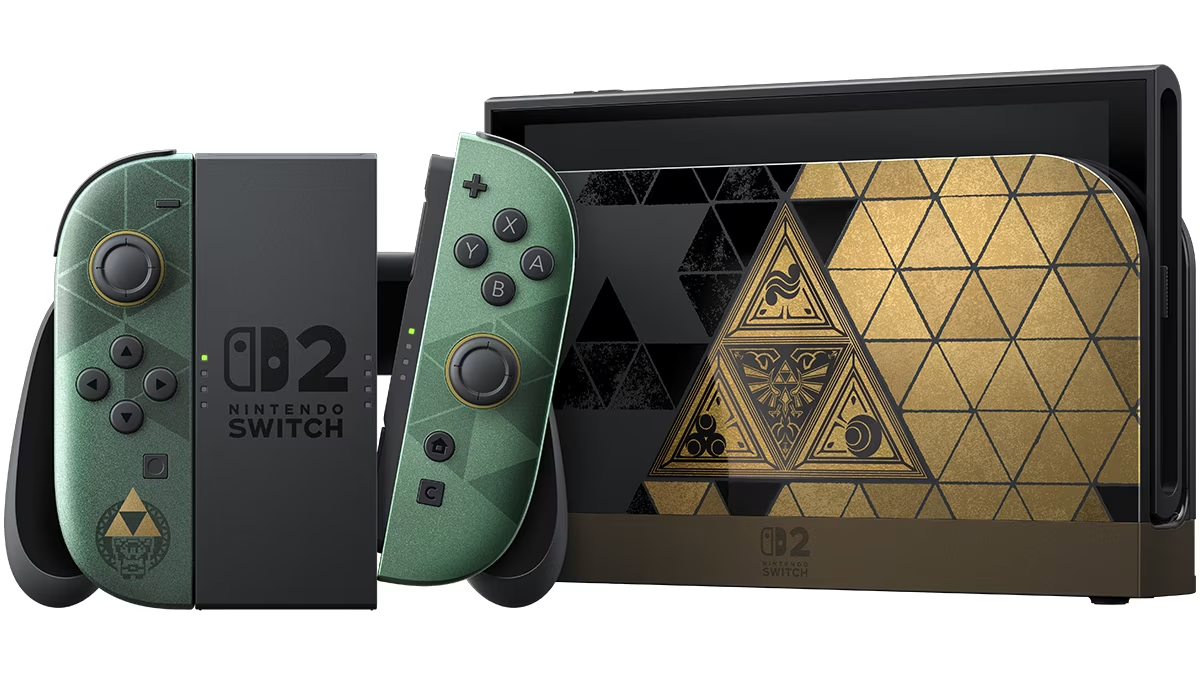
That system launches October 29, one week before Ocarina of Time.
Ocarina of Time Remake amiibo Support
The remake supports The Legend of Zelda series amiibo.
Scanning existing Zelda amiibo can provide in-game extras during Link’s adventure.
Nintendo has also announced new Young Link and Young Zelda amiibo scheduled for 2027. Scanning those figures unlocks in-game masks inspired by retro graphics.
We’ll update our amiibo guide as Nintendo reveals the complete reward list.
Watch the Ocarina of Time Remake Trailers
Nintendo revealed the game with a short trailer in June, then showed its first extended gameplay during the September 8 Zelda 40th Anniversary Direct.
On October 14, Nintendo released an overview trailer with a broader look at the adventure. It also introduced the Hall of Fallen Heroes, where players can view defeated monsters and take on boss rematches.
The September 8 Zelda 40th Anniversary Direct went much further, providing the first extended look at actual gameplay.
The newer footage confirmed several features that weren’t clear from the reveal, including free camera movement, manual jumping, dashing, voice acting, expanded NPC dialogue, Threads of Time, the continuous day/night cycle, and new ways to play the ocarina.
After the direct, Nintendo released a more extensive gameplay trailer featuring Adult Link.
Ocarina of Time Remake FAQ
When does the Ocarina of Time remake come out?
The Legend of Zelda: Ocarina of Time releases November 5, 2026.
The game is being released for Nintendo Switch 2.
Is Ocarina of Time really getting a remake?
Yes. Nintendo officially announced the Ocarina of Time remake in June 2026 and showed its first extended gameplay during the Zelda 40th Anniversary Direct on September 8, 2026.
Is the Ocarina of Time remake coming to Switch 2?
Yes. It is being rebuilt from the ground up rather than simply remastered from the Nintendo 64 version. Ocarina of Time is being developed specifically for Nintendo Switch 2.
Is the Ocarina of Time remake coming to the original Nintendo Switch?
Nintendo has not announced an original Nintendo Switch version. The remake is currently listed as exclusive to Nintendo Switch 2.
How much does the Ocarina of Time remake cost?
The standard U.S. price is $59.99. Prices vary by country and retailer.
Is Ocarina of Time Remake physical or digital?
Both physical and digital versions are available, although exact availability may vary by region.
Does the Ocarina of Time remake have voice acting?
Yes. Nintendo has confirmed that the remake features fully voiced cutscenes as well as expanded character dialogue.
Can Link jump in the Ocarina of Time remake?
Yes. Unlike the original game, the Switch 2 remake gives Link a dedicated manual jump command. Link can also dash.
Does the Ocarina of Time remake have a free camera?
Yes. Players can freely control the camera using the Nintendo Switch 2’s Right Stick.
Is the Ocarina of Time remake open world?
Nintendo has not described Ocarina of Time as an open-world game. The remake retains the recognizable locations and structure of the original adventure while modernizing movement, environments, and exploration.
Is the Water Temple different in the remake?
Nintendo has not yet detailed specific changes to the Water Temple. The new camera, movement controls, jumping system, and redesigned environments could affect how the dungeon plays, but any larger changes to its puzzles or layout remain unconfirmed.
Is Master Quest included?
Nintendo has not announced Master Quest for the Switch 2 remake. Ocarina of Time 3D included Master Quest, but its inclusion in the 2026 remake has not been confirmed.
Does the remake support amiibo?
Yes. Existing Zelda-series amiibo can provide in-game extras, and new Young Link and Young Zelda amiibo arriving in 2027 will unlock retro-inspired masks.
Does Ocarina of Time Remake have multiplayer?
No. Nintendo lists Ocarina of Time as a single-player game.
What is Threads of Time?
Threads of Time is a new feature that lets players review their progress, see their current objective, and follow Link’s adventure through a tapestry that gradually fills in as the story progresses.
Can you actually play an ocarina with the game?
Yes. The remake can recognize players humming learned melodies, and Nintendo has also announced support for compatible physical and electronic ocarinas. The Nintendo Switch App’s ZELDA NOTES feature also includes a virtual touchscreen ocarina.
