
















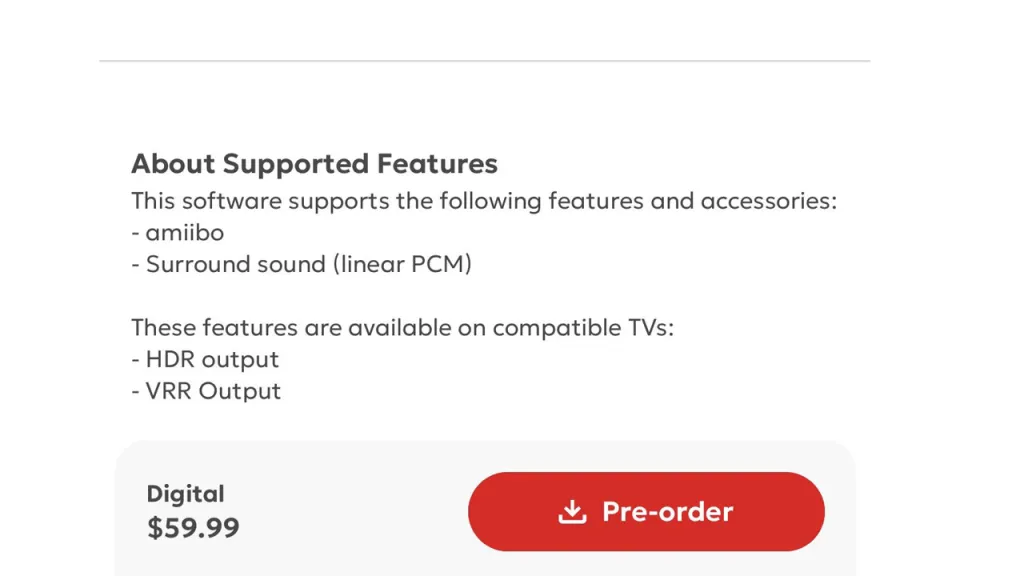
According to Nintendo’s official store listing, the Switch 2 remake will support both HDR and Variable Refresh Rate output on compatible televisions. The game will also support linear PCM surround sound.
The VRR support is probably the most interesting addition of the bunch, particularly because it arrives alongside a major change Nintendo recently made to the Switch 2 itself.
Ocarina of Time Will Support VRR in TV Mode
Variable Refresh Rate allows a compatible display to adjust its refresh rate to match the game’s output rather than relying on a fixed refresh rate. In practice, that can make changes in frame rate appear smoother and help reduce visible screen tearing.
That feature originally wasn’t available when playing Switch 2 games on a television. Nintendo changed that with system update version 23.0.0, released September 10, 2026, which added VRR support to TV mode. Nintendo notes that both the game and connected television need to support the feature.
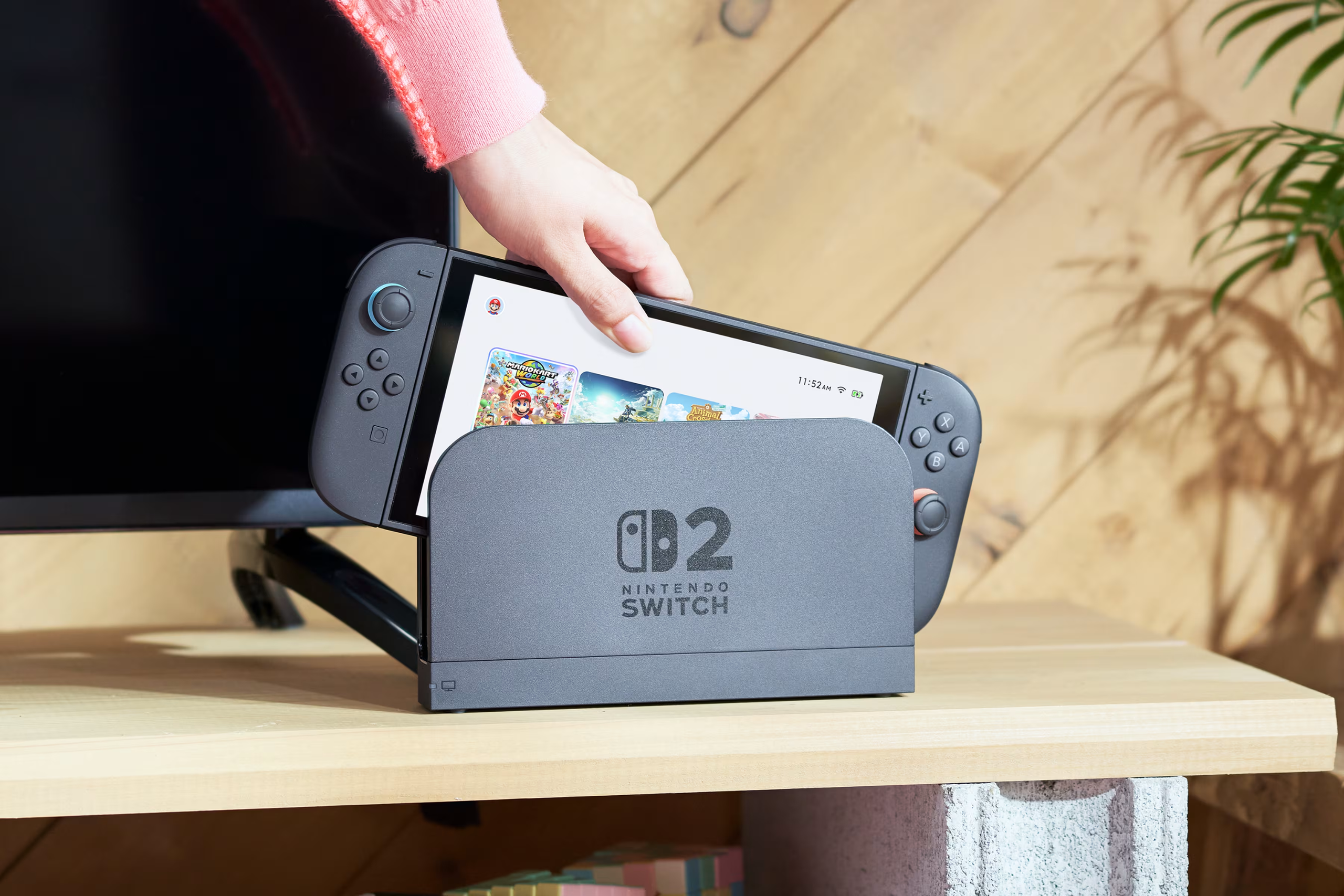
Ocarina of Time is now officially listed as one of those supported games.
Players will need a compatible TV and will also need VRR Output enabled in the Switch 2’s display settings. Nintendo’s current system settings allow VRR to be toggled specifically for compatible software while the console is docked.
For a remake that is completely rebuilding a Nintendo 64 game for modern hardware, it is encouraging to see Nintendo taking advantage of features that go beyond simply increasing the resolution.
What About 60 FPS?
This is where it’s worth separating what Nintendo has confirmed from what has been discovered through technical analysis.
Nintendo has not officially listed a specific frame rate for the finished version of Ocarina of Time. However, Digital Foundry’s analysis of footage shown by Nintendo found gameplay running at approximately 1080p and 60 frames per second, with some menu elements appearing at a higher resolution.
That’s a substantial jump from the original Nintendo 64 release, but those measurements come from the footage Nintendo has released so far. They should not be treated as final specifications until Nintendo confirms them or the retail version can be tested.
The newly confirmed VRR support is interesting in that context. If the final game does target 60 FPS but occasionally falls below it in more demanding scenes, a compatible VRR display can help make those fluctuations less noticeable.
Nintendo’s Switch 2 hardware can also output up to 4K resolution and supports frame rates of up to 120 FPS under certain conditions, although none of that means Ocarina of Time itself will necessarily use those maximum settings. Nintendo currently only confirms HDR and VRR support for this particular game.
Another Big Upgrade Over the Original
The technical features join a much longer list of changes Nintendo has already revealed for the remake.
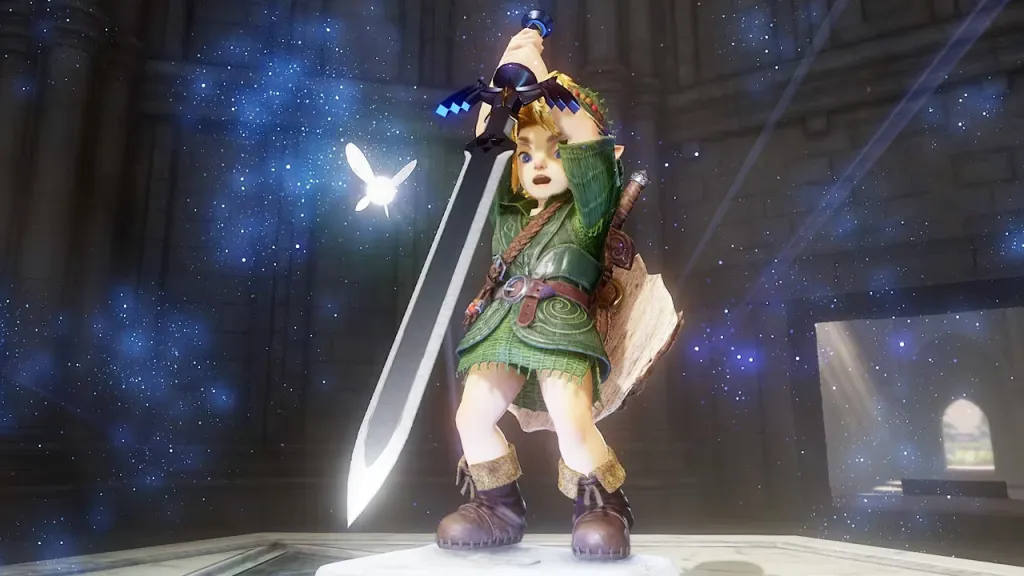
Nintendo describes Ocarina of Time as being built from the ground up for Nintendo Switch 2, with completely overhauled visuals, fully voiced cutscenes, expanded dialogue and a symphonic orchestral soundtrack. Movement and camera controls have also been reworked, with Link now able to jump and dash using the remake’s expanded control system.
It’s becoming increasingly clear that Nintendo isn’t approaching this as a simple graphical remaster.
The original Ocarina of Time was designed around the limitations of the Nintendo 64, and even the excellent Nintendo 3DS remake remained closely tied to that game’s basic presentation and structure. The Switch 2 version appears much more willing to modernize the experience while keeping the locations, characters and story recognizable.
HDR should also be particularly interesting for a game built around dramatic changes in lighting and atmosphere. Areas such as the Forest Temple, Death Mountain, Lake Hylia and the ruined version of Hyrule Castle Town could benefit considerably from the wider brightness and color range available on a properly calibrated HDR display.
We’ll have to wait until the finished game is in players’ hands before knowing exactly how substantial those improvements are.
Ocarina of Time Remake Releases November 5
The Legend of Zelda: Ocarina of Time launches November 5, 2026, exclusively for Nintendo Switch 2. Nintendo currently lists the game’s estimated file size at 27 GB and confirms support for TV, tabletop and handheld play.
The remake was one of the centerpiece announcements of Nintendo’s Legend of Zelda 40th Anniversary celebrations, and we’re continuing to learn more about it as the November release approaches.
With HDR and docked VRR now officially confirmed, Nintendo appears determined to make this version of Ocarina of Time feel at home on modern hardware rather than simply recreating the 1998 classic with new character models.

1 comment